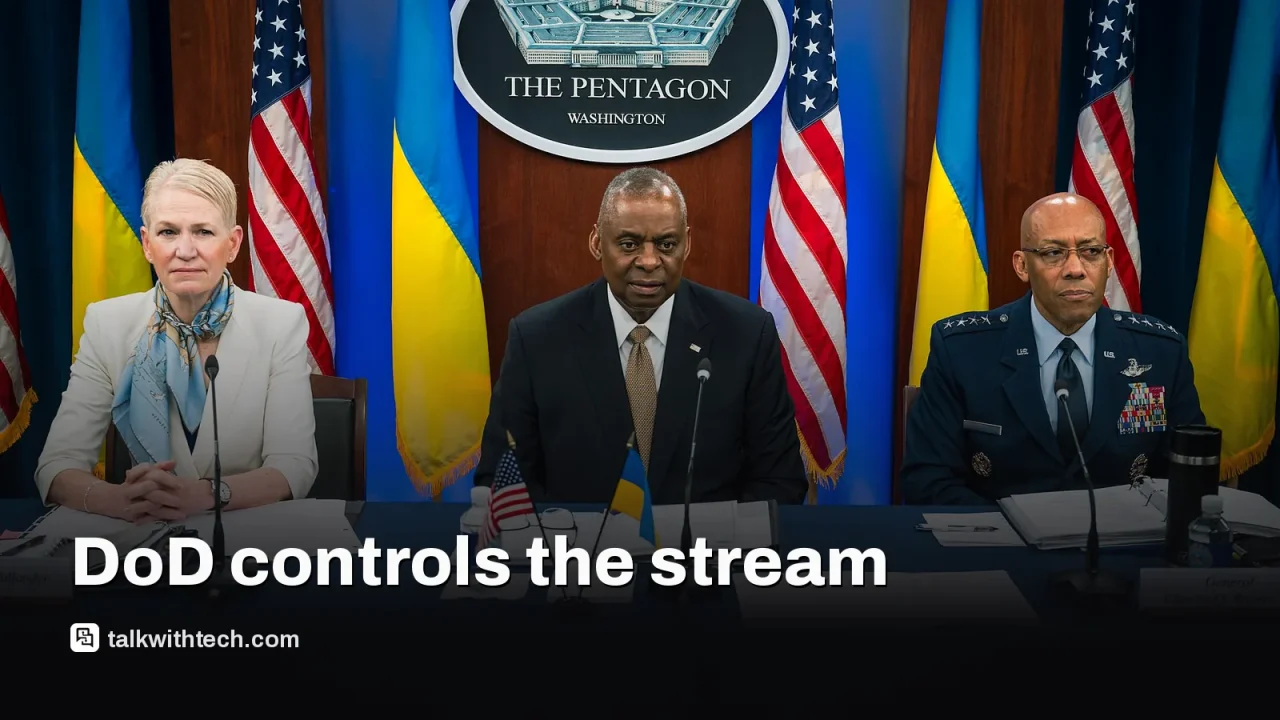
The FCC will not decide whether a public execution should be televised or streamed; that call belongs to the Defense Department and Secretary Pete Hegseth.
Commissioner Brendan Carr indicated the DoD has the authority to determine the broadcasting path for the event, especially since it may appear on online platforms rather than traditional TV.
The Pentagon has signaled a livestream plan, which could place the event outside the FCC’s typical broadcast remit.
As networks and platforms weigh their options, this raises questions about who controls access to government actions online and on broadcast channels.
Quick read · 1 min
The FCC says it will defer to the Defense Secretary on whether a planned public execution can be aired. The Pentagon plans to livestream the event, potentially on online platforms beyond traditional TV.
What this means for you: watching the livestream will likely depend on the Defense Department’s broadcasting decision and platform policies, not a straightforward FCC ruling. Keep an eye out for official DoD or platform announcements as the date approaches.
DoD decisions may determine availability on online services.
Broadcast TV may not be involved unless DoD requests it.
Platform rules will shape who can host the video and how it’s presented.
The FCC will not decide whether a planned public execution at Fort Hood can be shown. Commissioner Brendan Carr said the decision should rest with the Defense Department, specifically Secretary Pete Hegseth, because the matter touches on military policy and how the event is carried out. Carr suggested the agency’s involvement is limited when the event isn’t expected to air on traditional broadcast television, leaving the choice up to the DoD and its leaders.
The Pentagon has indicated it plans to livestream the execution, which could appear on online platforms beyond the FCC’s usual airwaves jurisdiction. Carr noted that if the event were to air on broadcast TV, the Defense Department would determine whether that path makes sense and whether networks should participate. He emphasized that his view is that the FCC’s decisions are not needed in this scenario when the content isn’t slated for traditional TV.
At this point, major tech platforms have not publicly commented on whether they would host the livestream if DoD pursues it, leaving the policy question in a gray area between government rules and platform terms. The Verge report cites that platforms such as YouTube, Twitch, Meta, and X had not responded to requests for comment at publication time.
01
What this means for the FCC’s role
The exchange underscores a broader question: when should the FCC get involved, and when should it defer to other government bodies or private platforms? Carr’s remarks imply the agency won’t regulate or block a livestream simply because it’s online content, shifting much of the decision to the Defense Department and the platforms themselves.
02
Why this is unfolding now
The planned livestream tests how viewers in the U.S. might access sensitive government actions online. It spotlights ongoing debates about government transparency, platform moderation, and the public’s right to observe state actions in real time.
03
What this could mean for viewers
For everyday readers, the bottom line is that watching the livestream will depend on two things you don’t control: the DoD’s broadcasting choice and the platform’s rules. If you stick to traditional TV, there may be a narrow option, but online streaming will likely depend on later, platform-specific decisions.
04
What happens next
Watch for official statements from the Defense Department or major platforms as the event approaches. If the DoD confirms plans to livestream and names the channels, we’ll spell out exactly where to watch and any regional limits. Until then, the story hinges on policy decisions rather than a single product plan.
No. The FCC is not expected to decide the livestream path; the Defense Department will determine the approach for online distribution and any broadcast involvement.
Where might I be able to watch it?
If the DoD goes ahead with a livestream, it could show up on an online platform beyond traditional TV, but no official platform has been announced yet.
ENISA and the European Commission’s Joint Research Centre are quietly evaluating open-weight Chinese AI models to understand capabilities, limits, and risks.
President Trump urges federal agencies to use the term ‘super intelligence’ instead of ‘artificial intelligence’ in official communications, a shift that could ripple through policy and tech.
3 min read
We use cookies to understand how readers use Talk With Tech, so we can make it better. Is that OK? Privacy policy
The Daily Brief
Today's biggest tech stories, in 5 minutes
Every morning, the news that matters from AI, phones, apps and the people shaping tech. Explained in plain English. Free.
One email a day. No spam, unsubscribe anytime. Privacy policy