Sunday, 22 November 2026

Galaxy Watch Ultra 2 or Watch 9? Who should pay the $320 gap

Both Samsung watches share a chip and the same health tools. The Ultra 2 adds battery, brightness, trail and dive features that only some buyers will use.

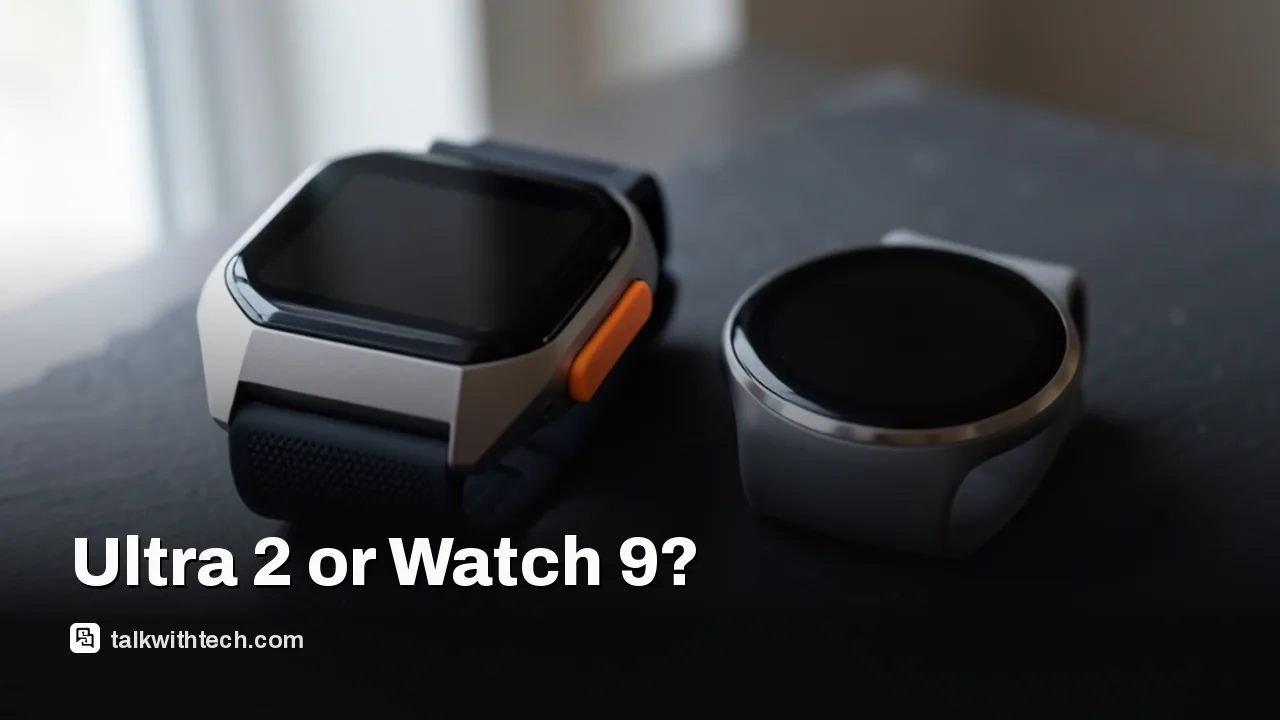
A large rugged titanium smartwatch next to a slimmer aluminum smartwatch on a slate surface

The short version

  • With its always-on display running, the Galaxy Watch Ultra 2 is rated for up to 60 hours, against 30 for the Watch 9.
  • The Watch 9 starts at $379 and the Ultra 2 at $699, and both run the same Snapdragon Wear Elite chip.
  • Trail Run tracking, dive support to 40 meters and a 5,000-nit screen are the Ultra 2's main extras.
  • A South Korean report says Samsung will skip a new Galaxy Watch in 2027, which Samsung has not confirmed.
Quick read · 1 min

Samsung's two current watches share more than their prices suggest. The Galaxy Watch 9, from $379, and the Galaxy Watch Ultra 2, from $699, run the same Snapdragon Wear Elite chip, the same Wear OS 7 software and the same core health tools, and both are promised five years of updates.

The Ultra 2's extra cost buys three things:

  • A battery rated for up to 60 hours with the always-on display, against 30 on the Watch 9
  • A 5,000-nit screen, against 3,000 nits
  • Trail Run tracking and dive support to 40 meters

It also comes in one large 47mm titanium size, which can feel bulky on small wrists and in bed. The Watch 9 is lighter and comes in 40mm and 44mm. One more thing to check: ECG and sleep apnea monitoring need a compatible Galaxy phone. A South Korean report says no new Galaxy Watch is coming in 2027, though Samsung has not confirmed that.

The Galaxy Watch Ultra 2 vs Watch 9 decision starts with one pair of numbers. With the always-on display running, Samsung’s battery rating is up to 60 hours on the Ultra 2 and up to 30 on the Watch 9. That extra stamina comes at a price: the Watch 9 starts at $379 and the Ultra 2 at $699, so you pay $320 more for the big one.

Here is the short answer. Buy the Watch 9 if you mostly want sleep tracking, everyday workouts and health scores in a light watch. Pay for the Ultra 2 if you run trails, dive, or spend long stretches away from a charger. Both use the same processor and the same core health tools, so the cheaper watch is not the slower one. The harder question is whether the Ultra 2’s extras match anything you really do, and the answer sits in a few details below.

01

Galaxy Watch Ultra 2 vs Watch 9: the specs that differ

Size, battery, screen brightness and toughness are where the two watches part ways. Start with the Watch 9:

  • Case: aluminum, in 40mm and 44mm sizes, about 8.6mm thick
  • Weight: between 31.5 grams and 34 grams, depending on size
  • Screen: 1.34 inches on the 40mm and 1.47 inches on the 44mm, reaching up to 3,000 nits
  • Battery: 390mAh in the smaller watch and 445mAh in the larger one, both rated for up to 30 hours with the always-on display
  • Storage: 32GB
  • Protection: MIL-STD-810H, 5 ATM water resistance and IP68
  • Colors: Graphite or Cream for the 40mm, Silver or Graphite for the 44mm
  • US price: $379.99 for the 40mm Bluetooth model and $409.99 for the 44mm

And the Ultra 2:

  • Case: grade 4 titanium in a single 47mm size, with LTE built in
  • Screen: up to 5,000 nits
  • Battery: 800mAh, rated for up to 60 hours
  • Memory: 64GB of storage with 2GB of RAM
  • Protection: MIL-STD-810H, 10 ATM and IP69K, plus EN13319 certification for diving
  • Colors: Titanium Silver or Titanium Gray
  • US price: starts at $699

In the box, the Watch 9 comes with a band and a proprietary 10W wireless charging pad. Samsung showed both watches at Galaxy Unpacked in London on July 22, and general sales began on August 7.

A trail runner on a mountain path checking a rugged smartwatch
02

What both watches share, so you don’t pay twice for it

The chip and the health software are the same on both. Each watch runs Wear OS 7 on Qualcomm’s Snapdragon Wear Elite, a switch away from the Exynos chips Samsung used in earlier Galaxy Watches. Gemini works on both through a raise-to-talk gesture.

The health tools are shared too. Daily Cardio Load and Fitness Index look at how hard you are training and how well you are recovering. Heart Health Score sums up your cardiovascular wellness. Vitals pulls your overnight readings into a personal baseline and flags big changes, and you need to wear the watch for a few nights before that baseline exists. Hearing monitoring warns you when your surroundings get loud enough to do damage, and sleep apnea monitoring runs through an FDA-cleared feature.

Software support is equal as well. Samsung has promised five years of OS and security updates for both models. If long support was your reason to buy the expensive one, cross it off the list.

03

Where the Ultra 2 earns its higher price

Battery is the Ultra 2’s strongest argument. Its 800mAh cell is 35% larger than the one in the first Ultra, yet Samsung made the titanium body 12% thinner. In one multi-week test that ran from early morning to late evening with heavy notifications and workout tracking, the watch delivered multiple days per charge. Fast wireless charging took it from empty to 40% in roughly 30 minutes, and to full in around 90 minutes.

The screen is the second reason. A 5,000-nit peak against 3,000 nits on the Watch 9 makes workout numbers easier to read in midday sun.

Then come the sports features the Watch 9 doesn’t get:

  • Trail Run: tracks elevation, climbing progress and how the terrain affects your run, and can follow routes loaded from GPX files with turn-by-turn guidance, using dual-frequency L1+L5 GPS.
  • Nutrition Alert: estimates sweat loss relative to your body weight and tells you when and how much to drink.
  • Diving: Samsung supports recreational dives down to 40 meters, and the watch can start logging water temperature, depth and dive time on its own once you are in the water.
  • Three physical buttons: including an orange Quick Button you can set to jump straight into a favorite workout.

LTE is included on every Ultra 2, but you are not forced to pay a carrier for it. A standalone eSIM plan is optional, and GPS and Bluetooth features work when the watch is paired to an Android phone.

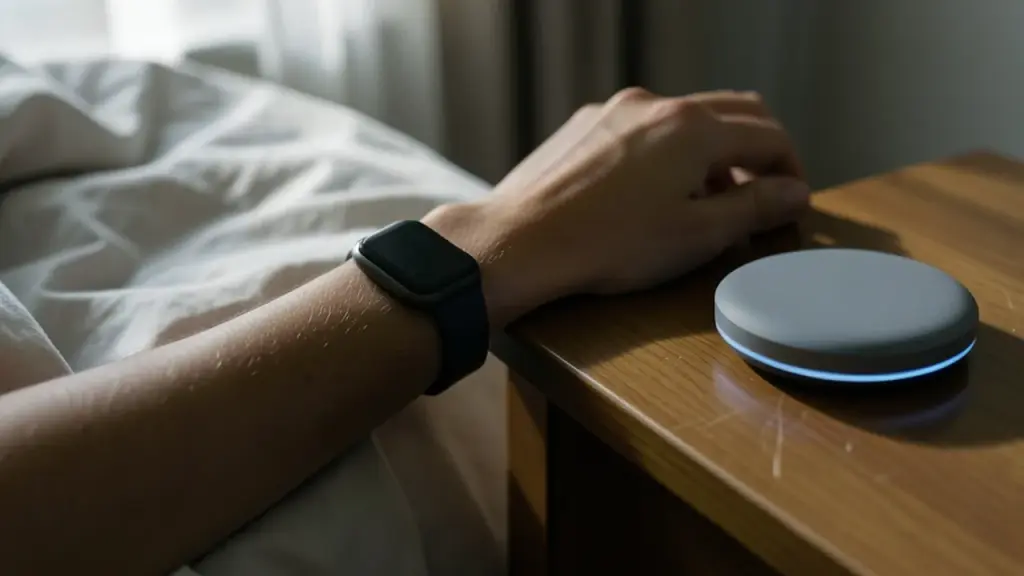
A slim smartwatch on a wrist beside a wireless charging puck on a bedside table
04

The catches that don’t show up on the spec sheet

The Ultra 2 has one size, and it is a big one. Even after slimming down, the 47mm frame sticks out noticeably on smaller wrists, which matters if you plan to sleep in it. The Watch 9’s lighter case is the easier one to wear to bed, and overnight wear is what feeds Vitals and sleep tracking.

Your phone matters more than either watch’s price. The Watch 9 pairs with other Android brands, but the Samsung Health Monitor app only runs on Galaxy handsets that support it. That app is behind ECG and sleep apnea monitoring, so owners of another Android brand lose those two tools on the Watch 9. Blood pressure checks, listed among the Ultra 2’s sensors, need calibration with a cuff first.

Divers should read the fine print. Samsung built an Ultra 2 Diving app with dive gear maker Mares, expected later this year, that adds ascent and descent speed tracking and safe dive limits. Premium functions in it are set to need a separate subscription.

Two smaller gripes come from long-term testing of the Ultra 2: silencing duplicate alerts on Wear OS still takes tedious manual filtering, and Samsung has not added a pickleball workout mode. And no score on either watch is a diagnosis. Treat an alert as a prompt to ask a doctor better questions.

05

Should you wait for next year’s Galaxy Watch?

Probably not, if a report from South Korea is right. ETNews, citing industry sources, says Samsung plans to skip 2027 entirely for the Galaxy Watch line and switch to a new model every other year. That would leave the Watch 9 and Ultra 2 as Samsung’s newest watches until 2028. Samsung has not confirmed the plan.

The same report says Samsung would spend 2027 improving the current watches through software updates and more advanced health features, and would release a new Galaxy Fit band in place of a new watch. It also says higher part costs pushed up the Watch 9’s launch price this year.

06

Which Galaxy Watch fits your week

Picture a normal seven days and the choice gets easier.

  • Desk job, gym, sleep tracking: the Watch 9 covers it from $379 in a lighter case.
  • Training for a road race: Daily Cardio Load is on both, so recovery guidance does not need the expensive model.
  • Weekend trail runs or hikes: the Ultra 2’s route guidance, elevation data and brighter screen are built for exactly this.
  • Diving trips: only the Ultra 2 carries the EN13319 dive certification.
  • Long days with no charger: the 60-hour rating gives the Ultra 2 far more room, while the Watch 9 suits people who can top up daily.
  • Not on a Galaxy phone: check which health features you would lose before buying either.

If you bought the first Ultra and found it too thick or its strap too stiff, the thinner body and the softer rubber strap now in the box are aimed at you. Just remember that 47mm is still the only size it comes in.

07

Quick answers

Is the Galaxy Watch Ultra 2 worth it over the Watch 9?

Yes if you run trails, dive or need the 60-hour battery rating. For sleep, gym workouts and general health tracking, the Watch 9 has the same chip and the same core Samsung Health features for $320 less.

Does the Galaxy Watch Ultra 2 need a cellular plan?

No. LTE hardware is built in, but activating a carrier eSIM plan is optional. GPS and Bluetooth features work when it is paired to your Android phone.

How long will the Galaxy Watch 9 and Ultra 2 get updates?

Samsung has promised five years of OS and security updates for both watches.

You're reading the quick version.