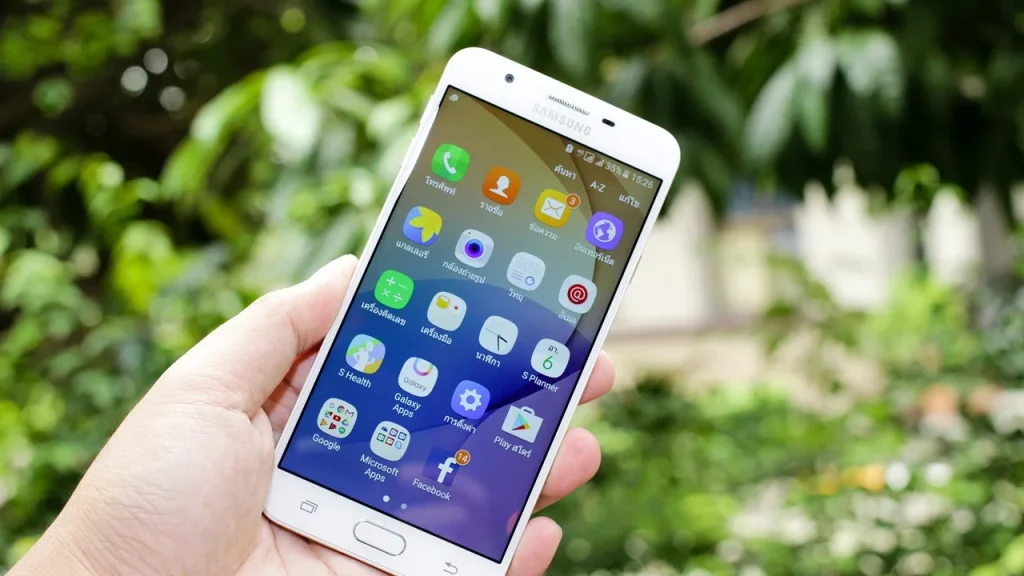
UCLA researchers built a 19-inch humanoid named PhoneBot that relies on an Android phone mounted on its torso for processing and sensing.
The setup lets a walking robot perform tasks like following a person and standing back up after a fall using the phone's camera and sensors.
The build costs about $400, not counting the phone, and works with several older and budget Android devices.
Movement commands are sent from the phone to a small computer that drives 13 motors.
Quick read · 1 min
A UCLA team built a 19-inch humanoid robot called PhoneBot that runs on an Android phone mounted on its torso. The project aims to keep robotics affordable by relying on consumer smartphones for processing and sensing tasks.
PhoneBot can walk, follow a person, and recover from a topple. It works with older and budget Android devices, though some features require devices with Google services. The team plans to add uneven terrain handling and lightweight arms next.
For students and hobbyists, this approach means you don’t need pricey hardware to explore robotics. The next steps include more on-device processing and broader device compatibility.
A low-cost, desk-sized robot prototype is turning heads in robotics labs. PhoneBot, created by researchers at the University of California, Los Angeles, stands about 19 inches tall and weighs around four pounds. The big idea is simple: power a walking robot with a regular Android phone mounted on its torso instead of expensive onboard hardware.
In demonstrations, PhoneBot can walk, follow a person, and even pick itself up after tipping over. The Android device acts as the robot’s brain, handling image processing and sensor data to interpret the world and decide how to move. Those instructions are sent over Wi-Fi to a small computer that actually controls the robot’s 13 motors.
What makes this notable is the cost. The frame and motors are modest, and the total price comes to about $400, excluding the phone. The team tested four Android devices, ranging from an older 2017 model to newer budget smartphones, and all handled the core tasks. One device without Google services couldn’t support a mapping feature, underscoring how the phone choice can affect capabilities.
PhoneBot is pitched as an open-source project meant to democratize robotics experimentation. By using consumer smartphones as core components, the researchers hope students and hobbyists can prototype more complex ideas without expensive gear. The approach also signals a shift toward modular, upgradable robotics anyway, where phones can be swapped in as new capabilities emerge.
There are limits. PhoneBot currently has no arms and is designed for flat surfaces. Its motors aren’t built for heavy lifting, so it can’t carry much. Still, the concept is appealing for classrooms and maker spaces: reuse an old phone, cut hardware costs, and explore how a walking robot can be steered with software running on a familiar device.
01
Which phones work with PhoneBot
PhoneBot isn’t picky about a single model. The team showed it can run with a range of Android devices, from older to budget-friendly newer options. Features like mapping may depend on having devices with Google services, but the core tasks, walking and following, can be done with various phones.
02
In plain terms: how it all fits together
Picture the phone as the robot’s brain and eyes. Its camera helps recognize people, while its sensors track motion and orientation. The phone’s processor then issues movement commands that a tiny computer translates into motor actions for balance and walking.
03
Why this matters to everyday people
If you’ve got an old Android phone lying around, PhoneBot suggests it could still do more than just calls and texts. For students and hobbyists, it lowers the barrier to building a functioning robot because the high-cost hardware is replaced with a consumer device. It also hints at a future where robotics becomes more affordable and adaptable, with phones as upgradable brains replacing dedicated chips.
04
What happens next
The researchers want to push PhoneBot to handle uneven ground, add lightweight arms, and begin moving more processing onto the phone itself. As the project evolves, it could become a practical template for affordable robotics education and experimentation.