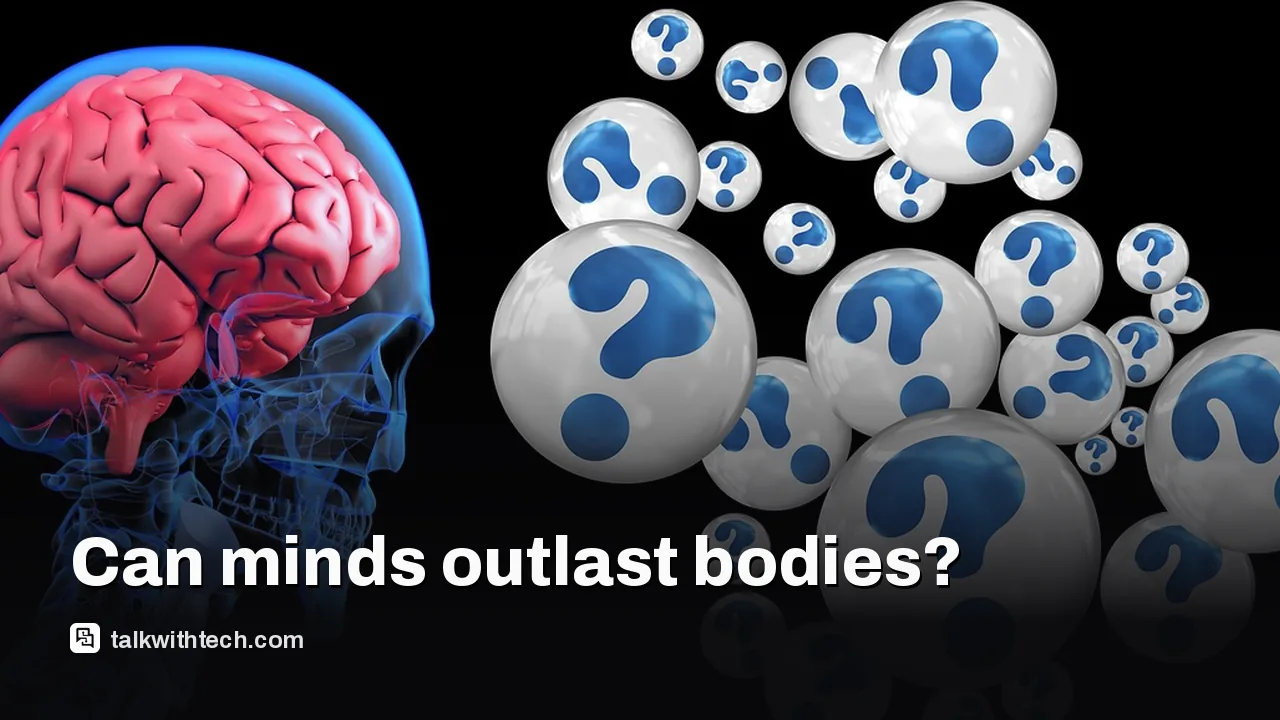
Researchers are exploring ways to keep the mind active beyond normal lifespans, from radical body swaps to digital mind avatars.
Experts are skeptical about practical feasibility, especially for head transplants and true consciousness in digital forms.
Even if technology advances, ethical and privacy questions will shape how or whether people use these ideas.
Quick read · 2 min
Scientists are exploring six bold paths to keep your mind alive longer than your body, from head transplants to digital mindclones. Most of these ideas are early-stage, with serious technical and ethical questions. A few concepts exist in basic form today, but none are ready for everyday life. If any advance, they’ll bring big conversations about who controls personal data, who has rights, and how society should regulate these technologies. Expect progress to come slowly, with safety, cost, and access as major hurdles.
What this means for you: these aren’t happening tomorrow, but they could change how we think about aging, identity, and privacy. If you’re curious, keep an eye on neural interfaces, AI safety, and data rights as researchers push these ideas forward.
What to watch: breakthroughs in spinal tech, digital avatars, and ethics debates.
Who might be affected: patients with severe disabilities, data subjects, and future users of any mind-preservation tech.
What’s next: regulatory and medical guidelines will shape how, when, or if these ideas reach real life.
When you picture cognitive immortality, you might imagine a mind that lives on in a computer or another body. That idea is no longer just sci‑fi. A prominent science and technology magazine recently looked at six bold paths researchers are pursuing to keep your sense of self going long after your body wears out. The motives range from curiosity about identity to a practical aim of avoiding the losses that come with aging and disease.
Here are the six paths and what they would involve in plain terms, plus what they could mean for you if any become real. Some are already being tested in animals or in software form; others live more in theory than in the clinic or lab.
01
Head transplant and the body swap dream
The idea would be to attach a brain to a new body or to transplant the head onto another torso. Proponents argue it could restore life to people with severe disabilities. Critics point to enormous technical and ethical hurdles, especially around reconnecting spinal cords and ensuring ongoing autonomy. A notable voice in the debate says there is currently no technology capable of such a move, calling the idea “crazy” in a recent discussion with researchers.
02
Augmenting life with spinal and neural technologies
Beyond full transplants, researchers are exploring ways to fuse damaged or aging neural tissue with new interfaces that restore function. The goal is to keep movement, sensation, or memory working even when the original parts fail. This route would be less about a sudden switch and more about extending viability through gradual enhancements and rehabilitation.
03
Mindclones: digital copies that mimic you
Another track imagines uploading diaries, social media histories, and other personal data to build software avatars that act like you. These “mindclones” could have conversations, share memories, or run tasks for you. Realistic digital likenesses exist today in consumer tools, but the question remains: should they be treated as conscious beings with rights or as sophisticated tools?
04
Digital consciousness and the test of true self-awareness
As AI grows more capable, developers and ethicists ask whether a mindclone could or should be considered truly conscious. There isn’t a clear test for consciousness yet, and many researchers caution against assuming mindclones are more than convincing simulations. Some observers warn that people could mistake a digital avatar’s behavior for real understanding, creating emotional attachments or misguided expectations.
Other extreme ideas include keeping the brain alive in a supportive environment while a body or avatar handles interaction with the world. These efforts are at the edge of biology and engineering and face steep scientific and moral questions about quality of life and identity.
The bottom line: even the most compelling ideas face big gaps between promising early work and practical, safe, affordable reality. Yet the conversation itself matters. If any of these paths reach the point where people routinely choose to preserve themselves beyond typical lifespans, it will change how we think about aging, privacy, and what it means to be human.
06
What this means for everyday people
For most readers, these discussions start with a simple question: should I consider any of this now, and what would it cost me? Right now, most of the ideas are exploratory or speculative. If you’re curious, you can follow ethical debates and regulatory guidance as they evolve. Expect delays, high costs, and uneven access if any become available outside experimental settings.
07
What happens next
Experts say progress will be incremental. Watch for breakthroughs in neural interfaces, AI reliability, and privacy protections. If a breakthrough travels from lab to clinic or consumer product, it will likely come with strict safeguards and clear limits on who can access it and how data is used.
08
Quick answers
What is cognitive immortality?
A broad idea that people could preserve their mind in some form beyond the typical lifespan, through biological, digital, or hybrid means.
Which idea is closest to reality?
None are truly ready for everyday use yet. Some digital avatar concepts exist today, but they are not conscious minds.