NASA's SpaceX Crew-12 returned to Earth on Oct. 8 after 237 days in orbit.
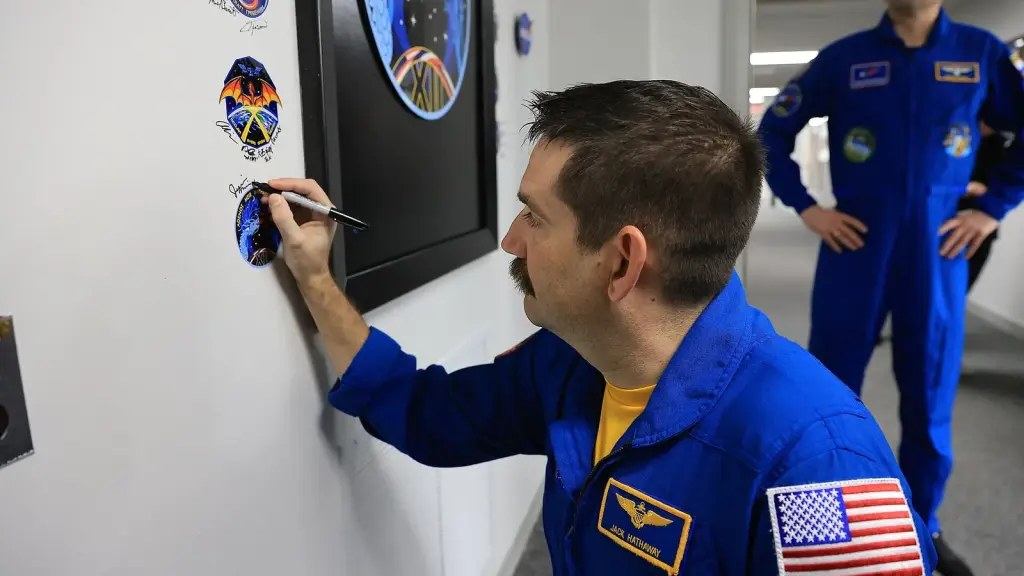
Astronauts Meir, Hathaway, Adenot, and Fedyaev participated in a postflight news conference at Johnson Space Center.
The briefing highlighted the mission's scientific research and ongoing international collaboration.
Quick read · 1 min
NASA’s SpaceX Crew-12 returned to Earth on Oct. 8 after 237 days aboard the ISS. Today, the crew discussed their mission in a postflight news conference at Johnson Space Center in Houston. Meir, Hathaway, Adenot, and Fedyaev shared highlights from the science they conducted and what it means for future exploration.
The briefing focused on experiments in biology, materials processing, and Earth observations, all aimed at improving life support and technology for longer missions. Adenot was not on hand for the press event due to European return plans.
Looking ahead, NASA intends to analyze the mission data to inform ongoing research and future crewed flights. The agency continues to emphasize international collaboration as a core driver for next-generation space exploration.
NASA’s SpaceX Crew-12 crew touched down on Earth on Oct. 8 after spending 237 days living and working aboard the International Space Station. Today, the astronauts spoke publicly about their mission during a postflight news conference at NASA’s Johnson Space Center in Houston. The event brought together the crew members who were willing to share what they learned and what comes next for the program.
Two of the original crew members, Jessica Meir and Jack Hathaway, joined ESA astronaut Sophie Adenot and Roscosmos cosmonaut Andrey Fedyaev for a briefing about the science they conducted, the daily life of long-duration spaceflight, and the lessons learned for future missions. Adenot was not available for today’s press event as she prepared for her return to Europe, according to NASA’s schedule notes.
The mission marked a lengthy stay aboard the orbiting laboratory, with the crew contributing to a wide range of experiments spanning biology, material science, and Earth observation. While the briefing touched on many experiments, NASA emphasized that the work supports human health in microgravity, technology demonstrations, and the station’s role as a testbed for future exploration missions beyond low Earth orbit.
01
Which experiments stood out from Crew-12?
NASA framed Crew-12’s work as a mix of fundamental science and practical tech demonstrations. The briefing underscored research that could influence future crewed missions, including life-support system testing, advanced materials processing, and studies that rely on the unique conditions of space to yield insights not possible on Earth.
Meir and Hathaway described the routine of a long-duration mission, from daily science tasks to maintaining the health and safety of the crew. The crew members talked about the importance of crew dynamics, the challenges of working in a confined environment, and the steady pace required to sustain a multi-month research program in orbit.
03
What this means for future missions
NASA’s postflight notes frame Crew-12’s time on the ISS as part of a broader plan to expand international collaboration and to prepare for longer, more ambitious missions. The agency continues to refine life-support systems, radiation shielding concepts, and other technologies that can support sustained human presence in space.
04
What happens next
With Crew-12 back on Earth, NASA will parse the data from the mission and integrate the findings into ongoing research programs at the Johnson Space Center and partner institutions. The agency has not disclosed new launch timelines in this briefing, but the return of Crew-12 reinforces ongoing momentum for commercial crew activities and future exploration goals.
Long-duration spaceflight research has real, earthly payoffs. The science helped test life-support and habitat technologies that could keep astronauts alive on longer trips, while Earth-observation experiments can improve climate science and disaster response. The partnership with international space agencies also highlights how global collaboration pushes tech forward in ways that trickle down to consumer devices and everyday life.
06
What you can do now
If you’re curious about what’s next for NASA, keep an eye on updates from the agency about future crewed missions and upcoming demonstrations. You can also follow the Johnson Space Center’s public briefings for more context on how these experiments translate into future space hardware and safety protocols.
07
Quick answers
When did Crew-12 return to Earth?
They landed on Oct. 8 after 237 days in space.
Who was at the postflight briefing?
NASA astronauts Jessica Meir and Jack Hathaway, along with ESA’s Sophie Adenot and Roscosmos’ Andrey Fedyaev, participated in today’s briefing.
What’s the takeaway for future space missions?
Crew-12’s work helps refine life-support, radiation protection, and other systems needed for longer missions and international cooperation.