Thursday, 26 November 2026

Apple TV 4K drops HDMI audio passthrough despite faster chip

The A19-powered Apple TV 4K ships November 13 with hands-free Siri and HomePod surround sound, but it still decodes all audio itself instead of passing it to your receiver.

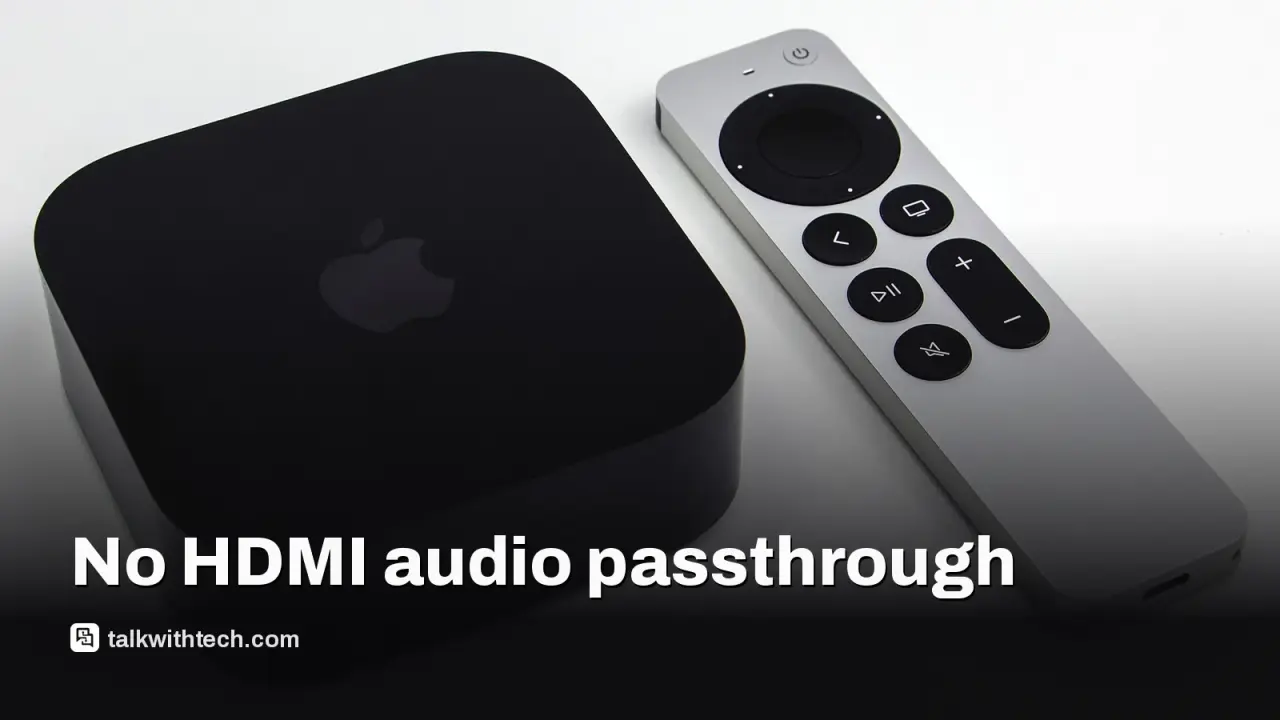
Apple TV 4K
Photo: Dillan Payne / CC BY-SA 4.0 (modified)

The short version

  • Apple's fourth-generation Apple TV 4K costs $299, uses the A19 chip and goes on sale Friday, November 13.
  • Like earlier models, it decodes audio itself instead of passing the raw soundtrack through HDMI to a receiver.
  • That matters most for DTS:X and lossless formats, which owners of high-end AV receivers want decoded by their own gear.
  • New extras include built-in microphones for hands-free Siri, four-HomePod surround sound, Wi-Fi 7 and 128GB of storage as standard.
Quick read · 1 min

Apple's fourth-generation Apple TV 4K is a big step up on paper. It runs the A19 chip, adds microphones so you can talk to Siri without the remote, comes with 128GB as standard and can drive four HomePods as a surround system. It costs $299 and goes on sale Friday, November 13.

The catch for home theater fans is unchanged: there is still no audio passthrough. The box decodes sound itself, so formats it does not support, like DTS:X, never reach your receiver as the original mix.

  • TV speakers, soundbar or HomePods: you will barely notice.
  • A receiver built for DTS:X or lossless audio: consider another box or your TV's own apps.
  • Happy 2022 owners: Siri AI is coming to your model too, just without hands-free mics.

Apple gave its new streaming box a chip from the iPhone 17, three built-in microphones and a remote you can find with Precision Finding. What it did not give the Apple TV 4K is audio passthrough, the one feature home theater fans keep asking for.

If you watch through a TV’s speakers or a basic soundbar, you may never notice. If you paid for an AV receiver that can decode every surround format going, though, the $299 box still sits between your movies and that receiver and makes its own decisions about the sound. With the box going on sale Friday, November 13, it is worth knowing exactly what you get before you order.

01

What audio passthrough means on the Apple TV 4K

Audio passthrough means a streaming box sends the soundtrack to your receiver or soundbar untouched, so the receiver does the decoding. The Apple TV 4K does not work that way. It decodes the audio itself and then sends the result on.

For Dolby Atmos content that is mostly fine, because the Apple TV supports Atmos. The problem shows up with formats the box does not handle, such as DTS:X. Owners say their receiver simply shows a generic multichannel signal (one reports a “Multi-In” label) instead of the format the film was mixed in. In other words, the receiver you bought to handle every format is stuck with whatever the streaming box can manage.

That is why the omission stings. Cheaper rivals offer passthrough: a reviewer who has owned an Apple TV since the first 4K model pointed out that the Roku Ultra, at about half the price, has it, while Apple’s premium box still does not.

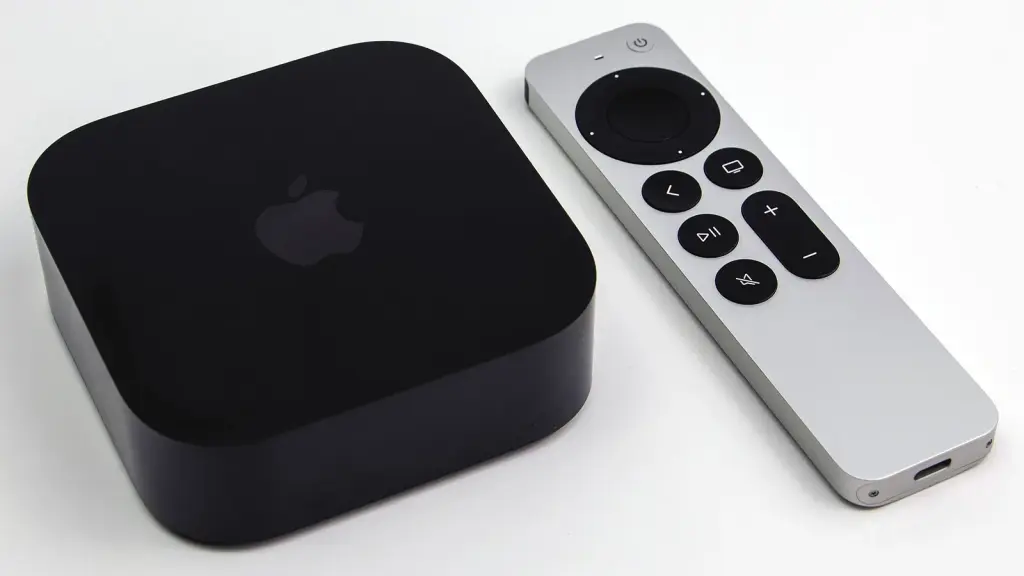
Apple TV
Photo: Dillan Payne / CC BY-SA 4.0 (modified)
02

What the new model does upgrade

Leaving passthrough aside, this is a big hardware jump. The fourth-generation Apple TV 4K moves from the A15 Bionic in the 2022 model to the A19. Apple claims up to 50% faster CPU performance and up to twice the graphics speed, which it says shows up as snappier menus and smoother animation.

The A19 also brings a dedicated AV1 decoder. AV1 is a newer video format that streaming services use to deliver sharp pictures with less data, so it helps on slower connections.

Other changes worth knowing:

  • Hands-free Siri. A three-microphone array in the box lets you say “Siri” from the couch without picking up the remote. Siri AI answers appear as text in a corner of the screen rather than speaking over your show.
  • One model only. Every unit has 128GB of storage, Gigabit Ethernet and Thread, which used to require the pricier version.
  • Faster wireless. Wi-Fi 7 replaces Wi-Fi 6, and Bluetooth 6 replaces Bluetooth 5.0.
  • A findable remote. The Siri Remote now works with Find My, gives step-by-step directions to its hiding spot and has a speaker that can beep. It also sells on its own for $59 and works with older Apple TV 4K boxes.
03

Apple’s answer to surround sound is more HomePods

Instead of passthrough, Apple is pushing its own speakers. The new box can drive up to four HomePods, placed front left, front right, rear left and rear right, as a surround system. Older Apple TV 4K models are limited to a stereo pair.

You can use four HomePod mini 2 speakers, four HomePod 2 speakers, or mix them as long as each pair matches, such as two full-size HomePods in front and two minis behind. Apple says the speakers work out where they sit in the room and adjust timing and volume to suit.

There is also a Whole Room Audio mode for parties or game day. Code found in tvOS 27.2 suggests it sends the same stereo channel to speakers sitting diagonally opposite each other, so the sound stays even wherever people stand. In surround mode, the same code shows a setting to raise or lower the rear pair by up to 8 dB.

That setup can sound impressive, but it only helps if you are willing to fill your living room with Apple speakers. It does nothing for someone who already owns a receiver and floor-standing speakers.
04

Who should buy the new Apple TV 4K, and who should wait

For most people this is still an easy box to like. It has no ads on the home screen, it is fast, and Siri AI makes finding something to watch easier. Some enthusiasts see it as the natural successor to the Nvidia Shield TV Pro, which launched at $199 in 2019, now lists at $299.99 and is hard to find in stock.

Here is a simple way to decide:

  • Buy it if you use TV speakers, a soundbar or HomePods, own a first-gen Apple TV 4K or older, or want hands-free Siri.
  • Think twice if you own a 2022 Apple TV 4K that works well, since Siri AI is also coming to the second- and third-generation models, without the hands-free microphones.
  • Look elsewhere if your setup is built around a receiver that decodes DTS:X or lossless soundtracks, and passthrough is the reason you upgrade streaming boxes.

The Shield is a good example of what passthrough buyers value: it was one of the few boxes that sent TrueHD and DTS-HD Master Audio straight to a receiver. The Apple TV 4K still cannot do that.

05

What this means for your living room

The practical question is where your sound comes from. If it is your TV, a soundbar or HomePods, the lack of passthrough will barely touch you, and the faster chip and new Siri are real gains. Some smart TVs do offer passthrough, so a TV app can be a workaround for the odd DTS film.

If you have a dedicated receiver, check which formats you actually play. Much of what you stream, including many HBO Max shows, comes with a Dolby Atmos mix, which the Apple TV handles. It is mainly DTS soundtracks where you lose out. People in that group often keep a 4K Blu-ray player for their best films anyway.

Price is the other sticking point. Even some longtime fans say $299 is hard to justify for a streaming box when their older Apple TV still runs fine, and Apple rarely cuts its own prices.

06

Quick answers

Does the new Apple TV 4K support audio passthrough?

No. It decodes audio itself, so formats it does not support, such as DTS:X, never reach your receiver in their original form.

When can I get the new Apple TV 4K and how much is it?

It costs $299 in the US, pre-orders are open, and it goes on sale Friday, November 13.

Can older Apple TV models use four HomePods?

No. Four-speaker surround and Whole Room Audio need the new model; older Apple TV 4K boxes stay limited to two HomePods.

You're reading the quick version.