Open AI models benefits risks: local control cuts cloud costs
Open-weight AI models offer lower costs and local control, but safety and misuse risks are reshaping how they’re adopted.
Talk With Tech Newsroom
The short version
Open models can be downloaded and run locally, reducing dependency on external providers.
They offer opportunities for researchers to study inner workings and improve AI systems.
Open models can lower costs and enable on-site processing of sensitive data.
Safety and misuse risks require careful balancing of openness and protection.
Quick read · 1 min
Open AI models can be downloaded and run on local hardware, which lowers costs and gives users more control over their data. They also offer researchers a rare chance to study how AI systems think and to tailor models for new tasks.
But there are real safety concerns: freely available models could be misused for fraud, cyberattacks, or misinformation. Balancing openness with protections is the big question many in tech and policy are trying to solve.
What happens next is unclear, but expect moves toward safety certifications, governance over model weights, and hybrid deployments that combine local running with centralized controls.
Open AI models are at the center of a growing debate about how to balance innovation with safety. Recent discussions spotlight models that are freely downloadable and modifiable, which could democratize access to powerful AI but also raise new risks. The core question: do the potential benefits justify the possible downsides?
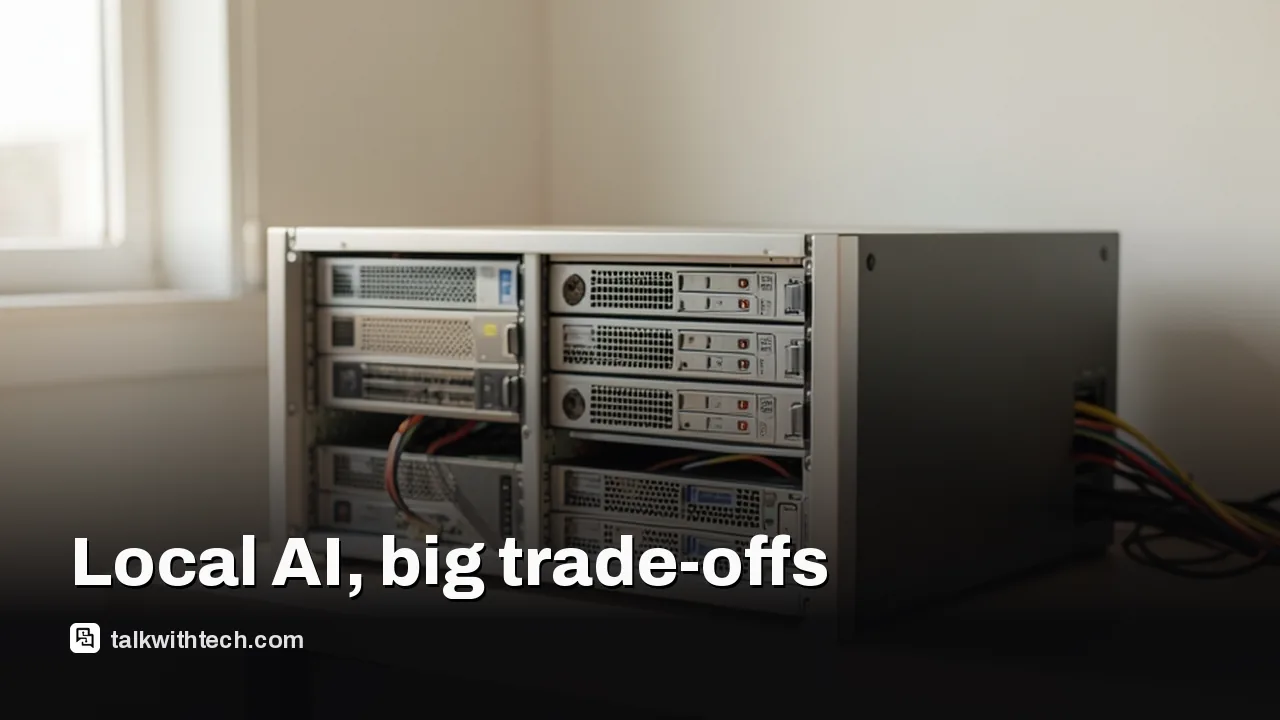
On one hand, open models let researchers and companies run AI systems on their own hardware. That can mean lower ongoing costs, greater control over data, and the ability to study how the models think. Open access also makes it easier to combine multiple models, tailor them for specific tasks, and even tune them for new applications without needing a constant connection to a vendor. For researchers, the visibility into how a model reasons can be invaluable for diagnosing errors and bias.
There’s also a broader public-interest argument. If AI infrastructure remains locked behind a handful of companies, power and access concentrate in a few hands. Open models could help avoid that by spreading capability more broadly, which some experts say matters for accountability and resilience in AI systems.
Yet open models raise clear safety and security concerns. If powerful systems are freely available to download, bad actors could modify them for phishing, fraud, or more sophisticated cyberattacks. This tension, between democratizing AI and guarding against harm, is at the heart of the current policy and industry debate. Stakeholders vary in how they think best to handle it, with some urging more guardrails and others pushing for broad access as a public good.
Industry leaders hold different bets. Some advocate for more openness to spur competition and drive down costs, while others warn that unregulated access could enable misuse across domains, from security to privacy. The debate also intersects with national policy, because governments must weigh whether to encourage open AI as a public resource or to maintain tighter control over foundational technologies.
What this means for readers is practical and immediate: the openness of AI models affects who can build, test, and deploy AI-powered tools. It can influence the price and availability of AI services, and it shapes how organizations handle sensitive data and explainability. The question isn’t simply “open or closed.” It’s about designing a framework that preserves safety without stifling the benefits of broader access.
As the AI state of play evolves, expect more nuanced arrangements. We may see hybrid models with safety certifications, governance over model weights, and modular deployments that let users run only parts of a model locally while keeping core functions in secure, managed environments. The exact path will depend on how policymakers, researchers, and companies negotiate safety, innovation, and accountability.
A new wind-down economy is selling the archives of dying startups to AI labs, turning code, emails and chats into training data, sparking privacy and value questions.