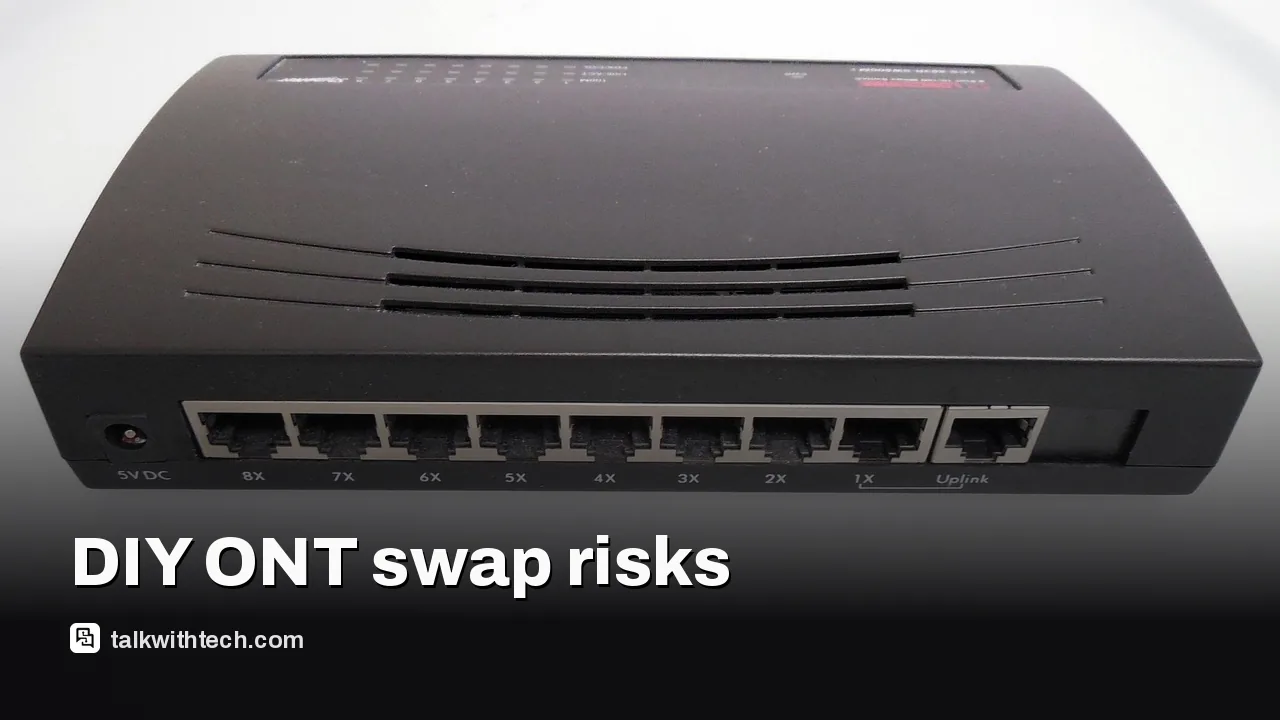
Openreach plans a three‑month trial that would allow a DIY replacement of the Fibre Terminal (ONT) for certain fibre upgrades.
The pilot would target about 200 orders where customers are upgrading from legacy setups to higher‑speed fibre, without a site visit.
Risks include improper mounting, bent cables, and dust or debris affecting connections, which could hurt performance.
If the trial proves workable, it could pave the way for cheaper upgrades for eligible customers without a professional install.
Quick read · 1 min
Openreach is reportedly testing a do‑it‑yourself fibre upgrade. Eligible customers could receive a new Optical Network Terminal (ONT) by mail and swap it in themselves, without an engineer. The three‑month trial is aimed at about 200 orders from users upgrading to faster speeds.
If successful, this could lower upgrade costs for households with compatible equipment. The main risks are a poor cable route or dust in ports, which could affect performance. Openreach has not confirmed dates or eligibility publicly yet.
DIY swap could lower upgrade costs
Risks include cable bending and dirt in ports
Trial may influence broader future upgrades
Openreach appears ready to test a do‑it‑yourself route for fibre upgrades. The plan, described as a three‑month proof‑of‑concept, would let eligible customers receive a new Optical Network Terminal (ONT) by post and swap it in themselves instead of waiting for an engineer. The ONT sits at the edge of your home network and converts the fibre signal into Ethernet for your router.
In practical terms, this would offer a lower‑cost path for people who already have a fibre modem in place but want to push their speeds higher. The pilot is said to involve about 200 orders, focusing on upgrading from older hardware to faster multi‑gigabit services without a technician’s visit.
So what does this mean for you? If you’ve ever paid for an engineer to swap a modem during an upgrade, a successful rollout could mean quicker, cheaper improvements for the households that fit the criteria. The upside is obvious: reduced setup fees and shorter wait times. The downside is that a DIY swap can go wrong if steps aren’t followed carefully, potentially impacting performance or complicating future upgrades.
Openreach’s parent BT isn’t sharing every detail publicly yet, and, as with any trial, exact timing and eligibility could change. If the idea proves workable, it could influence how UK fibre upgrades are handled in the future.
For everyday readers, a few practical cautions help. A loosely mounted ONT or a cable that’s pulled tight can introduce dust or dirt into ports or cause connector damage, which hurts the connection. If you’re experimenting with a DIY swap, consider mounting the new unit on a wall bracket so future replacements can be done quickly and the cable has enough slack to reach the new port without strain.
01
What this could mean for you
If the concept expands beyond the trial, some households could see cheaper upgrades when they already have compatible equipment. It’s not a blanket promise for all UK fibre customers, but it could loosen the cost leash on speeding up connections for those who qualify.
02
How the trial works
Reportedly, the three‑month test would run before the end of 2026 and involve about 200 orders. Participants would receive a new ONT by mail and replace the current unit themselves. The focus is on upgrading from older hardware at 1Gbps or below to higher‑speed services.
03
Potential pitfalls to watch
Experts warn that skipping proper steps can backfire. Poor cable routing, insufficient slack, or forcing cables to reach a new port can damage the fibre or degrade performance. Dust in the port is another risk. A wall bracket or secure mounting could help prevent future issues as replacements occur.
04
What happens next
Openreach would confirm who qualifies and how the swap is arranged if the trial moves forward. If the approach proves safe and scalable, it could shape future upgrade paths for UK fibre customers and possibly broaden DIY upgrade options in suitable scenarios.