Thursday, 26 November 2026

Google links AI responses add visible source links up front

AI Overviews and AI Mode now push source links higher and add a top box for official sites, but publishers still get no click data.

Google image for: Google links AI responses add visible source links up front

The short version

  • Google announced in mid-October that inline links will appear higher up in AI Overviews and AI Mode answers, and more often.
  • It is testing a box at the top of some answers that highlights the one or two official pages you need for a task.
  • News carousels for timely topics are expanding worldwide, and related links at the end of answers get image thumbnails.
  • Publishers remain skeptical: Google still offers no click data for AI answers, and it has since expanded ads inside AI Mode.
Quick read · 2 min

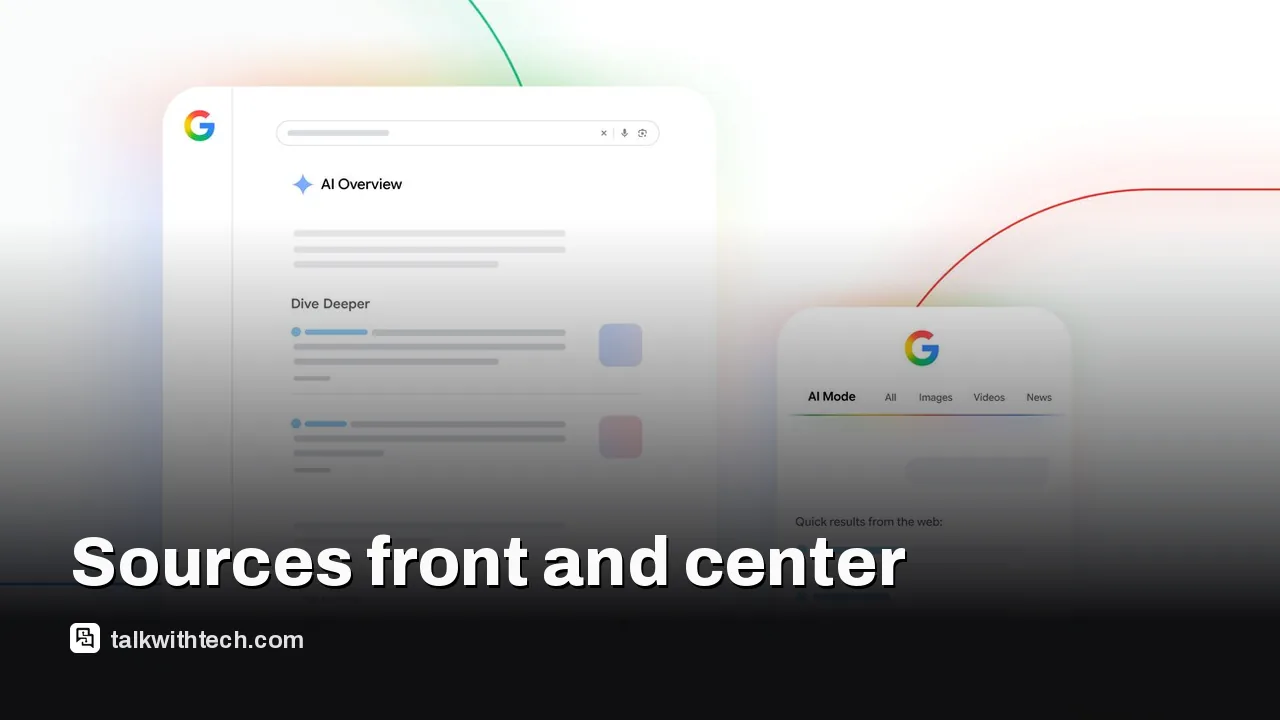
Google is making the links in its AI answers easier to find. Since mid-October, AI Overviews and AI Mode show inline source links higher up and more often, and Google is testing a box at the top of some answers that points straight to the one or two official pages you need, such as an airline refund page.

  • News carousels for timely stories are expanding to more countries and languages.
  • Related links at the end of answers now have image thumbnails.
  • More than 400 publishers are paid through Google's News AI pilot.

Why it matters: AI answers often satisfy a search before anyone clicks, which has hit traffic to news and other sites. Publishers want proof the new design helps, but Google still shares no click data for AI answers, and it has since expanded ads inside AI Mode. For you, it means quicker access to original sources, as long as you click them.

Google wants you to click again. On October 15, the company said source links inside AI Overviews and AI Mode will now show up higher in the answer and more often, and it is testing a new box at the top of some responses that points you straight to the page you need.

This matters because AI answers now sit at the top of a huge share of Google searches, and they often answer the question before you ever visit a website. That is handy when you want a quick fact, but harder when you need the official airline refund page, the original news story or a source you trust. It is also a money problem for the sites that write the material Google summarizes. Here is what changed, what you will see, and why publishers are not celebrating yet.

01

What changed in Google’s AI responses

Google’s links in AI responses are getting more room. Inline links, the small clickable citations placed inside the text of an AI answer, will appear nearer the top and more frequently. Google says it has been adding steadily more of these links for months, and this update is meant to make key sources easy to click at the moment you are reading.

The update came in several parts, announced by Google search executive Nick Fox:

  • A test of a new section at the top of some answers that highlights one or two pages you need to finish a specific task or find exact information, with a short note on why each link helps. Google’s own example was a question about getting an airline refund.
  • News carousels for timely topics, first announced in May, rolling out to more countries and languages. These can also feature outlets you picked through Google’s Preferred Sources setting.
  • A redesign of the related links at the end of an answer, now with image thumbnails and a bigger, more clickable layout.
  • A test in AI Mode that makes publisher and creator names on video results clickable, leading to their Google Search profiles.

Use of Preferred Sources is up more than sevenfold since January, Google added.

Over-shoulder view of tablet with dark screen and index cards with thumbnails on table
02

Why Google is doing this now

The short answer is pressure. AI Overviews have been tied to steep drops in traffic to the websites whose work they summarize. One study published in February 2026 linked the summaries to a 58% fall in click-through rates for top-ranking pages. Earlier research from the Pew Research Center found people click a regular search result far less often when an AI Overview is on the page, at about eight percent versus 15 percent without one.

Publishers have pushed back hard. Penske Media sued Google on antitrust grounds, the European Publishers Council complained to the European Commission, and the EU opened its own investigation into whether AI Overviews and AI Mode use publisher content unfairly. Google has responded with a string of link changes, including a Further Exploration section added in May.

Money is part of the answer too. Google says more than 400 publishers worldwide now take part in its News AI pilot, a licensing program it announced last December. It pays outlets for delivering enhanced content that Google uses to build new AI features, such as detailed article overviews on publisher pages in Google News. Axios, CNN and the Financial Times are among the newer partners.
03

What this means for you when you search

For everyday searchers, the change should make it easier to check where an AI answer came from. If you ask how to claim a refund or use a specific service, the new top box could put the official page right in front of you, with a note on why it is the right one, instead of making you scroll for it.

Links that sit higher also make it quicker to read the original article behind a claim. Search experts suggest a couple of habits if you want to see more of the web:

  • Set your favorite outlets as Preferred Sources, so they show up more often in news carousels and results.
  • Scroll past the AI box, or use Google’s Web filter, when you want a plain list of links.

None of this rolls out to everyone at once. Several pieces, including the top-of-answer box and the clickable creator names, are still tests, so what you see may differ from what a friend sees.

Hands exchanging a fact-check printout at a living room table with phone face down
04

Why publishers are still unconvinced

Sites that depend on search traffic welcomed more links but asked for proof. Google’s reports for website owners still do not show how many clicks come from AI answers. When asked, Google said it is working with site owners to learn which insights would help and will add more metrics over time. Critics point out that clicks are the main number Google reports to its own advertisers.

The ad picture has shifted since, too. In late October, Google said sponsored results will start appearing in AI Mode follow-up questions in the US when a chat turns commercial, and it is bringing AI Mode ads to 10 more countries, Canada among them, with the UK planned later this year. Google said AI Mode searches currently earn less than traditional searches.

For publishers, that means paid listings now compete with source links inside the same AI answer. Some search experts warn that people who want specific articles will have to change how they search, by scrolling to regular results or leaning on saved favorite sources.

05

What happens next

Google says it will keep adjusting these features based on feedback, and the carousels are still spreading to new regions and languages. The bigger question is whether more visible links turn into real visits. Until Google shares click numbers for AI answers, publishers and readers will have to judge that from their own traffic and habits.

06

Quick answers

What are inline links in Google AI Overviews?

They are small clickable source links placed inside the text of an AI answer. Google now shows them higher in the response and more often, so you can open the original page while reading.

Can I still get normal Google results?

Yes. You can scroll below the AI Overview to the regular results, or choose the Web filter to see only a list of links.

Does Google pay publishers for AI answers?

Only some. More than 400 publishers are in its News AI pilot, which pays for enhanced content used to build new AI features. Most sites that appear in AI answers are not paid.

You're reading the quick version.