Google Universal Cart tracks price drops and restocks
Google's new cart keeps products from rival stores in one place, watches prices for you and suggests which card to pay with. Here is where it goes next.
Google began rolling out Universal Cart to US shoppers on Oct. 15, working inside Search's AI Mode and the Gemini app.
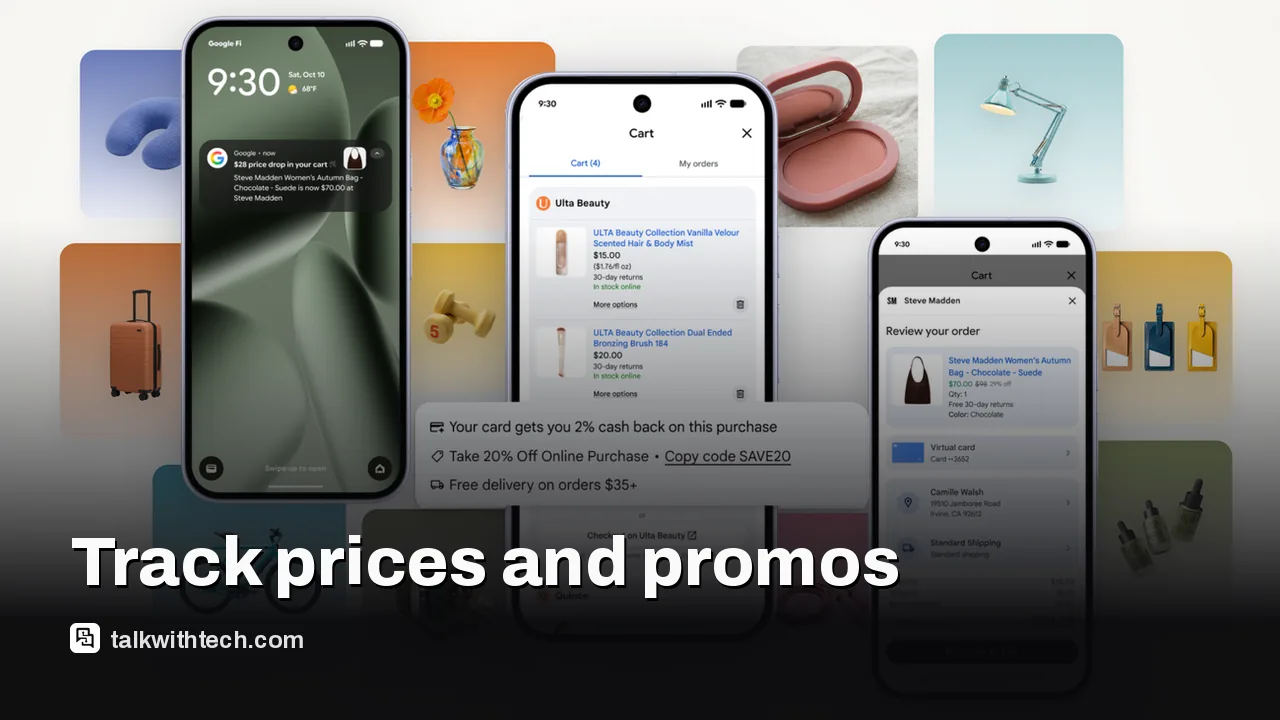
The cart holds products from different retailers, then alerts you when a saved item drops in price or comes back in stock.
It reads Google Wallet to suggest which of your cards earns the best perks and surfaces promo codes before checkout.
Direct checkout reached Canada on Nov. 4, the UK is promised later, and Google has said nothing about the EU.
Quick read · 2 min
Google has started rolling out Universal Cart to US shoppers. It is a single basket inside Google Search's AI Mode and the Gemini app where you can save products from different stores and come back to them later on any device.
The cart quietly watches what you saved and tells you when a price falls or a sold-out item returns. It also uses the cards in your Google Wallet to suggest which one earns the most perks, and it shows promo codes. You can pay with Google Pay inside the cart or hand the items over to the store's own site. Stores like Walmart, Target and Nike take part, and they still handle shipping and returns.
US launch: rolling out since Oct. 15.
Canada: direct checkout with a first group of retailers since Nov. 4.
UK: promised later; nothing announced for the EU.
The trade-off is that your saved and abandoned items now sit with Google rather than with each store.
That pair of headphones you spotted on Monday, the gift you found at a different store on Wednesday and the coat you keep meaning to buy can now sit in one basket. Google Universal Cart, which began rolling out in the US on Oct. 15, saves products from many retailers in one place and then keeps an eye on their prices for you.
Why should you care? Holiday shopping usually means a dozen open tabs, screenshots and forgotten links. Google wants to replace that mess with a single cart that lives inside Search and the Gemini app, pings you when something gets cheaper, and suggests the card that earns you the most. The catch is that all of that shopping behavior now runs through Google, and that matters for your privacy and for the stores you buy from.
01
What Google Universal Cart actually does
Google Universal Cart is a shared shopping basket that works across Google’s own services rather than on one store’s website. When you find a product through AI Mode in Google Search or while chatting with the Gemini app, you can save it to the cart. Close the app, switch devices, come back days later, and the items are still there.
The cart is not limited to one retailer. You could save a coffee maker found through a search, then add sneakers from another store while asking Gemini for gift ideas, and both would wait in the same list. Google first showed the tool at its I/O developer conference in May, when it said the US launch would come in the summer. It arrived in mid-October instead.
Behind it sits Google’s Shopping Graph, a product database that Google says holds more than 60 billion listings that are refreshed all the time. That catalog is what lets the cart know when a price or stock level changes. An earlier version of this article described the catalog as covering thousands of listings, which understated it badly.
02
How the price drop and restock alerts work
Once an item is saved, Universal Cart checks it in the background and sends you a notification if the price falls or if a sold-out product becomes available again. You don’t have to set up a separate alert or revisit the store every morning.
That is handy if you are waiting on a TV or a laptop ahead of Black Friday. Keep one caveat in mind, though. A price drop alert tells you the price went down, not that it hit the lowest price anywhere. Shipping fees, seller terms and slightly different models can still change what you actually pay, so it is worth a quick comparison before you buy.
Google paired the launch with a separate report called the When to Buy Guide. It looks at past promotions, search trends and discount data from US merchants to suggest when certain kinds of products tend to be cheapest. This year’s edition covers things like fragrances, handbags (Google suggests Black Friday may not be the best day for them) and luggage, where it says shopping early tends to pay off.
03
Card perks, promo codes and how checkout works
The cart is built on Google Wallet, so it can see the payment cards you have stored there. When you are ready to pay, it points out the benefits tied to each card, such as rewards at a particular store, and suggests which one to use. It also shows promo codes that apply to the items in your basket.
Checkout comes in two forms, and which one you get depends on the retailer:
Pay inside the cart with Google Pay in a few taps.
Send the items to a pre-filled cart on the retailer’s own site and finish there.
Some stores support both. Either way, the retailer is still the seller of record. That means order confirmations, delivery questions and returns are handled by the store, not by Google. Retailers have to sign up to take part. Walmart, Target, Wayfair, Nike, Ulta Beauty and Sephora are among the first, along with many smaller shops that run on Shopify.
Checkout runs on the Universal Commerce Protocol (UCP), an open standard Google released earlier this year and built with Shopify. In plain terms, it is a shared language that lets AI assistants, store systems and payment companies talk to each other, so a retailer doesn’t need a custom connection for every place a sale might happen.
04
What it means for your wallet and your privacy
For most shoppers, the benefit is simple: less tab juggling and fewer missed sales. If you hold several credit cards and never remember which earns more at which store, the card suggestions could save you a little on each order. Do read the fine print, though, because reward points don’t always equal the biggest saving.
The trade-off is data. Normally, when you leave items in a store’s cart, that information stays with the store. With Universal Cart, the list of things you saved and abandoned sits inside Google’s system. Google says merchants keep their customer data and stay in charge of the sale, but industry analysts point out that Google sees the searches and conversations that came before the purchase. One payments analyst summed it up bluntly: Google sees it all.
There is also a spending question. A cart that follows you across Search and Gemini and nudges you when prices dip is convenient, but it also makes buying easier. If you are on a budget, treat the alerts as information, not as a reason to buy.
Google’s roadmap from May said checkout would reach Canada and Australia within months, with the UK after that. Canada has already moved. Since Nov. 4, Canadians using AI Mode in Search or the Gemini app can buy from some retailers directly through Google, starting with lululemon, Shoppers Drug Mart, Simons and selected Shopify merchants. A survey Google ran with Angus Reid in October found that 59 per cent of Canadian holiday shoppers planned to use an AI tool to help them shop.
Google has not given a date for the UK. The European Union is missing from the plan entirely. Google is in a long fight with EU regulators over how it promotes its own shopping results, and it already keeps several of its AI shopping features out of Europe. A cart that sits inside Google’s results and handles payment for rival stores raises the same questions regulators have been asking for years.
Google also plans to let more stores join from 2027, when it adds a simpler way to switch on direct checkout inside its Merchant Center tools. Loyalty rewards are not supported yet, though Google says it is working on them with retailers. YouTube and Gmail integrations were also promised back in May, without a date.
06
Quick answers
Is Google Universal Cart free?
Yes. There is no charge to save items or get alerts. You only pay for what you buy, and the retailer, not Google, handles your order.
Where can I use Universal Cart?
In the US, it works through AI Mode in Google Search and in the Gemini app, though it is still rolling out, so you may not see it yet. Canada has direct checkout with a first group of stores, and the UK is planned later.
Does Universal Cart find the lowest price?
Not exactly. It alerts you when a saved item gets cheaper or comes back in stock, and it surfaces promo codes and card perks. It is still worth comparing shipping and returns before you check out.
Meta's chat-only spinoff of Instagram is testing in two countries, works without an Instagram account, and brings back an idea the company dropped in 2019.