Sunday, 1 November 2026

Rivian R2 review: mid‑size electric SUV keeps price below $60K

Our look at the 2027 Rivian R2: a roomy, quick midsize SUV that feels like a shrunken R1S, now Rivian's best seller, with cheaper trims still on the way.

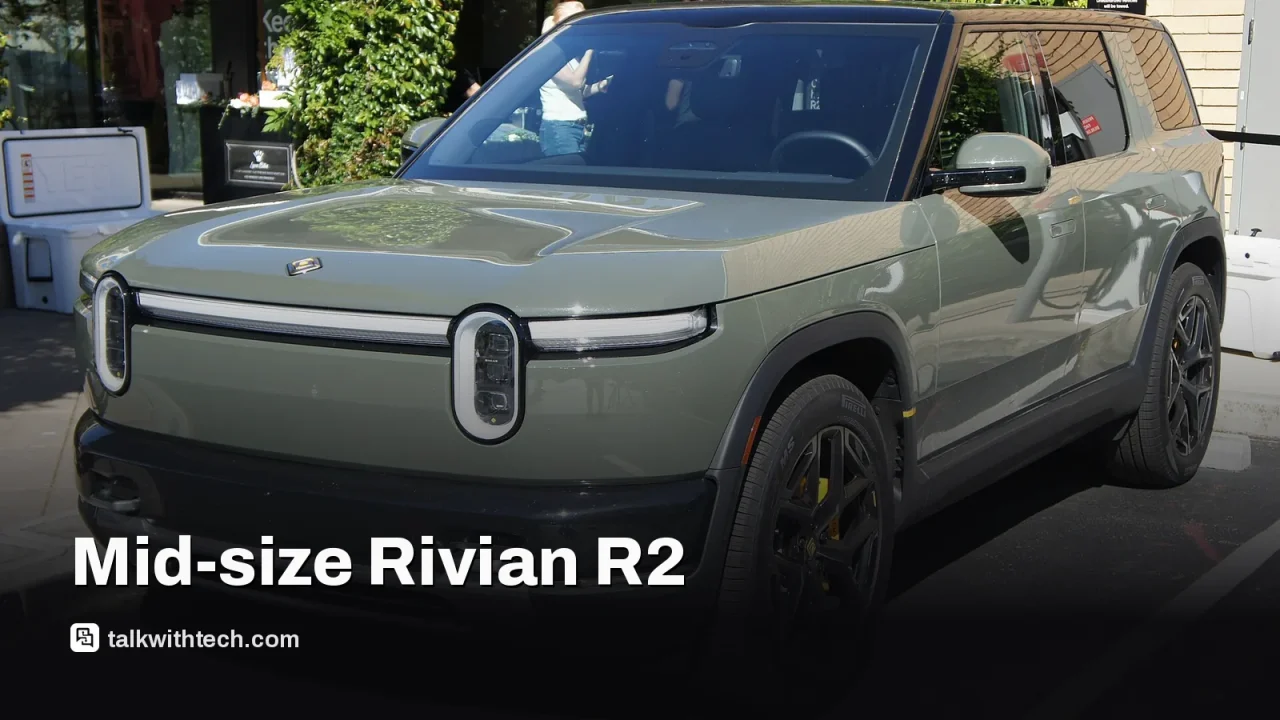
Rivian R2
Photo: Lcaa9 / CC BY-SA 4.0 (modified)

The short version

  • The 2027 Rivian R2 is a midsize electric SUV that packs most of the bigger R1S's design and tech into a smaller, cheaper body.
  • The launch Performance model comes in under $60,000, while the R1S starts above $80,000.
  • Strengths include a roomy cabin, a drainable frunk, strong acceleration and polished software; charging speed and city hands-free driving are weaker.
  • In the third quarter of 2026 the R2 became Rivian's best-selling vehicle by volume, and cheaper Premium and Standard trims follow from late 2026.
Quick read · 1 min

The 2027 Rivian R2 is a midsize electric SUV that feels like a smaller version of the R1S. It keeps the boxy look, the clever storage and the polished software, but costs far less: the launch Performance model is just under $60,000, while the R1S starts above $80,000.

It is roomy for its size, quick off the line and packed with family-friendly touches such as a drainable frunk and a drop-down rear window. The weak spots are charging speed, a firm ride and hands-free driving that is less reliable on city streets.

  • The R2 became Rivian's best-selling vehicle by volume in the third quarter of 2026.
  • Cheaper Premium and Standard trims arrive between late 2026 and late 2027.
  • Rivian will share more on its Point to Point driving feature on December 9.

The Rivian R2 is about the same length as a Ford Mustang Mach-E, yet it feels noticeably roomier inside, and it already outsells every other vehicle Rivian makes. That is the short version of our Rivian R2 review: this midsize electric SUV takes nearly everything people liked about the big, expensive R1S and fits it into a smaller body for under $60,000.

Why it matters: the R1S starts above $80,000 and has three rows of seats, which puts it out of reach and out of scale for many families. The R2 is Rivian’s attempt at a mainstream EV, the kind of car that could tempt people out of a gas-powered SUV. Early sales suggest it is working.

01

Is the Rivian R2 the Goldilocks electric SUV?

For most families, it comes close. The 2027 R2 sits between a city crossover and a full-size SUV. It is big enough for two adults up front, a six-foot passenger in the back and car seats, but small enough to park and drive without stress.

From the outside it looks a lot like an R1S shrunk to about three quarters of the size. That is on purpose. Rivian’s chief design officer, Jeff Hammoud, has said the R1 design actually grew out of an early R2 concept, so both share the boxy body, flush door handles, chunky bumpers and pill-shaped headlights. The one complaint: the R2 lacks a signature look of its own, unlike the slanted rear pillar on the smaller R3, which is not due until 2028.

City skyline at night
02

Practical features families will use

The R2 is full of small, useful ideas. The frunk (the storage space under the hood) holds 5.2 cubic feet and has a drain, so you can fill it with ice for a tailgate or toss in muddy gear. The rear hatch has a window that drops down for long items, and one button lowers all four side windows plus the rear glass at once.

Matrix LED headlights reshape their beams around oncoming cars automatically. There are built-in tow hooks, mounts for a roof rack and, in the cargo area, both a 12V socket and a 120V outlet. The car can also send power back out to devices or a home (known as V2L and V2H), though Rivian had not yet released the adapter needed for that when we tested it.

Not everything is perfect. Removing the rear headrests needs a small pin tool, which gets annoying when you are fitting child seats. And only the driver’s side gets a wireless phone charger, although there are plenty of USB-C ports, including on the backs of the front headrests.

Play video: Rivian R2 rear headrest removal
03

Inside: big screens, warm materials, clever controls

The cabin mixes clean, minimal design with warm touches. The dash uses upcycled birch in a charcoal or light gray finish. A 15.6-inch center touchscreen and an 11.5-inch display behind the wheel handle most tasks, but there are still physical stalks for the gear selector, turn signals and wipers. Two glove boxes open with a simple press.

The standout is what Rivian calls Haptic Halo Wheels: two scroll wheels built into the steering wheel. Roll them up or down to change volume or adjust speed in assisted driving, or push them sideways to skip tracks. They feel natural within minutes.

Rear-seat room is generous, the panoramic glass roof brightens the cabin, and the back seats split and fold. The cargo area is roomy even with all seats up, with extra storage under the floor.

Stock market screen
04

Driving, range and charging

The dual-motor Performance model is quick. It accelerates harder than a dual-motor R1S while weighing well over a thousand pounds less, so merging and passing take almost no effort. The ride is on the firm side, even in the softer setting, but it handles gravel and cobblestones calmly.

Rivian rates the Premium and Performance versions at roughly three hundred and thirty miles per charge, and in mixed driving that figure looked realistic as long as you resist using all that power. Charging is the weak spot. The R2 uses the NACS plug, with a CCS adapter available, but its peak charging speed in testing fell well short of Rivian’s claim. A typical fast-charging stop still takes under half an hour, just a little slower than rivals such as the Hyundai Ioniq 5.

Hands-free highway driving, part of the paid Autonomy+ package, was smooth and confident, and it even lets you make small steering corrections without switching off. On city streets it is less reliable and often drops out when lane lines are faint.

05

What it means for buyers and what it costs

The model we drove, the R2 Performance with Launch Package, is priced just under $60,000. That is tens of thousands less than an R1S with most of the same features. Cheaper versions are coming: Rivian’s latest lineup lists the Premium trim at $55,485 for late 2026, a Standard Long-Range at $49,985 in early 2027 and a Standard model at $46,495 in late 2027. Earlier reports gave slightly different prices and dates, so check Rivian’s configurator before you order.

Software is a strength. The built-in system does not support Apple CarPlay or Android Auto, but it is well designed, uses Google for maps and includes a dash-cam style recorder called Gear Guard. Music streaming and in-car Wi-Fi need a paid Connect+ subscription. The Rivian Assistant voice feature, missing at launch, has since rolled out to the R2, and the October software update added Gmail support to it along with a Halloween light-and-sound mode.

06

Sales so far: Rivian’s new best seller

In the third quarter of 2026, the R2 became Rivian’s best-selling vehicle by volume, ahead of the R1T pickup, the R1S and its electric delivery vans. Rivian delivered 19,248 vehicles in the quarter and built 19,751, and revenue reached $2.155 billion. CEO RJ Scaringe said feedback on the R2 from customers and the media had been exceptional.

Thanks to that demand, Rivian raised its full-year delivery target to between 67,000 and 70,000 vehicles. Next up is a supervised driver-assist feature called Point to Point, meant to handle full trips from driveway to destination, with early tests before year’s end and more details at an autonomy event on December 9.

07

Quick answers

How much does the Rivian R2 cost?

The launch Performance model is just under $60,000. Rivian lists cheaper trims from $46,495 to $55,485 arriving between late 2026 and late 2027.

Is the Rivian R2 bigger than a Mustang Mach-E?

It is about the same length, roughly 185 inches, but it feels roomier inside.

Can you buy a Rivian R2 now?

Yes. The Performance Launch model is on sale and is already Rivian’s top seller; other trims follow later.

You're reading the quick version.