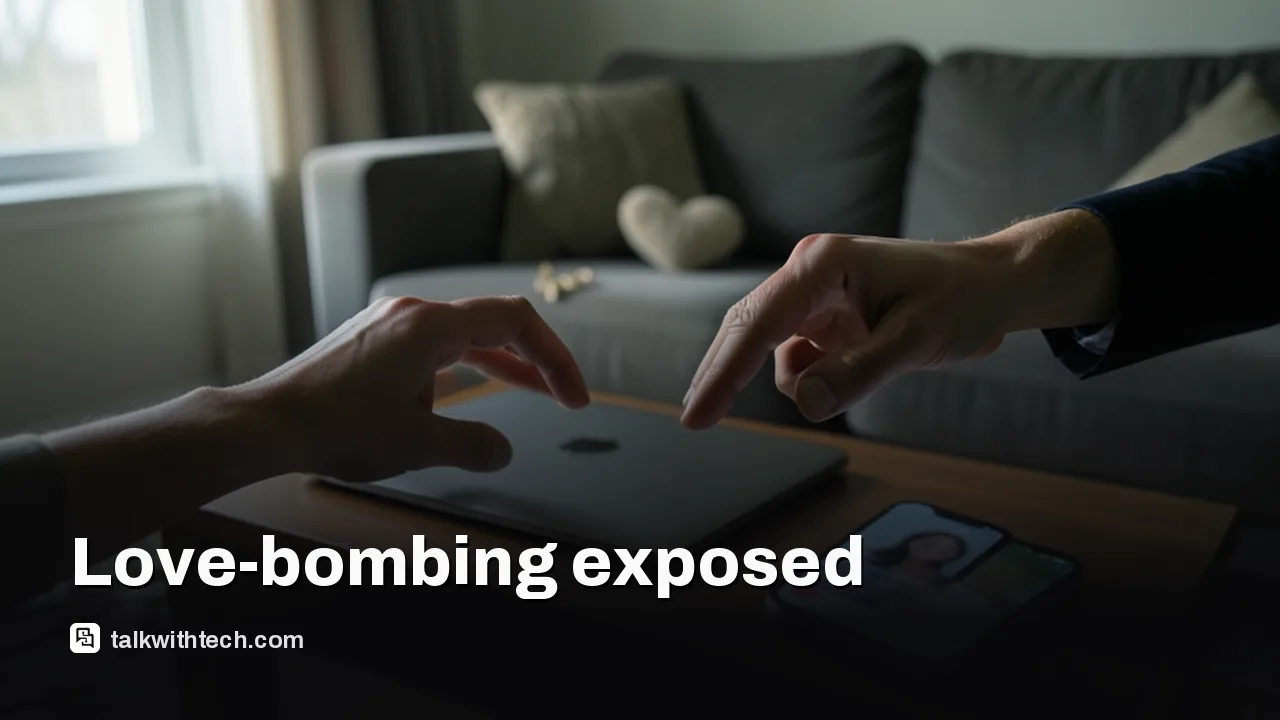
In National Geographic’s Super Scam Me, journalist Mariana van Zeller posed as a lonely divorcée to draw in romance scammers.
She was contacted within minutes, including by fake celebrities, and tracked one scammer posing as a four-star general to Ghana.
The FTC says Americans reported losing $1.48 billion to romance scams in 2025, up 22% on the year before.
A new federal law will make dating apps warn users who were messaged by accounts later banned for fraud, starting October 2027.
Quick read · 1 min
National Geographic’s Super Scam Me follows journalist Mariana van Zeller as she poses as a lonely, divorced antiques dealer to attract romance scammers. Fake suitors arrived within minutes, including celebrity impersonators. She tracked one scammer, posing as a four-star general with stolen photos, all the way to Ghana with help from an ethical hacker.
The stakes are real. Americans reported $1.48 billion in romance scam losses to the FTC in 2025, up 22%, and most of those scams started on social media rather than dating apps.
Watch for strangers who move fast, then hit sudden money emergencies.
Be wary of anyone who wants to leave the app or offers to recover lost money.
A new law will make dating apps warn users about banned fraud accounts from October 2027.
The special streams on Disney+ and Hulu.
Within minutes of posting a fake dating profile, Mariana van Zeller had scammers in her inbox. Among them, she says, were three George Clooneys, two Keanu Reeves and several Brad Pitts. That experiment sits at the heart of Super Scam Me, a romance scam documentary from National Geographic that follows the money and the manipulation behind one of the costliest frauds in America.
Why it matters: the Federal Trade Commission says Americans reported losing $1.48 billion to romance scams in 2025, a 22% jump on the year before, and most victims never see the money again. These scams don’t target the foolish. They target people who want connection, and they now use the same AI tools and social apps the rest of us use every day.
01
What the romance scam documentary shows
Super Scam Me is a one-hour special that premiered on National Geographic on October 17 and streams on Disney+ and Hulu. Van Zeller, the Emmy-winning host of Trafficked, spent years reporting on scams and kept hearing the same reaction: how could anyone fall for that? So she made herself the target.
With a wig, large glasses and a prosthetic nose, she became “Mary Zelle,” a middle-aged antiques dealer living a cheerful single life. The disguise was there for a practical reason. If a scammer ran a reverse image search on her photos, he would not find a journalist.
The bait worked fast. One scammer, posing as a handsome overseas four-star general called “Mark Turner,” became more and more persistent. His photos were lifted from a real military general’s Instagram account. Van Zeller worked with an ethical hacker known as Arman the Cyber, who kept the scammer talking and helped trace him. The trail led to Ghana, where she handed out flyers in his neighborhood showing a doctored “couple” photo he had made of the two of them, and went to confront him face to face.
The film also follows a woman who believed she was in a relationship with Jon Bon Jovi after commenting on his official Instagram posts. Using a fake bitcoin receipt, van Zeller and Arman baited the impostor, giving the victim some answers about who had been on the other end.
02
How romance scammers build trust before they ask for money
The pattern the film lays out is slow and patient. Scammers flatter, listen and make their target feel seen. A victim featured in the special said her scammer talked to her for months before asking for a single dollar. Calls, photos and video chats all help the lie feel real, and generative AI now makes celebrity impersonation easier to pull off.
Then come the crises. In a case described to Congress, a scammer on Tinder invented a string of emergencies, from job trouble on an oil rig to an arrest abroad and a family illness, each one a reason to ask for money. When that scheme fell apart, a second group stepped in claiming it could recover the lost funds, and took even more through a cryptocurrency setup.
Research cited alongside the film suggests romance scam victims tend to be well educated. What they share is loneliness, often after divorce or the death of a partner, and shame that keeps them from telling anyone.
03
What this means for you and your family
Romance scams are now one of the leading types of financial fraud in the US, and they rarely start where you’d expect. In 2025, nearly 60% of people who told the FTC they lost money this way said the con started on social media, not a dating app. Among victims who said how they paid, bank transfers caused the biggest losses at $195 million, ahead of cryptocurrency at $159 million.
Getting money back is hard. Under US rules, a bank generally doesn’t have to refund a payment that the customer authorized, even if a scammer talked them into it. The UK has gone further: since October 2024, sending and receiving banks there split the cost of paying back many scam victims.
Practical red flags, drawn from the film and the congressional findings:
A stranger, especially a “celebrity” or a soldier posted overseas, who messages you first and moves quickly to deep affection.
Photos that look too polished. A reverse image search can show if they belong to someone else.
A push to leave the dating app for another messaging service.
Sudden emergencies that need money sent by crypto or bank transfer.
Anyone offering to recover money you already lost, for a fee.
If an older relative has gone quiet about a new online partner, a calm, non-judgmental conversation helps more than ridicule. Van Zeller’s point is that shame keeps victims silent while the losses grow.
04
A new law puts some duty on dating apps
In late October, President Trump signed the Romance Scam Prevention Act. Under it, a dating service that bans an account for fraud must alert everyone that account messaged. The notice must identify the banned profile, tell users not to send money or financial details, and include fraud advice. It generally has to go out within 24 hours of the ban. The law takes effect in October 2027 and is enforced by the FTC and state attorneys general.
In practice it changes less than it sounds. New York, Utah, Arizona and Vermont already require similar warnings, so most dating services send them nationwide. The federal version reaches further, covering anyone who received a message, not just people who replied. It does not cover social media, where most romance scams begin, and it requires a warning, not a refund.
A congressional investigation led by Sens. Maggie Hassan and Marsha Blackburn found that Tinder’s scam detection had lagged for years. In the first nine months of 2025, nearly 1.5 million fake or abusive accounts on Hinge and Tinder got a match with a real user, and nearly 500,000 of them went on to swap contact details. Match Group has since added a mandatory face check for new Tinder and Hinge users and introduced 169 new automated rules to catch fake accounts.
The one-hour special aired on National Geographic and is streaming on Disney+ and Hulu.
How much do romance scams cost Americans?
Americans reported $1.48 billion in romance scam losses to the FTC in 2025, up 22% from the year before.
Will dating apps warn me about scammers?
Most already do because several states require it. From October 2027, federal law will require dating services to warn anyone messaged by an account banned for fraud.
A Brooklyn jury found Huawei guilty of bank fraud, sanctions breaches and plotting to take US trade secrets, but cleared it of racketeering. Here is what happens next.
Brussels wants its quantum labs to become quantum companies. The plan favors EU-controlled suppliers, tackles code-breaking risk and still faces years of debate.