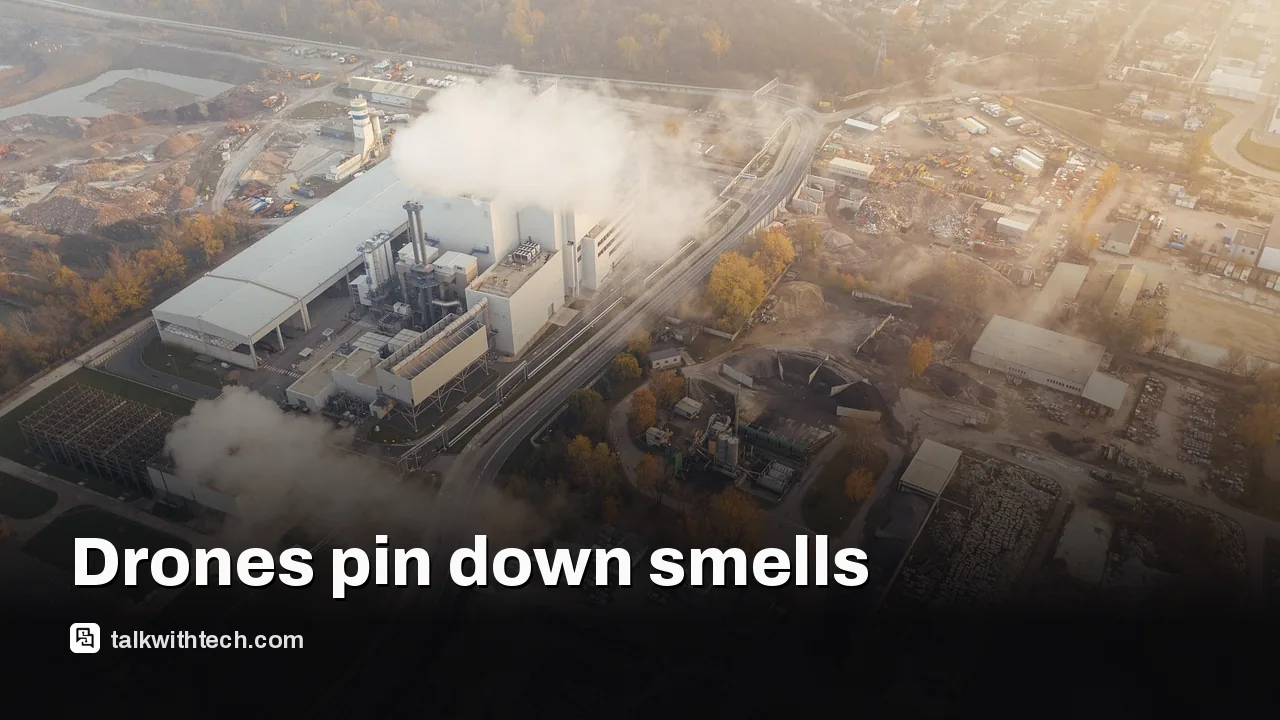
Silicon Valley’s stink gets tech help with real-time odour monitoring
Milpitas residents push for drones, sensors and automated gas capture to tame decades-long landfill smells.
Talk With Tech Newsroom
The short version
A California city near Silicon Valley is using technology to tackle long-standing landfill odours.
Drones, air monitors and automated gas collection are part of a data-driven effort to pinpoint odour sources.
The approach aims to reduce complaints and improve air quality, with local governments driving the rollout.
Readers can expect more communities to consider similar tech to manage smells and air quality.
Quick read · 1 min
A California city near Silicon Valley is trying to end decades of landfill smells with a tech-powered approach. Milpitas is deploying drones, real-time air monitors, and automating gas capture to map where odours originate and how to stop them at the source.
Why it matters to you: if your neighborhood ever complains about a stink, this kind of monitoring could turn those complaints into precise actions and faster fixes. It also shows how local governments use data to protect air quality where federal rules don’t step in.
What happens next: expect more continuous monitoring and more cities adopting the same approach. Whether this becomes a nationwide standard will depend on funding and how effectively the data translates into cleaner air.
Silicon Valley has a new kind of air quality problem: a stink that has lingered for decades around a large landfill south of San Jose. In Milpitas, residents and officials are turning to technology to finally pin down where the odours come from and how to cut them off at the source.
The plan combines drones, continuous air monitoring, and automated collection of landfill gases. Local officials ordered the landfill operators to set up a ring of odour monitors and to automate gas capture. The goal is to create a real-time picture of which facilities are driving the smells, when it happens, and how winds move the odour plume across neighborhoods.
Odour monitoring isn’t new, but it’s become more precise and scalable. A Spanish manufacturer is providing electronic noses and weather-influenced data that help translate a whiff into numbers you can act on. In Des Moines, Iowa, cities have already spent money on similar tech to track smells around facilities and shut down false accusations about which site is to blame.
Analysts say the approach can reduce the old, reactive game of “sniff and blame,” replacing it with evidence you can act on. A local consultant frames the advantage this way: if you can quantify the odour event, you can compare it against wind direction, proximity to homes, and the facility’s operations to pinpoint likely sources.
Des Moines’ experience isn’t a one-off. Milpitas and other communities are learning that regulating smells is tricky, often because odours aren’t classified as pollutants by U.S. policy at the federal level. That leaves local and state governments to decide what standards to apply and what tools to fund, making technology a practical bridge between complaints and real solutions.
Even with the tech in place, experts acknowledge odours are subjective. To a human nose, one person’s nuisance may be negligible to another. That’s why a mix of measurements, weather data, and human hearing remains part of the process. Still, the promise is clear: better data leads to faster fixes and fewer angry neighbors.
As Milpitas pushes forward, the cost of the system is a talking point. Local officials have emphasized the need to protect air quality in a dense, high-value area where land is expensive and residents are sensitive to everyday nuisances. If the pilot succeeds, other U.S. cities could follow, expanding the tech’s reach beyond the Bay Area.
What’s next is straightforward: more continuous monitoring, more data to act on, and, potentially, a blueprint for how cities handle odours in the future without relying solely on human sniff tests.
JPMorgan Chase says third‑party AI assistants can’t access customer accounts or move money, signaling a big hurdle for AI helpers that promise to manage everyday banking tasks.
From 6 November, possession or publication of porn showing strangulation, incest, or adults role-playing as under 16 will be illegal in England and Wales.
4 min read
We use cookies to understand how readers use Talk With Tech, so we can make it better. Is that OK? Privacy policy
The Daily Brief
Today's biggest tech stories, in 5 minutes
Every morning, the news that matters from AI, phones, apps and the people shaping tech. Explained in plain English. Free.
One email a day. No spam, unsubscribe anytime. Privacy policy