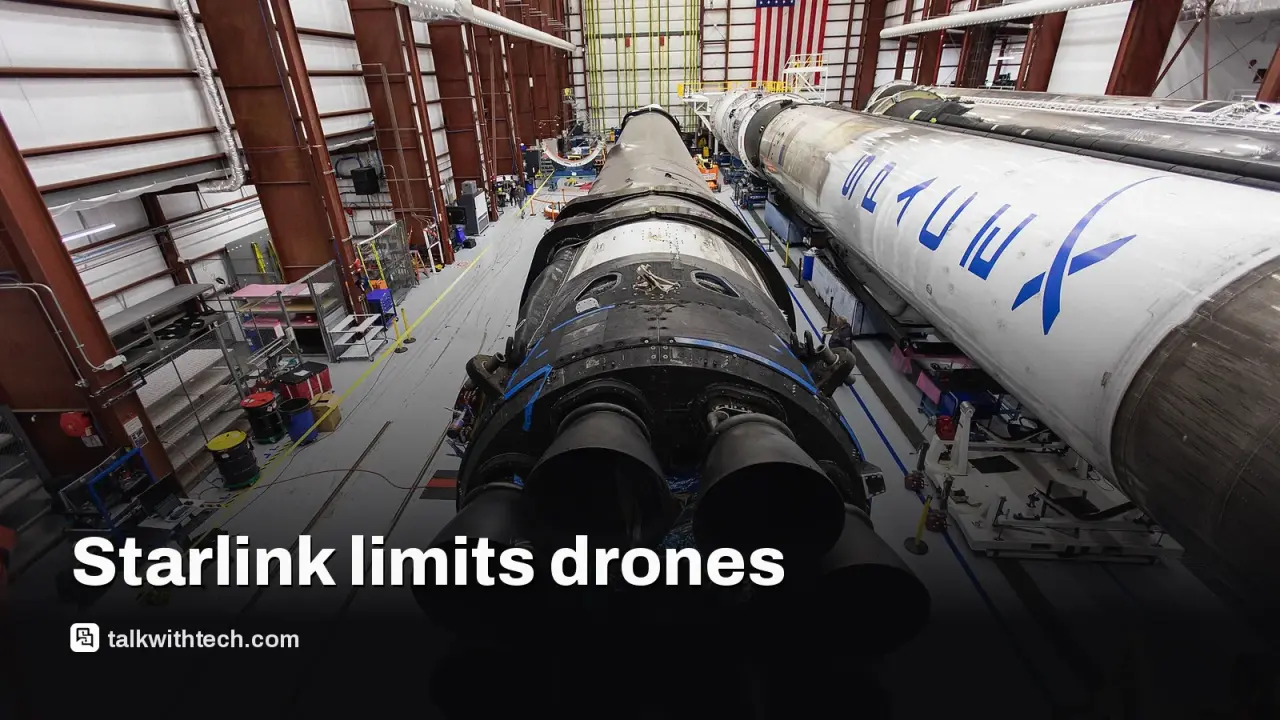
Starlink drone restrictions disrupt Ukrainian drone missions now
Ukrainian officials allege Elon Musk’s Starlink has begun limiting connections for drones traveling above a certain speed, disrupting military operations without warning.
Ukrainian defense tech adviser Serhii Beskrestnov says Starlink imposed a restriction that blocks connections to devices moving faster than 100 mph, disrupting drone missions.
The Verge report attributes the claim to Ukrainian officials and cites Reuters and the Financial Times for context; SpaceX did not comment.
The move comes amid ongoing tensions and political rhetoric surrounding Ukraine, Russia, and Western support, but concrete details from Starlink or SpaceX remain unconfirmed by the company.
Readers should look for official statements from Starlink or SpaceX, as well as further reporting on how widespread any service limits are and what it could mean for emergency and civilian uses of satellite internet.
Quick read · 1 min
Ukraine says Starlink has begun restricting drone connections for devices moving faster than 100 mph, disrupting missions. The claim, echoed by Ukrainian officials and reported by Reuters and the Financial Times, relies on a Telegram post from a defense tech adviser. SpaceX has not commented publicly.
Why this matters to everyday readers: satellite internet underpins power outages, rural online access, and emergency comms. If true, service changes could ripple beyond the battlefield and affect civilians who depend on Starlink.
What to watch next: an official Starlink statement, clarifications on scope and duration, and follow-up reporting to confirm whether this is a limited policy or a broader shift.
Ukraine’s military says Starlink is quietly tightening its rules, cutting off or degrading service for drone operations in ways that haven’t been publicly announced. A Ukrainian defense tech adviser described a new limit that prevents Starlink from connecting to devices traveling at more than 100 mph, and he said this has disrupted several drone missions. The claim adds fuel to a broader debate about how satellite internet services should operate in conflict zones.
Starlink, SpaceX’s satellite internet service, has become a backbone for Ukraine’s military and civilian communications during the war. If true, the reported restriction could change how Ukrainian forces conduct drone surveillance and strikes, potentially forcing more reliance on alternative links or ground-based networks. SpaceX has not provided a public statement in response to The Verge’s inquiries, and Reuters and the Financial Times also cited Ukrainian officials in their coverage of the claim.
The situation appears to be evolving quickly and with political undercurrents. Elon Musk publicly criticized Ukrainian leadership on X recently, and the broader dispute over who should control or limit such services in wartime remains unsettled. In this environment, both Ukraine and Starlink’s stance could shift as new information comes to light.
What matters for readers isn’t just the geopolitics. Satellite internet is a critical piece of how many people get online, especially in rural areas or during outages. If service limits are real and broad, users could see slower performance, intermittent connections, or a need to switch to backup options when a fast-moving operation or a failure in terrestrial networks occurs.
For now, the official word from Starlink or SpaceX isn’t available, and credible details about the scope or duration of any restriction remain unconfirmed. As with any wartime tech claim, it’s wise to treat it as developing news rather than a settled fact until a direct comment from the company or a thorough investigation clarifies the situation.
A Ukrainian defense tech adviser asserted on Telegram that Starlink implemented a new limit preventing connections to devices moving over 100 mph, which reportedly disrupted several drone missions. He framed the change as non-coincidental and tied to political tensions at the moment.
02
What Starlink might be doing
The reports describe a network policy change that could affect how fast-moving equipment connects to Starlink terminals. SpaceX has not confirmed the change, and they have not explained any public rationale or technical details if a policy is changing.
03
Why this matters to everyday readers
Most people rely on Starlink for home internet or travel connectivity. A policy like this, if it existed broadly, could have knock-on effects for emergency responders, remote workers, and rural communities that depend on satellite internet when other networks fail. It also raises questions about who gets to set the rules for satellite-based services used in critical situations.
04
What happens next
The next steps are straightforward: we need an official explanation from Starlink or SpaceX, plus independent verification of whether any limits exist, where they apply, and how long they’ll stay in place. Look for statements from the company and for additional reporting from wires services and regional regulators that could shed light on policy intent and scope.
According to Ukrainian officials, there is a claim of a new limit affecting fast-moving devices, but Starlink has not publicly confirmed it yet, so details remain unverified.
What should I do if this affects me?
If you’re relying on Starlink for critical connectivity, seek an official statement and consider backup options for essential services in emergencies.
OpenAI’s CFO says firms using low-cost Chinese AI models may face bigger cyber threats, citing breaches in Australian government agencies and a Chinese open model review.