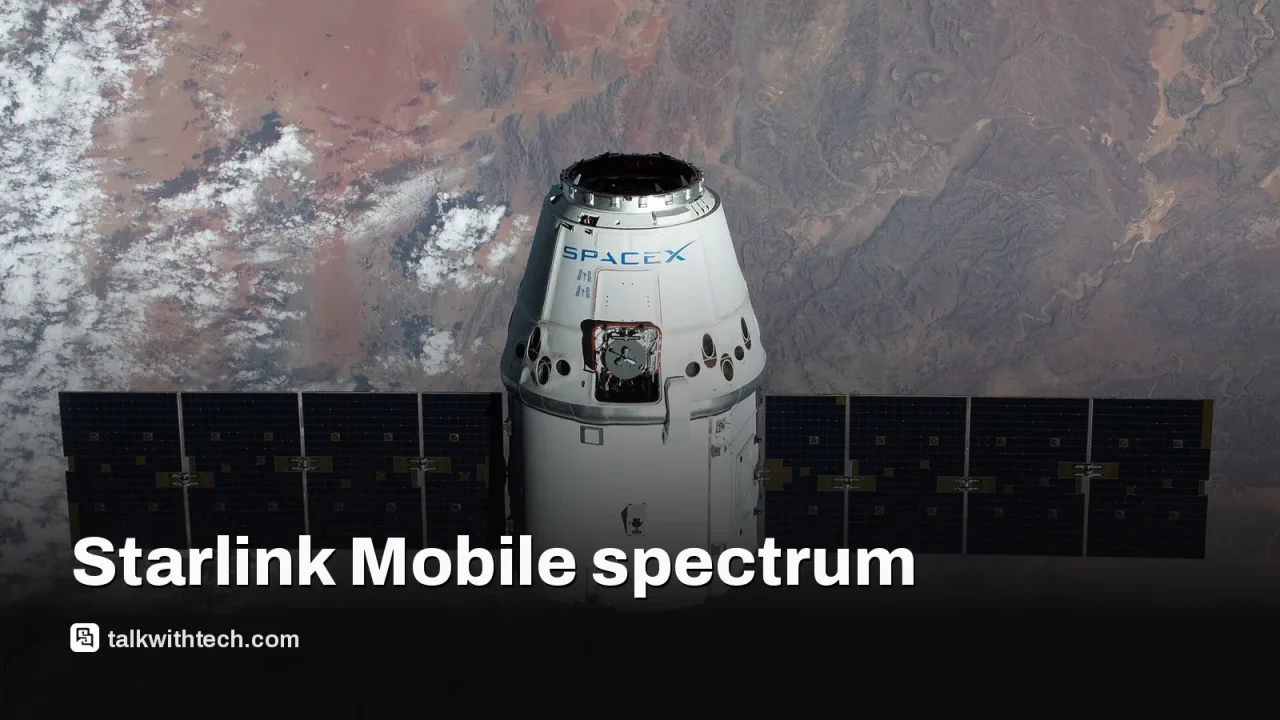
SpaceX plans to acquire nationwide 800 MHz low-band spectrum to support Starlink Mobile’s satellite-to-cell service.
The deal, worth around $8 billion, still requires regulatory approval and is not yet guaranteed.
Low-band spectrum helps signals penetrate walls and obstacles, potentially reducing indoor dead zones for satellite phone service.
Quick read · 1 min
SpaceX plans to buy nationwide 800 MHz low‑band spectrum to support Starlink Mobile, aiming to expand satellite‑to‑cell coverage across the U.S. The acquisition, worth about $8 billion, still needs FCC approval.
Low‑band spectrum can improve indoor service and reach in rural areas. SpaceX also received the green light to launch up to 15,000 more satellites, which could boost overall bandwidth.
What this means for you: a potential new option for phone service that could work better indoors and in areas with weak traditional coverage. The timeline depends on regulatory approval and hardware availability. Next year is when deployment would start in earnest, if approved.
SpaceX is pursuing a major step toward turning Starlink into a real‑world mobile network. The company said it has agreed to acquire Grain Management’s nationwide 800 MHz low‑band spectrum, a move it says is crucial for its Starlink Mobile plan to deliver satellite‑to‑cell coverage across the United States. If approved, the pairing would give Starlink up to 14 megahertz of paired low‑band airwaves, enabling two‑way data transmissions between satellites and ordinary mobile devices. SpaceX characterizes this as the final piece of the spectrum puzzle needed for broad, nationwide phone coverage in America.
The deal carries a steep price tag. SpaceX has agreed to buy Grain Management’s low‑band spectrum portfolio for about $8 billion, according to the company. The purchase still needs clearance from the Federal Communications Commission before it can move forward, and there’s no announced timeline for a decision.
What makes low‑band spectrum special is its reach. Low‑frequency airwaves travel farther and through more obstacles than higher‑band signals. That means better signals inside buildings and across rural areas where satellite signals can otherwise struggle to reach ground devices. In practice, Starlink Mobile would blend these low‑band airwaves with SpaceX’s broad satellite fleet to push data and calls directly to phones, bypassing some gaps where traditional cell towers struggle.
Separately, the FCC approved SpaceX to launch a much larger constellation of satellites, about 15,000 in total. SpaceX says these satellites will provide higher bandwidth and faster connections, transmitted directly to devices on the ground. The combination of more satellites and low‑band spectrum could, in theory, deliver a form of direct‑to‑device service that competes with current nationwide carriers.
Analysts remain cautious. One observer noted that spectrum alone isn’t enough to build a nationwide network; SpaceX would also need ground infrastructure and towers to ensure indoor service in urban areas. Still, supporters argue that a successful rollout could give consumers an alternative to the big three wireless carriers and change how satellite internet is used on a daily basis.
We announced an agreement to acquire a nationwide low-band spectrum license portfolio that will pave the way for @Starlink to become a major mobile carrier in the US.
With this new spectrum and our Gen2 constellation, Starlink Mobile can ensure Americans have access to… pic.twitter.com/uVktZ0g3tu
If SpaceX clears regulatory hurdles, Starlink Mobile could offer a new option for people who live in places with weak cell coverage or who want a backup line for emergencies. The low‑band spectrum is the piece that helps signals travel farther and pierce through walls, which could translate into fewer dead zones at home or in the office.
For now, there’s no fixed timeline for when Starlink Mobile would reach consumers. SpaceX says deployment would accelerate next year once the deal is approved and the necessary infrastructure is place. Until then, it’s still a wait‑and‑see story for U.S. wireless users who want an alternative to traditional carriers.
02
How Starlink Mobile fits with today’s carriers
SpaceX’s move comes as traditional carriers rely on thousands of cell towers to deliver broad coverage. Even with satellites, coverage gaps persist in dense cities and inside buildings. If Starlink Mobile can combine a sizable satellite fleet with low‑band spectrum, it could shorten some of those gaps, at least for basic calls, texts, and data transmissions. But competing with established towers requires not just spectrum and satellites, but a dependable ground network and regulatory approvals across the country.
03
Regulatory and industry caveats
The FCC will need to sign off on the spectrum purchase, and SpaceX will have to demonstrate that the new system will work safely and effectively with consumer devices. Industry observers caution that even with spectrum and satellites, success depends on how quickly SpaceX can roll out compatible phones and the necessary ground infrastructure. Everyone will be watching closely for a concrete timetable and any pricing details tied to Starlink Mobile.
04
What happens next
Expect continued updates on regulatory decisions and any official timelines from SpaceX as it negotiates FCC approval. If the deal goes through, the company would begin expanding its backend and device support to enable Starlink Mobile services in more places around the country.