NASA released a final request for proposals inviting industry to plan and build next-generation commercial space stations in low Earth orbit.
The agency wants two or more contractors to develop, certify, and operate destinations and transportation services for human spaceflight, with bids due Dec. 8, 2026.
Bidders likely include Axiom Space, Voyager Space, and Vast Space, with SpaceX not expected to bid in this round.
This move aims to sustain a US-led presence in orbit after the International Space Station retires, freeing NASA to focus on Moon and Mars missions.
Quick read · 2 min
NASA is asking U.S. companies to design and operate the next generation of private space stations in low Earth orbit, with the goal of replacing the ISS after it retires. The agency issued a final request for proposals, and bids are due on Dec. 8, 2026. NASA plans to award contracts to two or more developers, with final decisions in spring 2027. This move aims to keep a strong American presence in orbit and free NASA to focus on Moon and Mars missions. If successful, private stations could host researchers, provide life-support systems, and offer transportation services to astronauts in LEO.
What this means for you: more private players in orbit could mean more opportunities for science, new satellite and data services, and potential future human spaceflight experiences. The race could redefine who builds, runs, and pays for space habitats in the years ahead.
Two or more contractors will be funded to design and certify private stations.
Proposals due December 8, 2026; awards expected spring 2027.
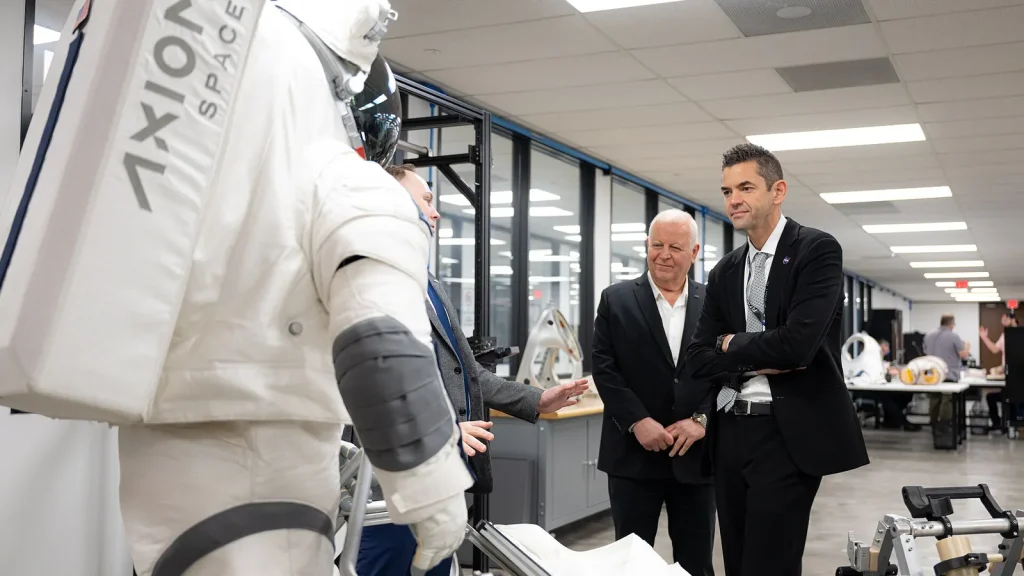
Possible bidders include Axiom Space, Voyager Space, and Vast Space.
NASA is asking U.S. industry to design, build, and run the next generation of private space stations in low Earth orbit. In a Friday release, the agency issued its final Request for Proposals (RFP) for Commercial Low Earth Orbit Destinations, signaling a major step toward replacing the International Space Station (ISS) with privately operated habitats by the end of the decade.
NASA says it wants two or more contractors to develop and certify commercial space stations and provide end-to-end services, including crew transportation, for NASA astronauts and other customers. Proposals are due December 8, 2026, with awards expected in spring 2027. The effort is part of a shift to maintain a strong American presence in LEO while redirecting NASA resources toward exploration missions to the Moon and Mars.
“We will continue to need a place to conduct research, develop technologies, train crews, and prepare for missions to the Moon and Mars,” NASA Administrator Jared Isaacman said. “Commercial space stations may provide that capability while creating new opportunities for American industry and allowing NASA to concentrate more of our resources on the near-impossible missions ahead.”
NASA plans a multi-phase process: Phase 1 will fund design, development plans, and certification work; Phase 2 will focus on development and certification of the stations themselves; Phase 3 will involve purchasing at least four crewed missions to these destinations. In this first round, the agency hopes to fund two or more contractors that can demonstrate credible plans and strong technical execution.
Several established players have already teased interest in commercial LEO habitats, including Axiom Space, Voyager Space, and Vast Space. Blue Origin and SpaceX are mentioned in industry chatter, but SpaceX’s participation is not expected in this round, and Blue Origin’s commitment remains a question. NASA says it will choose multiple awardees through an indefinite-delivery/indefinite-quantity contract approach, with firm-fixed-price tasks as work progresses.
For now, the bidding is about laying the groundwork for a new orbit economy where private companies operate habitats, supply chains, and potentially end-to-end services for researchers, governments, and commercial customers. The government’s goal is to keep a strong American presence in LEO well after the current station retires, while enabling NASA to focus more on ambitious missions beyond Earth orbit.
01
Which companies could win and why it matters
Industry officials have long discussed private space stations as a path to lower, steadier costs and more commercial customers in orbit. The finalists will need credible technical plans, solid funding, and track records in space hardware, life-support systems, safety certification, and orbital operations. Axiom Space, Voyager Space, and Vast Space are frequently cited as leaders in this space, and their bids will be watched closely as a potential signal of how the private space economy could scale in the years ahead.
The RFP outlines stations that can host astronauts, run life-support and other critical systems, and provide transportation to and from Earth. The awards will be multi-year and could include a mix of development contracts and service agreements that help NASA sustain its research and technology work in orbit while lowering the agency’s direct costs over time.
03
What this means for everyday readers
Beyond a space-industry story, this plan could affect science in orbit, commercial satellite services, and even how future space science is conducted. If a handful of companies successfully operate private habitats, research teams in the US and around the world may gain more frequent, flexible access to orbital labs. It could also foreshadow how people travel to and from space for work or tourism in the next decade.
04
What happens next
Proposals are due December 8, 2026. NASA plans to select two or more contractors in a later phase, with final decisions expected in spring 2027. That timeline means prospective bidders still have time to refine designs, safety cases, and business models that justify private investment in orbital habitats.
Private companies to design, build, and operate commercial space stations in low Earth orbit, plus end-to-end services including crew transport for NASA astronauts.
Spanish researchers uncovered 597 wooden Neanderthal tools preserved as hollow molds in mineral crusts, revealing everyday woodworking over 20,000 years.