Saturday, 14 November 2026

Starship flight 15 catch set for 4:17 p.m. ET: what to watch

The booster missed its tower landing and crashed into the Gulf. Now the upper stage gets the first attempt ever to catch a spacecraft coming back from orbit.

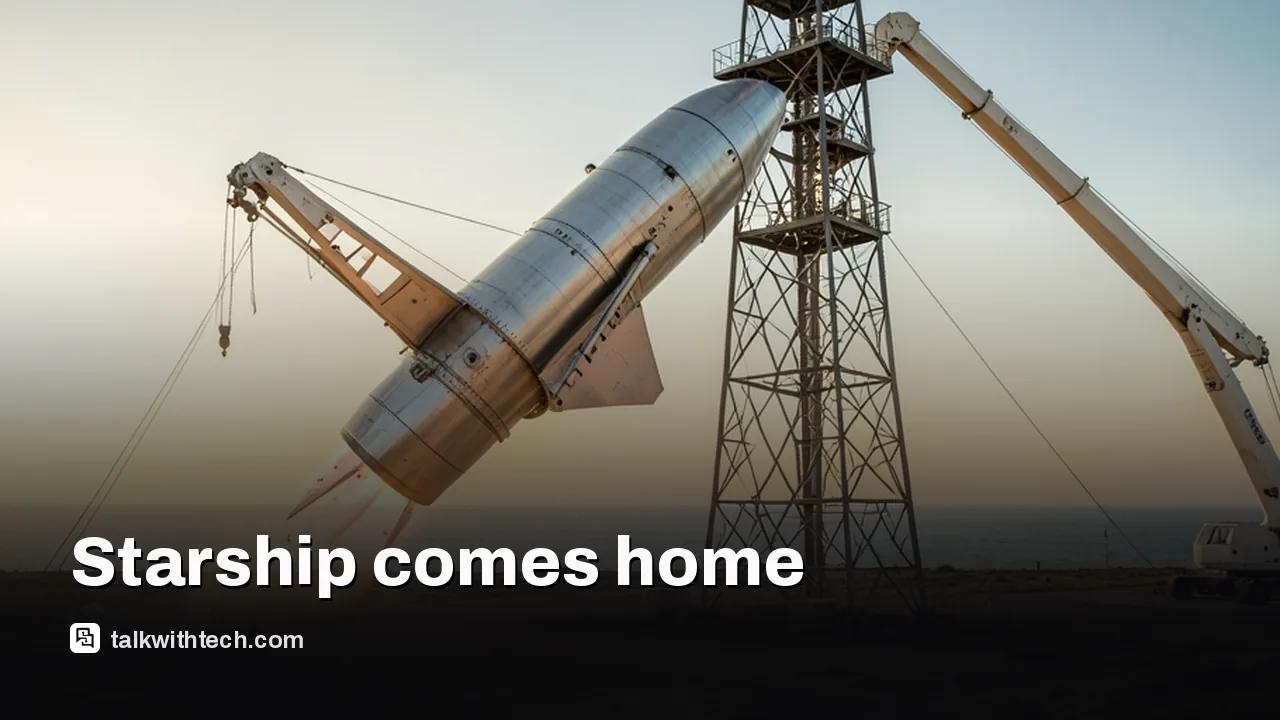
Rocket upper stage descending toward a launch tower with open mechanical arms

The short version

  • SpaceX launched Starship Flight 15 from Starbase, Texas, at 5:47 p.m. ET on Friday, November 13.
  • The Super Heavy booster skipped its planned tower catch and was steered into the Gulf of Mexico instead.
  • The Ship upper stage reached orbit for the second time ever and released 26 Starlink V3 satellites.
  • SpaceX plans to try catching the Ship at the launch tower around 4:17 p.m. ET Saturday, a first for any rocket.
Quick read · 1 min

SpaceX's Starship Flight 15 lifted off from Starbase, Texas, at 5:47 p.m. ET Friday. The Ship upper stage made it to orbit for only the second time and released 26 Starlink V3 satellites, but the Super Heavy booster aborted its tower catch and was sent crashing into the Gulf of Mexico. SpaceX hasn't fully explained why.

The headline moment is still ahead. Around 4:17 p.m. ET Saturday, SpaceX plans to bring Ship 42 back from orbit and catch it with the launch tower's arms, which has never been tried with an upper stage. Camera-equipped satellites photographed the heat shield, and SpaceX says it looks ready for reentry.

  • Three checkpoints let SpaceX switch to an ocean landing instead.
  • A catch would be a big step toward cheap, reusable launches.
  • NASA's Artemis Moon plans lean on Starship working reliably.

The Starship flight 15 catch is now down to one shot. The giant Super Heavy booster never made it back to its tower on Friday, so everything rides on the upper stage, Ship 42, whose catch at the Starbase launch tower is set for about 4:17 p.m. ET on Saturday, November 14 (2117 GMT, or 3:17 p.m. local Texas time).

If it works, SpaceX will have recovered a spacecraft that just spent most of a day circling Earth, something no orbital rocket has done before. That matters well beyond Texas: SpaceX’s Starlink internet service, NASA’s plan to put astronauts back on the Moon, and the cost of getting anything into space all depend on Starship becoming a rocket that can fly again and again instead of being thrown away after each launch.

01

When is the Starship flight 15 catch, and can it still be called off?

The Ship catch is planned for roughly 22 and a half hours after Friday’s liftoff, around 4:17 p.m. ET Saturday. SpaceX has said the whole mission should last 22 hours and 33 minutes if everything goes to plan.

It is far from locked in. SpaceX built three checkpoints into the flight where controllers can choose an early return to the Pacific Ocean instead of coming home to Texas:

  • about 10 minutes after the Starlink satellites finished deploying;
  • at 7 hours and 15 minutes into the flight;
  • at 20 hours and 41 minutes, the last chance before the trip home is committed.

If the Ship passes all three, it fires its engines for about 10 seconds at roughly 21 hours and 36 minutes after launch. That deorbit burn points it back toward South Texas, and it hits the thick part of the atmosphere around 35 minutes later. Even on final approach there is a way out: SpaceX has marked off a backup splashdown zone in the Gulf of Mexico in case conditions near the tower aren’t safe.

In its mission description, SpaceX said Starship will only come back to the launch site if the flight team has confirmed that the systems needed for reentry, the final landing burn and the approach to the tower are all healthy.

Flat satellites drifting away from a spacecraft above the curve of Earth
02

What went wrong with the Super Heavy booster

The booster was supposed to fly back and be grabbed by the tower’s giant mechanical arms, nicknamed the chopsticks, about six and a half minutes after launch. Instead, SpaceX called off the attempt and sent it into the Gulf of Mexico, where it hit the water in a huge explosion that observers more than 10 miles away could see.

SpaceX hasn’t given a detailed reason. One account of the flight points to trouble with some of the booster’s engines, while others describe the cause as unspecified or not yet clear. Until SpaceX explains, treat the engine explanation as a report rather than a confirmed finding.

The miss stings because this booster is the newest Version 3 design, which SpaceX started flying earlier this year. No V3 Super Heavy has been recovered yet. The company did catch and recover three boosters of the original V1 design and flew two of them again, so the tower catch itself is proven. Getting the bigger V3 to repeat it is the open problem.

Everything else on the way up went smoothly. The booster’s 33 Raptor 3 engines produced more than 18 million pounds of thrust, the stages separated about two and a half minutes after liftoff, and the launch happened right on time at 5:47 p.m. ET Friday.
03

How flight 15 compares with flight 14

Flight 15 is already Starship’s longest trip to space. Here is how it stacks up against the previous flight:

  • Orbit: both flights reached orbit. Flight 14, launched Sept. 28, was the first; this is the second. Ship 42 settled into a low orbit about 170 miles (275 kilometers) up, 26 minutes and 10 seconds after liftoff.
  • Time in space: Flight 14 ran a little over three hours after an engine problem cut it short, well under the nine-plus hours SpaceX had hoped for. Flight 15 is planned to circle Earth 14 times over more than 21 hours.
  • Landing: Flight 14’s Ship came down in the Pacific Ocean. Flight 15 is aiming for a tower catch on land, which has never been attempted with an upper stage.
  • Payload: both flights carried 26 of the larger Starlink V3 satellites, making this the second V3 batch in orbit.

SpaceX’s Dan Huot called the orbit insertion a really great moment on Friday’s launch webcast, noting that Starship was in orbit around Earth for only the second time.

Close-up of black hexagonal heat shield tiles on a steel rocket hull
04

The heat shield check that decides Saturday

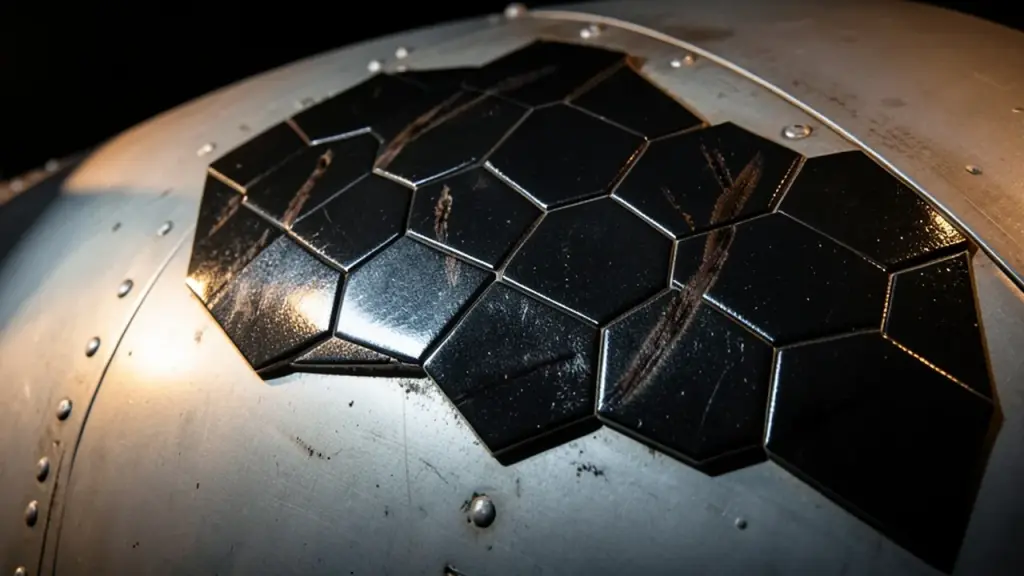
The biggest question for the Ship is whether its heat shield survived the climb in good shape. The shield is a skin of hexagonal ceramic tiles that has to protect the vehicle as it slams back into the atmosphere at speeds that may top 17,600 miles per hour.

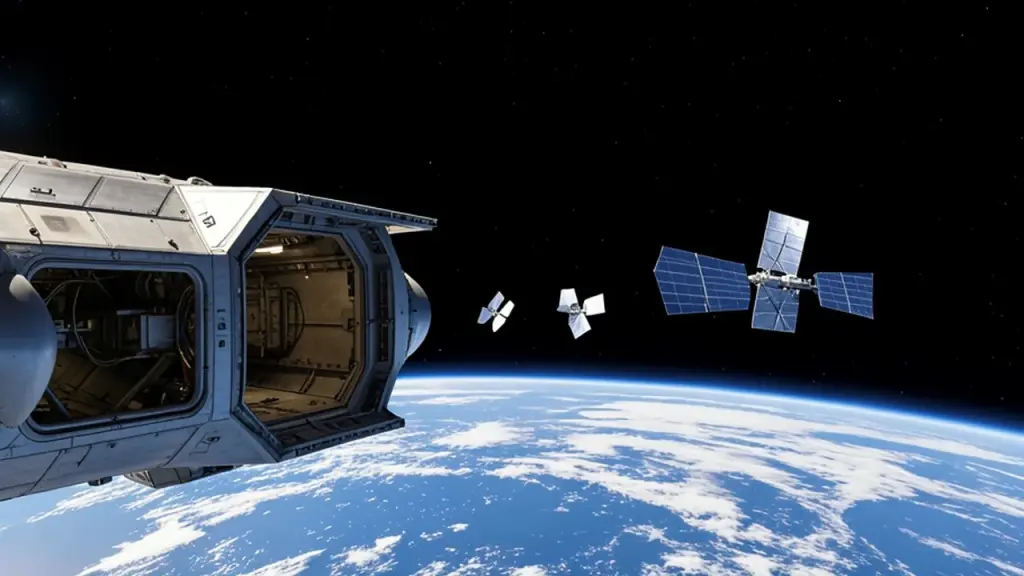
SpaceX came up with a clever way to check it. Three of the 26 Starlink satellites carried cameras, pointed back at the Ship as they slid out of its cargo door, to photograph the tiles and other hardware. Engineers then spent a few hours going through those images along with footage from ground tracking cameras.

The early verdict was good. Huot said the heat shield team confirmed the shield was in a good posture for reentry and a return to the launch site. That’s the clearest sign so far that SpaceX still means to go for the catch.

05

What a successful catch means for you

Most people will never ride a Starship, but you may feel the results. The rocket’s main near-term job is launching Starlink satellites, and each V3 is far more capable than the older V2 models, of which more than 11,000 are already in orbit. SpaceX says this one batch adds a terabit of data capacity to the network, about the same as 10 Falcon 9 launches of V2 satellites.

Reuse is what makes that affordable. Elon Musk has said full and rapid reuse could cut the cost of reaching orbit by a factor of 100 or more. SpaceX itself calls catching both stages the holy grail of rocketry. For comparison, NASA’s Space Shuttle was partly reusable but needed weeks of refurbishment between flights.

The stakes for spaceflight are just as big. NASA picked Starship as one of the landers for its Artemis Moon program, which aims to return astronauts to the lunar surface before the end of 2028. First, a Starship is meant to meet and dock with NASA’s Orion capsule and the Artemis III crew in Earth orbit in summer 2027, alongside a test version of Blue Origin’s Blue Moon Mark 2 lander.

06

What still has to happen after Saturday

Even a perfect catch wouldn’t finish the job. SpaceX still has to show it can turn a booster and a Ship around quickly and fly them again. Musk has projected about one Starship launch a week during the first half of 2027, and he has said SpaceX is targeting 10,000 Starship launches a year by 2030.

The Moon missions add another hurdle: refueling in space. A lunar Starship needs more propellant for a round trip than a single launch can carry, so SpaceX will have to transfer fuel between vehicles in orbit on future flights. And the booster catch has to work reliably on the V3 design, which Friday showed it doesn’t yet.

For now, the countdown that matters is Saturday’s. Watch for the final checkpoint, 20 hours and 41 minutes into the flight. If SpaceX keeps going past it, Ship 42 is coming home to Texas.

07

Quick answers

Did SpaceX catch the Starship booster on flight 15?

No. SpaceX called off the booster catch and steered the Super Heavy into the Gulf of Mexico about six and a half minutes after launch.

What time is the Starship flight 15 ship catch?

About 4:17 p.m. ET on Saturday, November 14 (2117 GMT), if the Ship stays healthy through its final checkpoint.

Has anyone ever caught a spacecraft returning from orbit?

No. A successful catch of Ship 42 would be the first time any orbital rocket’s upper stage has been caught and recovered this way.

You're reading the quick version.