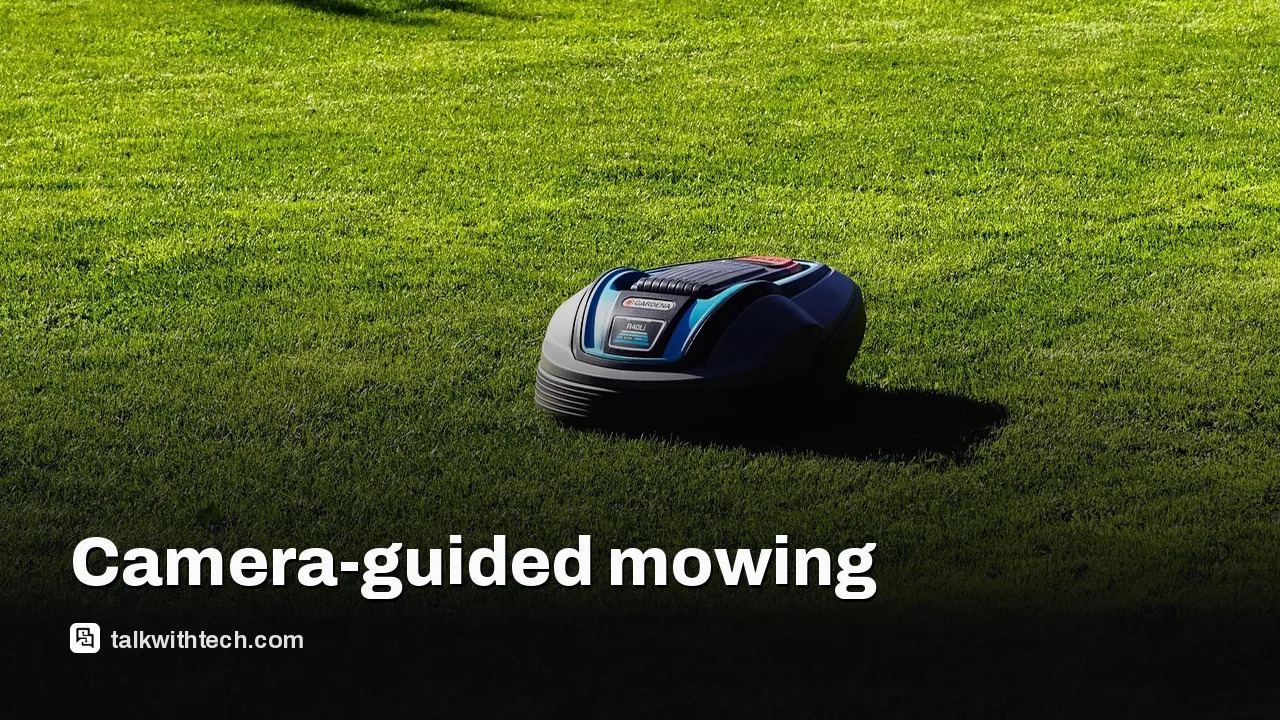
The Worx Landroid Vision Cloud WR306E is a £899 wire-free robot mower for lawns up to 600 square meters.
It combines cameras with cloud-based satellite positioning, so it needs no boundary wire and no extra antenna in the garden.
An included Cut-to-Zero side module trims much closer to borders than most robot mowers, which means less work with a strimmer.
Setup was fiddly in testing, cutting height is set by hand, and the model is sold only in the UK and Europe.
Quick read · 2 min
The Worx Landroid Vision Cloud WR306E is a wire-free robot lawn mower that costs £899 in the UK and Europe. It finds its way with cameras and cloud-based satellite positioning, so there's no perimeter wire to bury and no extra antenna to install.
Its best trick is an included side cutter that trims to within about an inch of solid borders, where most robots stop several inches short. It also dodges pets, toys and pots very well, and it runs on the same removable battery as other Worx garden tools.
Covers lawns up to 600 square meters
Cutting height is set by hand, with four steps
Smaller WR305E costs £699 without the edge module
The downside is setup, which took patience and several restarts in testing, plus an app that takes time to learn. It isn't sold in the US, where Worx offers a quarter-acre Landroid model instead.
Most robot mowers leave a scruffy strip of grass along every fence and flowerbed. The Worx Landroid Vision Cloud WR306E gets to within about an inch of a solid border in some spots, and it does it without a single boundary wire, for £899.
That price matters. It puts a mower that steers by camera and satellite in the middle of the market, and it skips only a few of the features most buyers care about. The catch is time: getting the WR306E running took real patience in testing, and a couple of the cost savings show up in daily use.
01
What the Worx Landroid WR306E is, and where you can buy it
The WR306E is a mid-priced robotic mower built for lawns up to 600 square meters, or medium-sized gardens. It costs £899, is on sale now, and is sold in the UK and Europe, where it goes for roughly the same figure in euros.
It is a UK and Euro-spec model, so you won’t find it on US shelves. American shoppers, who tend to have bigger yards, are pointed toward a related Landroid model rated for a quarter acre, listed on Amazon at $984.48. That is a different machine, so treat the details below as a guide to the family rather than a review of the US version.
If 600 square meters is more than you need, the smaller WR305E handles 500 square meters (6,458 square feet) and costs £699 in the UK, about £300 less, with prices as low as €594 in parts of Europe. It doesn’t come with the edge-cutting module, but it will take one if you buy it separately from Worx UK for around £100.
02
How it finds its way without a boundary wire
The WR306E pairs two systems. Cameras on the front watch the ground ahead and learn where grass stops and paths, beds and borders begin. At the same time, cloud-based RTK positioning (a very precise form of satellite location that uses correction data sent over the internet) tells the mower exactly where it is on the lawn.
Because the correction data arrives through the cloud, you don’t have to plant a separate RTK antenna in the garden, which many rival wire-free mowers need. You also skip the old chore of pegging a perimeter wire around the whole lawn.
You can let it map the garden on its own, or steer it around the edge with on-screen remote controls in the Worx Landroid app. It handles several lawns linked by clear paths, and you can draw no-go zones around ponds or sudden drops. In months of testing its navigation proved very dependable. It lost its charging base only once, and that was after the base had been moved.
03
The edge-cutting trick that saves you a job
The standout part is the Cut-to-Zero side module that comes in the box. It is a separate, offset cutter that reaches much nearer the edge of the lawn than the mower’s main blade, which sits in the middle of the body like on most robots.
Against a solid flowerbed border, other robot mowers tested on the same lawn stopped around four inches short. The WR306E got to within an inch in places. In practice that means far less tidying with a line trimmer after each cut.
Obstacle avoidance was excellent, too. The camera and onboard AI spot people, pets, toys, plant pots and garden furniture and steer around them, including a tiny flower pot that confused another brand’s mower. Leaves and small debris don’t stop it, which is what you want.
It mows in roughly parallel lines, a big step up from the random, pinball-style paths of its predecessor, the Landroid Vision M600. The stripes aren’t the prettiest, though, because the single rear wheel and two big front drive wheels leave a three-line pattern.
04
The setup headache and other trade-offs
Here’s the part to plan for. Setting up the WR306E was clunky. Joining Wi-Fi meant pressing buttons on the mower’s small screen, which then showed cryptic codes and messages. During testing it sat idle, tried to update its firmware out of order, threw an error and needed several restarts before an auto-mapping button finally appeared in the app. After that it ran smoothly.
It is far from the hardest mower to install, but it is nowhere near the drop-and-mow ease of the TerraMow V1000. The app also takes time to learn. The lawn map is tucked away in a general information menu instead of on the home screen, and the mower can be slow to respond to taps.
The other compromise is cutting height. There is no motorized deck you can adjust from your phone. Instead you turn a large orange dial on the mower, and it offers only four fixed heights. That is one reason the price is lower than many rivals.
For most households the sums look good. You get wire-free mowing, strong obstacle detection and close edge cutting for under £900, which puts it up against the TerraMow V600 and the Segway Navimow i108E at about the same price.
There’s a hidden saving, too. Instead of a built-in battery that can be costly to replace, the WR306E uses a removable Worx PowerShare battery, the same type that runs the brand’s trimmers, leaf blowers and other cordless tools. If it ever dies after winter storage, you can borrow one from another Worx tool or buy a replacement cheaply.
Security is sensible as well. The mower is tied to your Wi-Fi and Worx account, it tracks its location, and lifting or moving it unexpectedly triggers an alert and locks it behind your PIN. It is IPX6 rated against heavy rain, has a rain sensor and a big red stop button on top.
A few smaller gripes: the sharp, angular body has lots of nooks that make it harder to wipe clean, and it is oddly hard to tell the front from the back.
06
Should you buy the Worx Landroid WR306E?
Buy it if you want a wire-free mower on a budget, have a cluttered lawn full of toys or furniture, and hate trimming edges by hand. It is reliable once it is running and earned high marks for navigation and obstacle avoidance.
Skip it if you want a setup that just works out of the box, want to change cutting height from your phone, or need a wider cut for a big lawn. In the US, look at the quarter-acre Landroid model instead, since this one isn’t sold there.
07
Quick answers
Does the Worx Landroid WR306E need a boundary wire?
No. It uses cameras plus cloud-based RTK satellite positioning, and it doesn’t need an extra RTK antenna in the garden either.
How much does the Worx WR306E cost?
It costs £899 in the UK and about the same in euros in Europe. The smaller WR305E costs £699 without the edge module.
Can I buy the WR306E in the US?
No. It is a UK and Euro-spec model. Worx points US buyers to a quarter-acre Landroid model, listed on Amazon at $984.48.
Reviewers love Lenovo's OLED screen and light body, but Google's new laptop software still trips over phones, Wi-Fi and apps. Here's who should buy and who should wait.