AT&T and AST SpaceMobile moved a live phone call from a cell tower to a satellite on October 21 using ordinary phones.
Starlink's current phone service drops the call when you leave tower range and has to reconnect through the satellite.
AST has 13 satellites working and now expects the roughly 45 needed for always-on US coverage by mid-2027.
Patchy coverage is promised by the end of 2026, with AT&T and Verizon beta trials expected early in 2027.
Quick read · 1 min
AST SpaceMobile can do something Starlink's phone service can't yet: keep a call going as your phone leaves cell tower range. AT&T proved it on October 21 near Granite Falls, Washington, using regular smartphones, with Ericsson and Nokia gear handling the switch.
The problem is satellites. AST has 13 working and needs about 45 for coverage that never drops. With its November 9 results it pushed that target to mid-2027, after earlier aiming for the end of 2026.
Patchy coverage, a few minutes per satellite pass, is promised by the end of 2026 in the US, UK and Canada.
AT&T and Verizon beta trials are expected early in 2027.
Your current phone should work, with no new SIM or app.
SpaceX plans newer phone satellites with similar network links from next year, so the race is far from settled.
AST SpaceMobile vs Starlink comes down to what your phone does when the last bar disappears. On AST’s network, a call can carry on as you drive out of tower range. On Starlink’s current phone service, the call drops and your phone has to set up a fresh connection with the satellite. AT&T showed the AST version working on the morning of October 21, outside Granite Falls, Washington, with regular smartphones.
The catch for AT&T and Verizon customers is timing. AST SpaceMobile has 13 satellites working in orbit and says it needs about 45 for coverage that never cuts out. With its third-quarter results on November 9, it moved that 45-satellite goal to mid-2027. So the plain answer to “when do I get it” is: short, patchy windows from around the end of this year, carrier beta trials early in 2027, and always-on service later than first promised.
01
AST SpaceMobile vs Starlink: the difference is one dropped call
The biggest difference is that AST plugs straight into a carrier’s own network, while Starlink’s phone service so far works as a separate layer. That sounds technical, but you’d feel it on a road trip. Today, a Starlink phone call ends when you pass the edge of cell coverage, and a new connection has to start through space.
AT&T’s test was built to avoid exactly that. Ericsson gear inside AT&T’s network handles the handoff, with automation that AT&T says can cut the switch from seconds to milliseconds. Nokia supplies the radio software running AST’s satellite side. Brian Walsh, an AT&T engineer on the project, compared a normal handoff between towers to changing lanes on a highway. Jumping to a satellite, he said, is more like moving from the highway onto a plane in flight.
Starlink isn’t standing still. SpaceX plans to start launching next-generation phone satellites next year with the same kind of network integration. SpaceX president Gwynne Shotwell said in August that service from them would begin at the end of next year, while more recent reporting puts commercial service in early 2028. SpaceX also wants to use spectrum it bought from EchoStar to run its own mobile service, competing with the big carriers instead of just partnering with them.
02
When AT&T and Verizon customers can actually use it
AT&T has not committed to a launch date. Back in January, it said a beta would start in the first half of 2026, and that didn’t happen. Here is the schedule AST laid out with its latest results, which depends almost entirely on rockets it doesn’t control:
Now: 13 BlueBird satellites in operation. BlueBirds 14 to 16 have sat at Cape Canaveral since September, waiting for SpaceX to pick a launch date.
Late November: BlueBirds 17 to 19 ship for a Blue Origin launch expected early in the first quarter of 2027.
End of 2026: AST promises “intermittent” coverage for partners in the US, the UK, Canada, Japan and Saudi Arabia.
First quarter of 2027: more launches, including a US government mission, could lift the total to about 25 satellites if nothing goes wrong.
Early 2027: carrier beta trials, which AST president Scott Wisniewski said work best with roughly 25 satellites.
Mid-2027: about 45 satellites in orbit, the point AST ties to continuous US coverage and fuller commercial service.
That timeline has already slipped more than once. AST was aiming for 45 to 60 satellites by the end of 2026 as recently as March. One satellite was lost in April when a Blue Origin rocket left it in an orbit too low to save. AST now plans its own reusable rocket, called Blacklift, built around Firefly Aerospace engines and able to carry up to five satellites, but it isn’t due to fly until late 2028.
03
What “intermittent” coverage will feel like on your phone
Intermittent means the service works only while a satellite is passing overhead, then disappears until the next one arrives. Each pass over a given spot lasts several minutes. Japan’s Rakuten, another AST partner, says it currently gets four to six minutes of satellite connectivity per pass, too short even to test a continuous video call.
With only 13 satellites up, the gaps between passes in a rural area could stretch to hours rather than minutes. Wisniewski described it as nationwide availability whenever a satellite happens to be overhead. Until more satellites are up, it isn’t something you could count on for a long call.
04
Will your current phone work with AST SpaceMobile?
Almost certainly yes, and that is AST’s biggest selling point. The service runs on standard 4G LTE and 5G radio protocols over spectrum the carriers already own: 700 MHz for AT&T and 850 MHz for Verizon. To your phone, the satellite looks like another cell tower. AST says there’s no firmware update, no new SIM card and no special app.
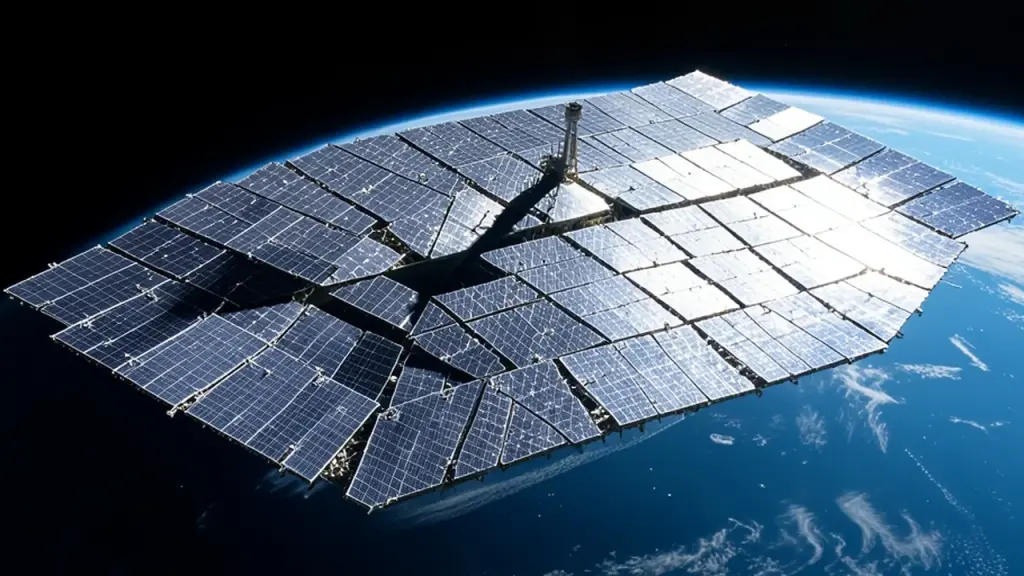
The trick is on the satellite side. A phone’s signal is weak, and the satellites orbit roughly 500 kilometers up, so AST builds huge flat antennas, about 2,400 square feet each, close to the floor of a pro basketball court. Each satellite can steer beams across more than 2,000 coverage cells, with peak speeds of up to 150 Mbps per cell.
What the AT&T, Verizon and T-Mobile joint venture changes
The search spike for an AST SpaceMobile partnership with AT&T and Verizon also ties back to a bigger move. This fall, AT&T, Verizon and T-Mobile formally launched a joint venture that aims to nearly eliminate US dead zones. Paul Roth, a former AT&T and Cingular executive, is interim CEO while the three search for a permanent boss.
The venture is meant to pool the carriers’ investment, open the door to more satellite providers and make satellite service simpler to use across networks. It doesn’t replace current deals. AT&T’s agreement with AST, a revenue-sharing arrangement, runs through 2030, and each carrier keeps working on coverage on its own too. The stated goal is simpler satellite access whichever of the three carriers you use.
06
What this means for you in the US, UK and Canada
If you’re on AT&T or Verizon in a rural area, there’s nothing to sign up for yet. The first sign will be brief satellite windows before the trials early next year. AST is betting that keeping calls alive and offering broadband-class speeds will matter more over time than being first.
In the UK and Canada, AST names both countries among its first markets for patchy coverage by the end of 2026. Delays at AST, meanwhile, leave room for Starlink, Amazon Leo and others to catch up. The next real milestone is simple to watch for: a SpaceX launch date for BlueBirds 14 to 16.
07
Quick answers
Is AST SpaceMobile operational?
Partly. Its 13 working satellites have carried test calls, texts and video calls on ordinary phones, but there is no commercial service yet. Intermittent coverage is targeted for the end of 2026.
Is AST SpaceMobile better than Starlink?
It is ahead on keeping a live call going between towers and space, which Starlink’s current service can’t do. But it has far fewer satellites working, so Starlink’s service is the one people can actually use today.
Will Verizon customers get AST satellite service?
Yes. Verizon is an AST partner, and its 850 MHz spectrum is what the satellites will use for its customers. Like AT&T, it is waiting on more satellites, with beta trials expected early in 2027.