Friday, 13 November 2026

Uber data breach 2026: got a letter? Do these 4 things first

Hackers reached Uber driver records through an AI vendor called Fireworks. Here is who is getting letters, what was taken and the free help on offer.

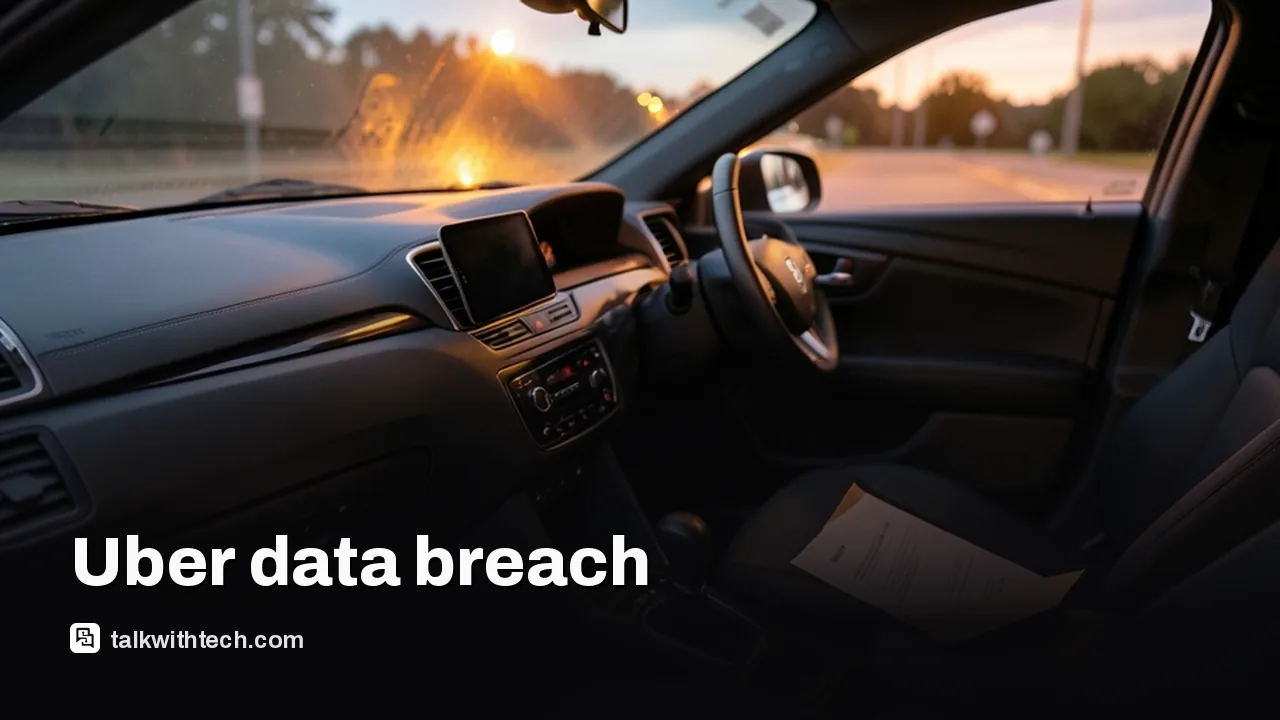
Opened letter on a car passenger seat beside a phone in a dashboard mount

The short version

  • Uber is mailing breach letters to drivers whose driver's license details were taken through a hacked outside vendor.
  • Uber named the vendor as Fireworks AI, a company that runs open AI models for developers, which was hacked twice in October.
  • State filings list 3,430 people in South Carolina, 2,567 in Massachusetts and 1,873 in Rhode Island, with California and Illinois counts not given.
  • Affected drivers get free credit monitoring through Cyberscout but must sign up within 90 days of the letter's date.
Quick read · 2 min

Uber is warning drivers that hackers took driver's license details and other personal information after breaking into an outside vendor. Uber has named the vendor as Fireworks AI, a company that runs open AI models for developers and was hacked twice in October.

Letters started going out on November 10. State filings so far list 3,430 people in South Carolina, 2,567 in Massachusetts and 1,873 in Rhode Island. California and Illinois drivers were also notified, but their counts aren't public, and totals are likely to rise.

  • Enroll in the free Cyberscout credit monitoring with the code in your letter, within 90 days.
  • Consider a free credit freeze at all three bureaus.
  • Call the number printed on the letter with questions, and ignore messages asking for your details.

Uber hasn't explained why driver data sat with an AI vendor. That question, and whether riders or drivers outside the US were affected, is still open.

The Uber data breach 2026 story starts somewhere most drivers never think about: an AI company. Uber says hackers stole internal login details from one of its outside vendors, then used them to reach Uber data, including driver’s license information for thousands of drivers. Uber has named that vendor as Fireworks AI, a service developers use to run open AI models.

If you drive for Uber in the US, check your mailbox. Uber began sending written notices on November 10, and filings with state attorneys general so far cover South Carolina (3,430 people), Massachusetts (2,567) and Rhode Island (1,873). California drivers were notified too, and an Illinois filing says some residents were hit, but neither state’s count has been made public. Those numbers are expected to climb as more filings appear.

01

Who is affected by the Uber data breach 2026?

So far, the people getting letters are Uber drivers. Uber hasn’t said how many people in total were caught up in the incident, and it hasn’t said how many drivers it is contacting. Every filing made public so far is with a US state, so the picture for drivers in Canada and the UK is unclear; Uber hasn’t addressed it.

The data Uber confirms was exposed is driver’s license information. The letters describe it as personal information that was stored with the vendor. Uber hasn’t published a fuller list of fields, so read your own letter closely. It’s the only document that tells you what was taken about you specifically.

Nothing Uber has said so far mentions riders who have never driven for the company.

Dim data center aisle lined with server racks and status lights
02

How hackers got to Uber data through an AI vendor

Here’s the timeline Uber gave regulators, in plain terms:

  • October 7: someone outside the company got hold of the vendor’s internal credentials and used them to log in to Uber’s account with that vendor.
  • October 9: the vendor spotted the activity and warned Uber.
  • October 13: Uber’s investigation confirmed the intruder had accessed Uber data held with the vendor, including personal details.
  • November 10: Uber started mailing letters to affected people.

An Uber spokesperson confirmed the letters relate to a security incident at Fireworks.ai, which had access to some Uber data.

Fireworks has had a rough autumn. It disclosed one incident in early October, when attackers got into environment variables holding API keys and tokens (the digital passes software uses to talk to other services) for a limited number of accounts. Fireworks linked that attack to a financially motivated criminal group that sells stolen access to large language models, a practice known as LLMjacking. Then, on October 23, a third-party cloud provider hosting Fireworks research machines was hacked, and the next day the intruders used it to run unauthorized work on those machines. That second break-in exposed customer billing details, some datasets and partial model weights.

Uber’s own dates point to the first of those two incidents, the one built on stolen internal credentials. Fireworks confirmed it found unauthorized access affecting customer data but didn’t answer detailed questions. No criminal group has publicly claimed the theft.
03

The open question: why did an AI vendor hold driver data?

This is the part nobody has explained yet. Fireworks sells computing power for running AI models. Uber hasn’t said what it used Fireworks for, or why records tied to driver’s licenses were sitting where a vendor’s stolen login could reach them.

It matters beyond Uber. Companies are wiring more customer data into AI tools, often through outside providers you’ve never heard of. Notion, the note-taking app, has already said the same Fireworks attacks exposed some of its AI chat transcripts. Fewer than 1% of Notion workspaces were affected, Notion says, and it is telling customers to treat that data as exposed and to change any passwords or keys they pasted into its AI chat during the incident.

For Uber, this is the second known breach of 2026. Earlier in the year, its Uber Freight trucking unit reported a security incident, and an extortion gang took credit for stealing data there.

Laptop, coffee mug and printed statement on a kitchen table
04

What to do if you got an Uber breach letter

Do these four things, in this order:

  1. Sign up for the free monitoring. Uber is paying for credit monitoring and fraud help from Cyberscout, which is part of TransUnion. Your letter has a unique activation code and the enrollment address. You must enroll within 90 days of the date printed on the letter, so don’t let it sit in a drawer.
  2. Think about a credit freeze. A freeze stops lenders from pulling your credit report, so nobody can open new credit in your name, you included, until you lift it. It’s free at each of the three big credit bureaus. Online or phone requests must take effect within one business day, and lifting a freeze online takes no more than an hour, so it won’t block you for long when you need a loan.
  3. Watch for warning signs. Look for bills for things you didn’t buy, collection calls about accounts you never opened, unfamiliar accounts on your credit report, or loan denials that make no sense.
  4. Report anything odd fast. Contact the FTC through its identity theft site or at 1-877-438-4338, ask the credit bureaus for fraud alerts, and call the fraud departments of your bank and card issuers.

Questions about the letter itself go to Uber’s dedicated line at 1-866-317-7961, open 8 a.m. to 8 p.m. Eastern time, Monday through Friday, except holidays.

05

How to spot a fake Uber breach message

Big breaches attract copycat scams. The genuine notice from Uber arrives as a written letter, and the activation code inside it is what unlocks the monitoring service. Be wary of a text, call or email that claims to be about the breach and asks you to confirm your license number, Social Security number or bank details. Official advice is simple: don’t answer messages from numbers or people you don’t know, and don’t hand over personal details because someone asked.

If you’re unsure whether something is real, call the number printed on your paper letter rather than one given in a message.

06

Quick answers

Did the Uber data breach 2026 affect riders?

The notices published so far are going to drivers. Uber hasn’t said whether any rider data was involved or how many people were affected in total.

Was my Uber password stolen?

Uber hasn’t said that account passwords were taken. The stolen login details belonged to the vendor, and the confirmed exposure is driver’s license information.

How long do I have to claim free credit monitoring?

You must enroll within 90 days of the date on your letter, using the activation code it contains.

You're reading the quick version.