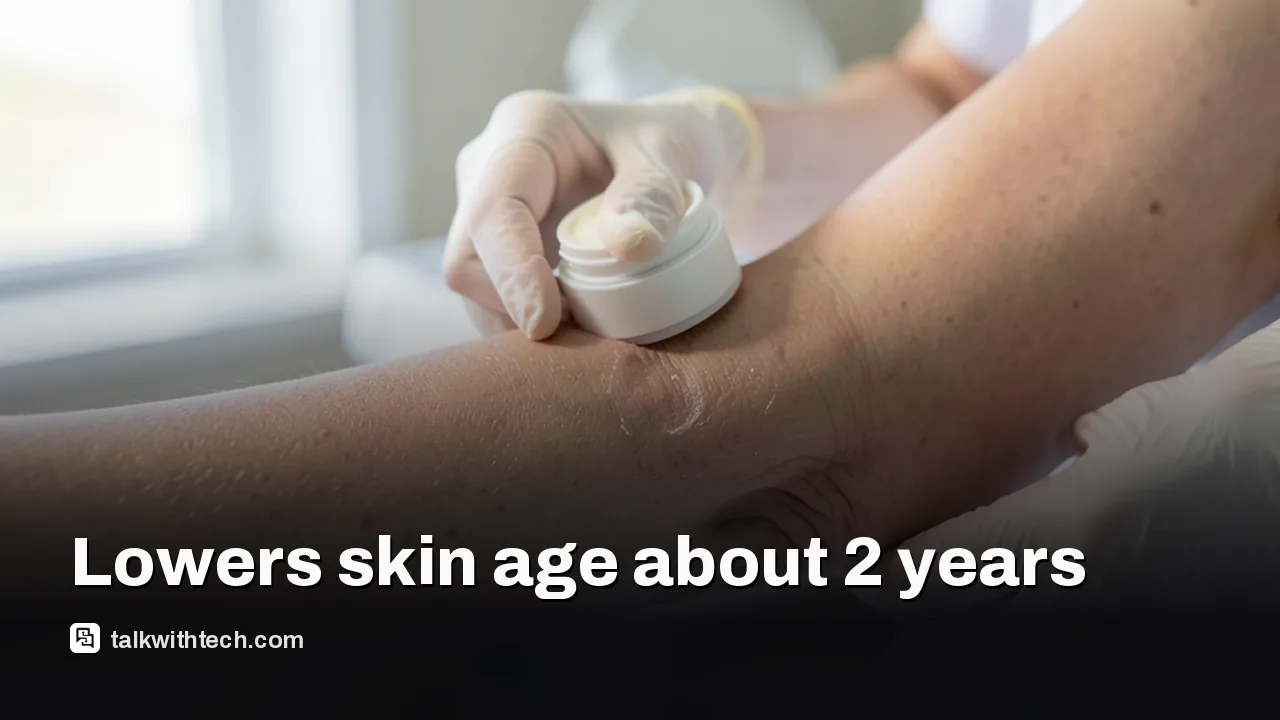
Rubedo Life Sciences is testing a topical anti-aging cream in a small trial to reduce visible skin aging by targeting cellular senescence.
In 11 participants with atopic dermatitis, the cream lowered the skin aging clock by about two years on average after four weeks, with one participant showing an 11-year improvement.
The treatment also reduced inflammation markers and increased a type of collagen related to skin elasticity; safety and broader efficacy are still to be determined.
Experts urge caution, noting aging clocks measure biological signals and may not reflect functional aging; results are early-stage.
Quick read · 2 min
Rubedo Life Sciences is testing a topical anti-aging cream aimed at cellular senescence. In a small trial, 11 people with atopic dermatitis saw the skin aging clock drop by about two years after four weeks of use, with one participant showing a larger improvement. The study also noted reduced inflammation markers and a boost in collagen linked to skin elasticity.
Experts urge caution: aging clocks measure biological signals and don’t prove the body is actually younger. If future trials confirm results, the company is exploring both OTC versions for general aging and a pill form for broader aging conditions. In the meantime, the everyday advice remains solid: sleep, eat well, exercise.
Early-stage data on a skin-aging cream
Potential wider aging therapies in development
Keep expectations grounded; more trials needed
The first hint of a real breakthrough in the cosmetics of aging is here, but it’s early. Rubedo Life Sciences, a biotech company based in Mountain View, is testing a topical cream designed to slow aging by targeting a cellular process known as senescence. In a small clinical trial, the cream was used by 11 people with a common skin condition called atopic dermatitis.
Over four weeks, researchers say the product lowered a skin aging clock by about two years on average. One participant saw an reduction of more than 11 years on that clock. The aging clock is a biological estimate developed by another company that looks at DNA methylation patterns to gauge how “old” skin is compared with calendar age. While helpful in research, experts caution that these clocks don’t necessarily prove the skin or body has become functionally younger.
Beyond the clock, Rubedo reported a drop in inflammation-related markers and a roughly 10 percent uptick in a collagen type linked to skin structure and elasticity. The goal is to clear senescent, or “zombie,” cells that stop dividing but don’t die. By temporarily suppressing a protein called GPX4, the drug aims to make those cells more vulnerable to a controlled form of cell death, sparing surrounding healthy cells.
Cosmetic science has flirted with comparable ideas for years, but this approach moves aging research closer to a therapeutic angle, one that could someday extend to other skin conditions and perhaps broader aging-related health questions. Rubedo’s leadership describes this as an early step in trying to alter the trajectory of aging, not merely slow its visible signs.
Still, experts interviewed for the story stress caution. Dr. Anthony Rossi, a dermatologist at Memorial Sloan Kettering Cancer Center, notes that aging signals vary and that senescence plays a role in normal processes like wound healing and tumor suppression. “The science is novel but early-stage,” he says, and he emphasizes the difference between a promising signal in a small study and a proven, widely applicable treatment.
Rubedo is already planning next steps. The company intends to expand trials to test the cream in people without atopic dermatitis and to evaluate other formulations, including a lower-potency, over-the-counter version that could compete with retinol-based products. There are also plans to explore a pill version to address metabolic aging conditions, potentially broadening the scope beyond skin alone.
What’s most relevant for readers today is that this represents a shift in what counts as a viable aging intervention. If larger, longer trials confirm the benefits and establish safety, we could see more serious consideration of anti-aging products that target the biology of aging, not just cosmetic appearance. Until then, the best aging advice remains the same, sleep, a balanced diet, and regular exercise, as experts remind us while watching early data with a careful eye.
What happens next? Rubedo plans additional studies to verify these initial findings and to explore other age-related indications. Expect more data from controlled trials in the coming months and years as researchers weigh how to apply these ideas to broader populations.
01
What exactly is “cellular senescence,” and why does it matter?
Cellular senescence is a state in which damaged or stressed cells stop dividing but don’t die. Over time, these cells can release substances that promote inflammation and tissue damage, which are linked to aging and age-related diseases. By removing or neutralizing these cells, some scientists hope to slow aging and improve tissue function. The catch is that senescence also plays a role in normal processes, so therapies must be precise to avoid unintended effects.
02
Which products could reach consumers first
If larger trials confirm benefit, Rubedo could advance a lower-potency, over-the-counter version for general aging and a pill form for broader metabolic aging. The timeline depends on regulatory reviews and ongoing trial results, but investors and patients will want to watch for updates on safety, efficacy, and long-term effects.
03
What this could mean for daily life
For now, there’s no change you’ll notice on your bathroom shelf. This is early-stage science, and a lot has to go right before a product hits the market. Still, the idea of addressing aging at the cellular level could influence future skincare and anti-aging options, potentially offering more than cosmetic tweaks if proven safe and effective.
04
What happens next
Rubedo will likely report further trial results as they become available, including data from broader populations. If results hold, we could see more human studies and, eventually, regulatory steps toward approving new formulations for different ages and conditions.
The topical cream lowered a skin aging clock by about two years on average after four weeks in 11 participants with atopic dermatitis; one person showed an larger improvement.
Should I expect to buy this soon?
No. This is early-stage research, and broader trials are needed to confirm safety and efficacy before any product reaches consumers.
TikTok’s boss says AI may accelerate physics, biotech, chemistry and materials science within the next two to three years, while warning about cybersecurity risks.
A reported incident shows AI-driven automation in a legacy mainframe environment caused a week of disrupted work, highlighting gaps in readiness for enterprise-scale AI in critical systems.