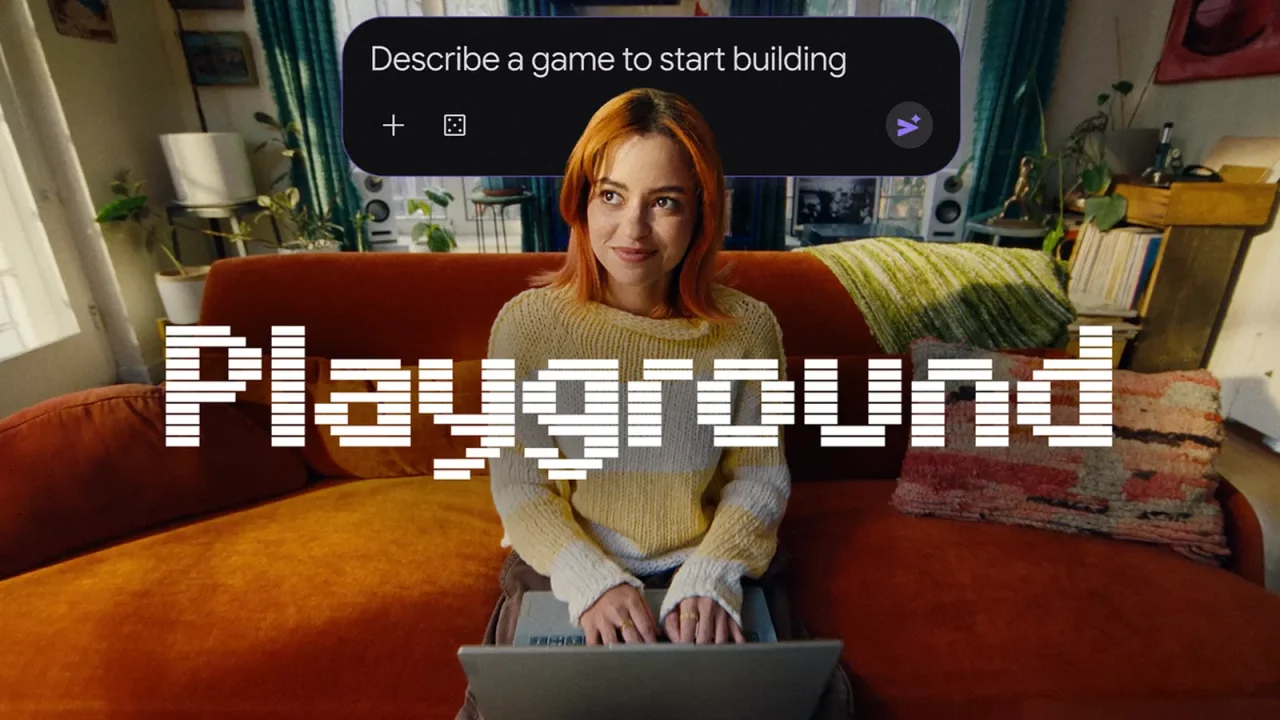
Google’s Playground lets anyone describe and shape their own games with AI prompts
An experimental platform lets you design, test, and share games using simple text prompts, with a Unity Spark integration on the horizon.
Talk With Tech Newsroom
The short version
Google launches Playground, an experimental platform to create, play, and share custom games using AI prompts.
Users can start from scratch or remix starter prompts and control game mechanics, physics, and visuals through prompts.
Unity Spark integration is planned to add advanced 3D features; access is limited by region and Google One membership.
Playground is browser-based, supports private sharing or public publishing, and includes safety screenings for published games.
Quick read · 1 min
Google has launched Playground, an experimental platform that lets you design, test, and share custom games using AI prompts. No coding required, describe what you want, tweak with prompts, and publish to a community gallery or keep it private. It’s live in the U.S. for now, with access gradually expanding by Google One tier.
Why it matters: it could make game creation more approachable for casual creators and players, not just developers. A Unity Spark tie-in could bring more advanced visuals later, letting simple ideas grow into more polished titles.
Describe your game and guide it with prompts
Playable on phones and laptops via the browser
Publish to a community gallery or share privately
Google has rolled out an experimental platform called Playground that aims to make game creation possible for people without coding experience. The service, now live for users in the United States who are at least 18, lets you describe the game you want to build and then refine it entirely with text prompts. The goal is to lower the barriers that traditionally kept game design restricted to developers and studios.
In Playground, you don’t write code or sketch complex graphics by hand. You start with a blank canvas or pick from starter prompts, then describe what you want. After the initial output, you can adjust rules, physics, characters, environments and other elements simply by asking for changes in plain language. It’s designed so you stay in the driver’s seat from rough idea to finished product, with prompts guiding the evolution of the idea as you go.
The platform runs in your web browser, so you can test and play your creations on a phone or a laptop. When you’re happy with a game, you can keep it private, share a link with friends, or publish it to the Playground Explore gallery for others to try. For some genres, multiplayer play and in-game leaderboards are part of the experience, adding a social layer to the creation process.
A big part of Playground’s appeal is the potential for quick experimentation. Instead of spending weeks learning a game engine, creators can explore concepts and iterate on mechanics in minutes. Google describes it as an early experiment designed to spark everyday creativity and widen the pool of people who try game design, from hobbyists to curious first-timers.
Google also previews a future tie-in with Unity Spark, which would unlock higher-fidelity visuals and more sophisticated gameplay mechanics. Spark is currently in testing with a closed beta on the horizon. The plan is to combine Playground’s accessible prompt-based workflow with Unity’s professional capabilities, letting simple ideas evolve into more complex experiences over time.
Safety and community standards play a role as well. All published games go through safety screenings aligned with Google’s Community Guidelines, and users can report inappropriate content. The gallery surfaces games based on ratings and activity, helping newer creators find and learn from what works well in the community.
For everyday users, the practical upshot is straightforward: you can dream up a game, tell Playground what you want, and see it come to life without opening a game engine or learning programming. You can then decide whether to keep it to yourself, share it with friends, or put it in a broader collection for others to explore. The experience is designed to be accessible on a variety of devices, with the emphasis on quick, iterative creation rather than mastering technical tools.
What this means for the broader world of gaming is still evolving. If Playground succeeds in attracting a wide audience, it could experiment with more complex features and even higher-end visuals as Unity Spark becomes more available. In the near term, users should expect continued refinements and some gradual rollout of access, guided by feedback from the growing community of creators.
In short, Playground is Google’s bet that creating games can be as simple as describing your idea and guiding it with prompts. If you’re curious, you can try it today in the U.S. for users 18 and older, with access expanding based on Google One membership levels and ongoing testing outcomes.
OpenAI released hundreds of results toward 372 major math problems on GitHub, sparking questions about verification and what it means for the math community.
Tab is emerging from stealth with a $300 million valuation, promising to handle everyday tasks via text on familiar apps while keeping your data private.