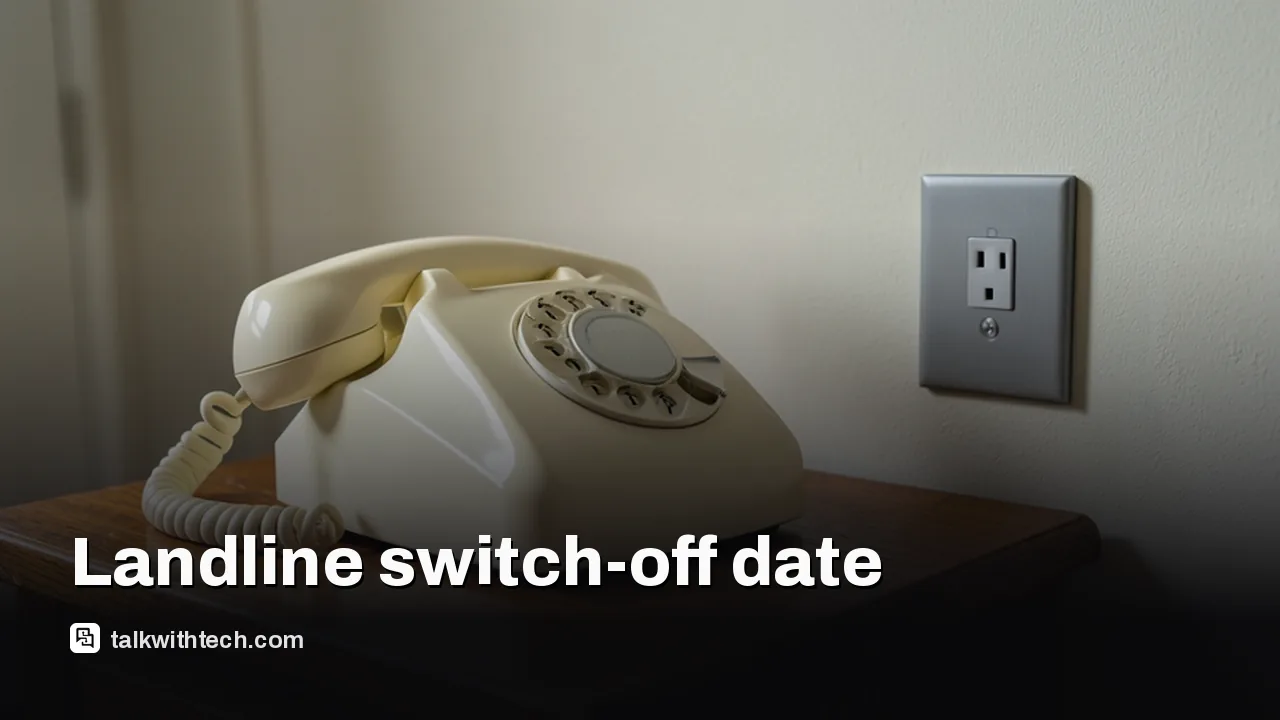
Landline switch off date: Jan. 31, 2027, and 4 checks to do now
Openreach says the old copper phone network shuts on Jan. 31, 2027, with no further delay. About a million lines still need moving. Here's what to check.
Openreach will retire the UK's old copper landline network on January 31, 2027, and says the date will not be extended again.
Around one million lines, including 300,000 at businesses, were still on the old network with roughly three months to go.
Homes that miss the switch may land on EVAc, a temporary voice-only backup without voicemail or call diversion.
Most people just plug their phone into the broadband router, but telecare alarms and power cuts need extra checks.
Quick read · 2 min
The UK's old copper landline network shuts on January 31, 2027. Openreach, which runs the biggest phone network, says the date won't move again, after an earlier end-of-2025 target was pushed back.
About a million lines were still on the old system with three months to go, including 300,000 at businesses. Anyone left behind may be put on EVAc, a temporary voice-only service without features like voicemail or call diversion.
Call your provider and ask if your line has been switched.
Plug your home phone into the broadband router, not the wall socket.
Check alarms and telecare devices, and keep a mobile or battery backup for power cuts.
For most homes the change is quick and the number stays the same. The real risk is ignoring the letter, and scams have made many people wary of genuine ones, so call the number on your bill if in doubt.
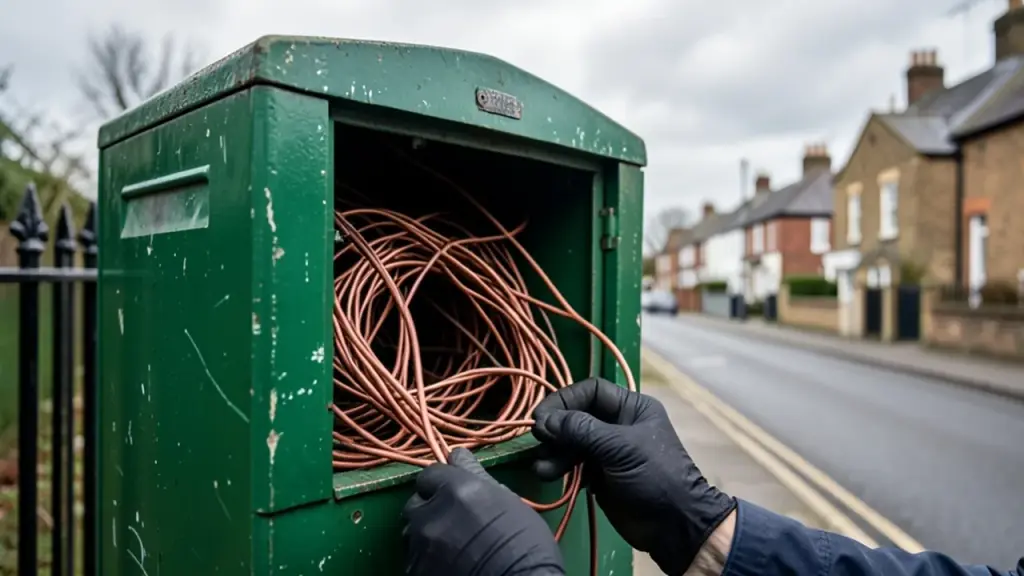
The UK landline switch off date is January 31, 2027, and Openreach, the BT-owned company that runs the country’s largest phone network, says there will be no more extensions. After that day the old copper phone system, known as the PSTN (public switched telephone network), goes, and every home phone in the country is meant to run over broadband instead.
That matters because roughly one million lines still hadn’t moved with about three months left, and some of them belong to people who rely on a landline more than anyone: older people with fall alarms, rural homes with weak mobile signal, and small shops whose card machines still dial out over copper. If you have a landline, the job is usually five minutes of work. The risk is ignoring the letter.
01
When is the landline switch off date, and could it slip again?
The date is January 31, 2027, and Openreach has written to the phone companies that sell services on its network to tell them it is final. Its own customer page puts it plainly: on that day, all traditional phone lines go digital, and anyone who hasn’t moved may find their service limited.
It has slipped before. The industry first planned to finish by December 31, 2025, under a plan announced in 2017. That deadline was pushed back after worries about rural households and vulnerable, often elderly, customers whose telecare devices depend on a working line. This time Openreach is holding firm, even though the campaign group Silver Voices has called for one more delay.
There is a twist worth knowing. Openreach also says there won’t be a single day when everyone is suddenly cut off. One of its directors, James Lilley, said there is no big red button that switches everyone off on January 31. In practice, providers have been moving customers line by line, and tens of thousands are switching each week.
02
Who is still on the old network
Openreach says about a million copper-based lines remain active across the UK, and around 300,000 of them are in business premises. Since 2017 it has helped move roughly 15 million lines off the old system, so the people left are a small but stubborn group.
London has the largest share of old lines left to switch among the UK’s big cities, according to recent Openreach data. Survey work from a broadband comparison site found that almost half of people asked had no idea the change was coming, and one in seven who had received a warning from their provider admitted ignoring it.
Part of the problem is scams. Lilley said a rise in fraud has made people wary of letters and calls about their phone line, so genuine notices get binned. If you’re unsure whether a message is real, ring your provider on the number printed on your bill, not one given in the letter.
03
What this means for your home phone
For most households, very little changes in daily use. Your number stays the same, and the new service (BT calls it Digital Voice) runs through your broadband router instead of the wall socket. Providers say it brings clearer calls and better blocking of nuisance calls.
The physical change is simple: the old wall socket stops working, so you unplug the phone’s cable from the wall and plug it into the phone port on your router. Most ordinary handsets work this way. BT also offers an adapter if your router sits somewhere awkward and you want the phone in another room.
The catch is power. The copper network carried its own electricity, which is why old landlines kept working in a power cut. A broadband phone needs the router switched on, so when the power goes, so does the home phone. That is the point MPs raised in a Commons debate in late October, warning that people on islands and in remote areas could lose phone, internet and mobile signal all at once in a storm.
The fix is a battery backup unit, a small box that keeps the router and modem running long enough for essential calls. Phone companies, BT among them, have been handing these out free to vulnerable customers, and they keep a phone working for an hour or more.
04
The 4 checks to do before January 31
Ask your provider if your line has moved. If you’ve had a letter about switching, act on it. If you haven’t heard anything and still plug your phone into the wall, call the number on your bill and ask.
Move the phone to the router. Once your provider confirms the switch, plug the handset into the router’s phone port and test an outgoing and incoming call.
Check anything else on the line. Personal alarms, telecare pendants, home security panels and monitoring kit may need an upgrade. Under an industry pledge called the PSTN Charter, providers agreed not to switch telecare users until their devices work on a digital line, but tell your provider about the device so it isn’t missed.
Plan for a power cut. Keep a charged mobile phone handy. If you have no mobile or poor signal, ask your provider for a battery backup.
While you’re on the phone to them, it’s also a good moment to compare broadband deals, since many switches come with an offer to move to full fiber anyway.
Openreach says customers still on copper after January 31 may be moved onto a stopgap called EVAc (Emergency Voice and Access Continuity). It keeps basic calls working for a limited time, but it is voice only. Features such as voicemail, three-way calling and call diversion may not work, and some customers risk losing the connection entirely.
Openreach says it will keep linked broadband running where it technically can, but it describes EVAc as a temporary safety net with limited capacity. For businesses it is also much more expensive than a normal digital line, and rental prices on old ISDN business lines have already gone up, with more rises planned from February 2027.
06
Businesses face the hardest part
The lines left are the tricky ones. Openreach says the remaining business connections often link to specialist equipment: card payment terminals, emergency phones in lifts, fire alarm panels, door entry systems and industrial sensors. Some large firms have several suppliers and old circuits nobody wrote down.
Openreach warns that leaving these unmoved could create safety and compliance problems serious enough to close buildings. If you run a shop, a block of flats or an office, audit every device that uses a phone line and get a migration plan from your provider now, not in January.
Ofcom, the UK telecoms regulator, says it expects minimal disruption for most people. It has rules providers must follow during the switch, says it is watching closely, and has already fined one company for putting vulnerable customers at risk during the changeover.
07
Quick answers
When is the BT landline switch off date?
The old copper network is due to close on January 31, 2027. BT customers are moved to Digital Voice, which runs through the broadband hub.
Will my landline number change?
No. You keep the same number. Only the way the call travels changes, from copper wire to your broadband connection.
Does a digital landline work in a power cut?
Not on its own, because the router needs power. A battery backup unit keeps essential calls going for an hour or more, and vulnerable customers can ask their provider for one free.
Beijing proposed new limits on exporting AI, then cleared its two biggest challengers to keep selling abroad within days. Here's what the rules do and don't touch.
A 235-page court order forces Apple to allow other app stores, website downloads and cheaper payments, and Fortnite is already back on Australian iPhones.
At its Bali meeting, ICANN's leaders admitted the body must move faster and explain itself better, just as 1,615 bids for new web endings enter review.
6 min read
We use cookies to understand how readers use Talk With Tech, so we can make it better. Is that OK? Privacy policy
The Daily Brief
Today's biggest tech stories, in 5 minutes
Every morning, the news that matters from AI, phones, apps and the people shaping tech. Explained in plain English. Free.
One email a day. No spam, unsubscribe anytime. Privacy policy