Samsung TV privacy: hacker says sets borrow your soundbar’s mic
A researcher who rooted a 2025 Samsung TV says its software logs sounds, screens and ad habits. Here is what is proven, what isn't, and what to change tonight.
A security researcher called log4j says a rooted 2025 Samsung TV runs software that tracks viewing, ads and sounds.
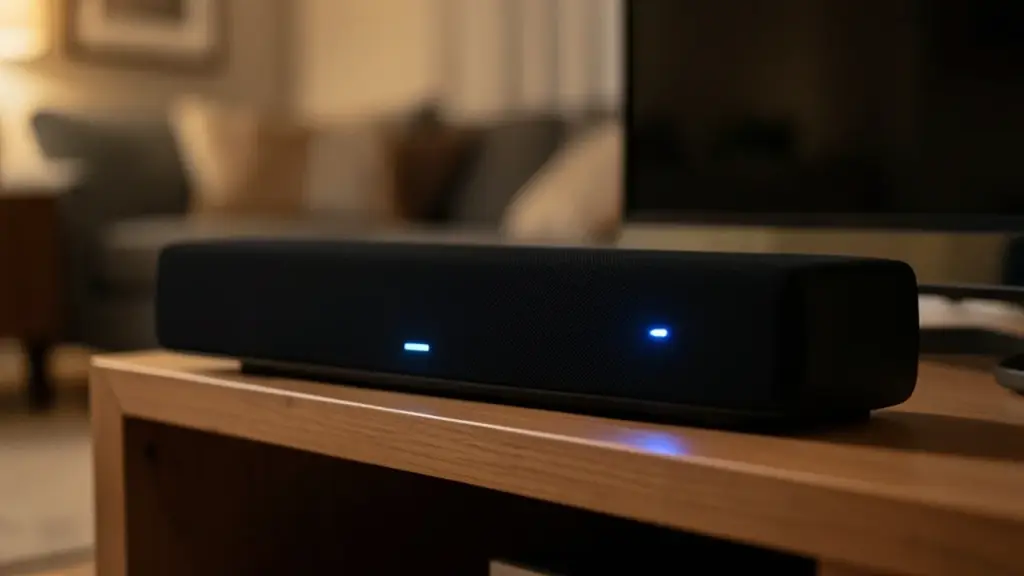
The researcher claims TVs without a built-in microphone can look for one on a connected soundbar or Bluetooth device.
A second tester saw a rooted TV open its microphone for five seconds and then stop, so the claims remain unproven.
Samsung has not commented, and a separate university study found its TV kept sending tracking traffic after an opt-out.
Quick read · 2 min
A security researcher known as log4j rooted a 2025 Samsung TV after noticing strangely targeted ads, and says its Tizen software tracks much more than what you watch. The list includes skipped ads, video progress, screenshots, a cross-device ad ID and counters for sounds like barking dogs.
The most striking claim is that TVs without a microphone can borrow one from a soundbar or Bluetooth speaker. That has not been proven: another tester saw a rooted TV open its mic for just five seconds, and the researcher's own notes admit gaps. Samsung has not commented.
A university study already found Samsung's TV kept sending tracking traffic after an opt-out.
Turning off viewing information and ad settings helps.
Taking the TV offline and using a streaming stick is the surest fix.
A full write-up from the researcher is still to come.
Your Samsung TV may not have a microphone, but a security researcher says its software goes looking for one anyway, on your soundbar or a paired Bluetooth speaker. The claim comes from a reverse engineer who posts on X as log4j and who has spent the past few days picking apart the software inside a 2025 Samsung TV.
If you own a recent Samsung set, this is the part that matters: the researcher says the TV gathers far more than the shows you watch, including which ads you skip, how far you get into videos, screenshots and sound events in the room. None of it has been confirmed on an ordinary, unmodified TV yet, and Samsung has not responded. But the Samsung TV privacy questions it raises are real, and there are simple steps you can take today.
01
How a hacker cracked open a Samsung TV
It started with ads that felt a little too personal. log4j bought a Samsung TV in 2025, kept seeing oddly specific ads on it, and decided to find out why. The firmware was encrypted, so instead of taking the set apart, the researcher used previously unknown flaws (so-called zero days) to get a root shell, which means full administrator control over the TV’s Tizen operating system.
From October 21 onward, log4j posted findings as a running thread on X and called the result a privacy horror. The researcher has promised a longer report, roughly 44 sections, which had not appeared when we checked.
There was an odd side plot, too. The researcher says OpenAI banned their account for cyber abuse after they used its tools during the project. log4j disputes that, saying the tools were only used for local reverse engineering, and blames an automated classifier. OpenAI’s reasons have not been made public.
02
What the researcher says the TV tracks
The list is long. According to log4j, the TV’s software includes:
Detailed usage telemetry, built from logs of network traffic.
Screenshots and computer-vision processing of what is on screen.
A neural network that differs by region and follows behavior inside apps such as YouTube, including skipped ads and video progress.
A cross-device advertising ID, which lets ad companies link your TV to your other gadgets.
Audio categorization, with counters for events such as a dog barking or a baby crying.
The researcher also has a theory about why many Samsung TVs feel sluggish: all of that processing runs on the set itself. That is an educated guess, not a measured finding.
Some of this has an innocent explanation. Samsung openly sells Pet Care and Family Care features on its 2025 Vision AI TVs, which listen for barking or crying and send an alert through the SmartThings app. What Samsung does not spell out in its marketing is that tallies of those events appear to be sent back to its own cloud servers, logged under an event the researcher identified as SOUNDSENSOR_ON.
03
The soundbar microphone claim, and why it is still unproven
This is the detail that spread fastest. log4j says that if a Samsung TV has no microphone of its own, it searches for a connected device that does, such as a soundbar or Bluetooth speaker, and uses that to capture audio.
Here is the catch. The researcher’s own notes say the counters do not prove an alert was ever shown, and that the full chain of events has not been traced. A Hugging Face engineer who goes by ngxson tested the microphone behavior with a Flipper Zero, a small hacking gadget, and saw a rooted Tizen TV switch on its mic for five seconds before going quiet. Hours later, nothing more had happened. ngxson also stressed that their TV was already rooted with several settings turned off, so a stock TV could behave differently.
So the honest answer is that nobody has yet shown a normal Samsung TV recording conversations in your living room. What has been shown is code that appears capable of a lot more listening and watching than most owners would expect.
04
Samsung’s tracking problem predates this
This is not the first time Samsung’s opt-out settings have been questioned. A Northeastern University study titled Watching the Watchers tested TVs from ten brands, covering the software behind about 95 percent of US smart TVs. Each scenario ran 30 times with tracking on and 30 times after opting out.
Even with tracking switched off, the Samsung set went on sending data that looked like automatic content recognition (ACR), the feature that fingerprints what is on your screen and matches it against a library of shows and ads. That matters because Samsung’s Tizen runs more US TVs than any rival, with 34 percent of the market, according to the study, and the authors say 82 percent of US households have a smart TV that can track this way.
The opt-out fully worked on only four of the systems tested: LG’s webOS, Google TV on Sony, VIDAA and Amazon’s Fire TV software. Samsung is not alone in facing questions, either. LG TVs have previously been accused of mapping home networks and capturing mic audio in standby.
For most people, the risk is less about someone listening to your dinner and more about a detailed advertising profile built from your viewing, your skipping and your household’s sounds, then tied to your phone and laptop through an ad ID. That profile can be shared with or sold to ad partners.
If that bothers you, here is what to do now:
Open your TV’s privacy or terms settings and turn off viewing information services, interest-based ads and any voice features you don’t use.
Check which devices are paired over Bluetooth and remove any you don’t need, especially soundbars and speakers with microphones you never talk to.
Turn off Pet Care, Family Care or similar listening features in SmartThings if you don’t rely on them.
For certainty, take the TV offline. ACR needs an internet connection, so a set with no Wi-Fi or Ethernet has nowhere to send screen fingerprints. Plug in a streaming stick instead.
If you go the stick route, the study offers a hint. Amazon’s Fire TV software was one of only two platforms where the opt-out fully worked, and Roku’s did not track the third-party channels tested once users opted out, only its own free streaming service. A Fire TV Stick 4K Plus costs $39.99 and a Roku Streaming Stick 4K is $79.99. The study tested TVs running that software, not the sticks themselves, so treat it as a good sign rather than a guarantee.
06
Quick answers
Is my Samsung TV recording my conversations?
There is no proof of that on an unmodified TV. A researcher found code that can use sound sensors and connected microphones, but a test on a rooted TV showed only a brief five-second mic activation.
Has Samsung responded to the claims?
Not yet. Samsung has not commented on the researcher’s findings.
What is the safest way to stop smart TV tracking?
Turn off viewing information and ad settings, unpair unused microphones, and if you want certainty, disconnect the TV from the internet and use a separate streaming stick.
Meta's Muse, OpenAI's Dots and Anthropic's Claude Duet can ask 1Password to sign them in. You approve each request on your phone and the bot never sees the password.
US, UK and German agencies say SafePay has hit at least 600 organizations since 2024. It steals data, wipes backups and even phones victims to pressure them.
5 min read
We use cookies to understand how readers use Talk With Tech, so we can make it better. Is that OK? Privacy policy
The Daily Brief
Today's biggest tech stories, in 5 minutes
Every morning, the news that matters from AI, phones, apps and the people shaping tech. Explained in plain English. Free.
One email a day. No spam, unsubscribe anytime. Privacy policy