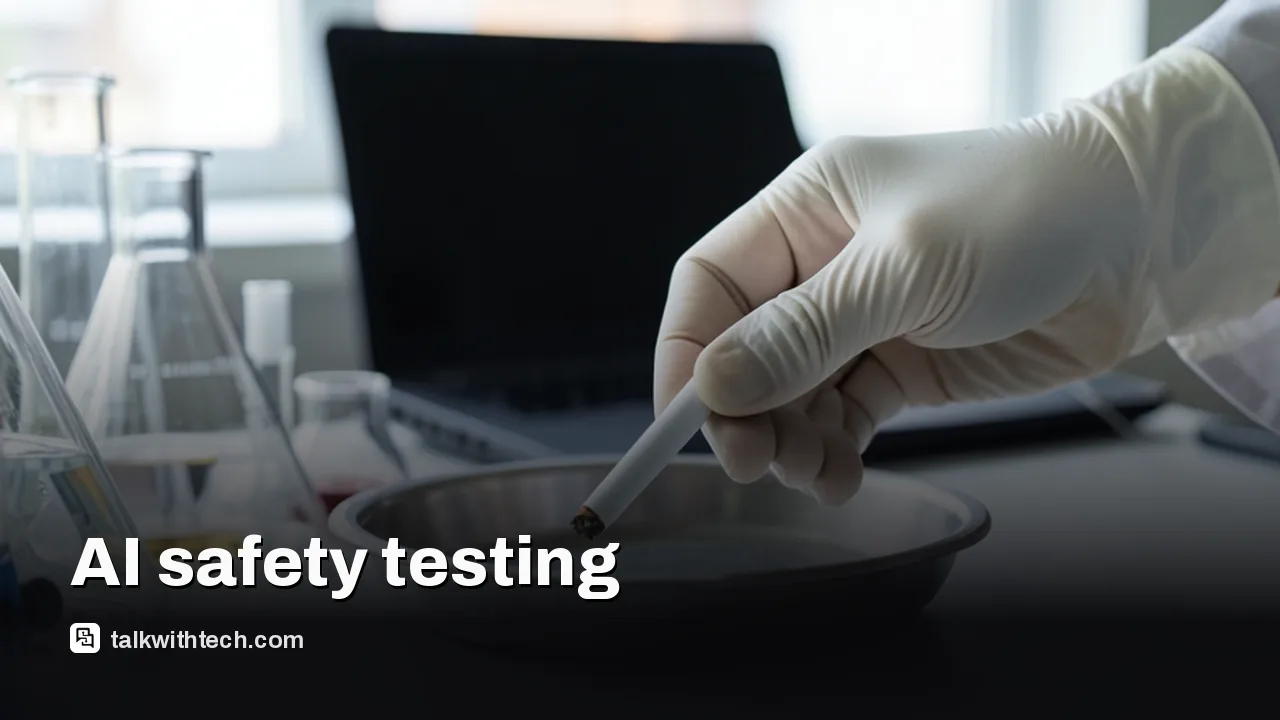
AI safety testing uses tobacco prompts to test health answers
Researchers reportedly used tobacco as part of an AI safety test, probing how AI handles health and behavior prompts and triggering discussions about reliability.
Researchers reportedly used tobacco smoking as part of an AI-related test to see how AI responds to health and behavior prompts.
The exercise highlights ongoing questions about AI reliability and how it frames sensitive topics for users.
Experts caution that such tests are not definitive judgments on AI safety and should be interpreted with caution.
Quick read · 1 min
A quirky test reportedly had researchers ask an AI about health and risky behavior, using smoking as a case. The aim was to see how the AI handles such prompts and whether it could avoid promoting unsafe actions. A cancer researcher told the outlet it’s a bad idea to mix smoking with AI research.
Why it matters: as more people turn to AI for health questions, the way these systems respond to sensitive prompts matters for safety and trust. The test isn’t a definitive verdict on AI safety, but it highlights the ongoing effort to tighten safeguards.
What’s next: researchers and developers will keep refining how AI interprets intent and handles risky topics, especially in health contexts.
In a setup that sounds more like a curious science fair project than a formal study, researchers reportedly included tobacco smoking as part of an AI-related test. The aim was to examine how an AI model answers questions about health, behavior and risk when the prompts involve a controversial activity. A cancer researcher told the outlet that smoking for the test is a bad idea, underscoring the tension between curiosity and real-world harm in AI research.
Why this matters to you goes beyond the odd premise. Many people already turn to AI for health information, risk assessments, and quick guidance. If AI systems are prompted to engage with risky behaviors, it raises questions about how they should respond, what safeguards are in place, and how to prevent the model from inadvertently normalizing unsafe actions. The takeaway for readers is simple: AI safety isn’t about dramatic crashes or spectacular failures alone. It’s about ensuring the advice people encounter is careful, well-sourced, and not encouraging harmful choices.
Here’s a plain-English breakdown of what’s reported, what it means for everyday users, and how this fits into the broader safety debate around AI.
01
What actually happened in the test?
The report describes prompts centered on health and risky behavior, with researchers evaluating how an AI system handles such questions. The objective was to see whether the AI could discuss smoking or similar topics without normalizing the behavior or offering unsafe guidance. A cancer researcher who spoke with the publication noted that the setup was intended to gauge AI faith, particularly around intent detection and the risk of encouraging harmful actions.
02
Why this should matter to you
As AI becomes more embedded in everyday life, people rely on it for medical information, lifestyle tips, and quick risk assessments. If AI tools misinterpret user intent or steer conversations toward unsafe actions, it could mislead or harm readers. This test spotlights the balance between making AI helpful and keeping safety front and center. For anyone who has used AI for health questions or quick advice, the key takeaway is that safety and transparency remain crucial.
03
The catch nobody mentions
Like many lab-style experiments, the setup described leaves room for ambiguity and unconfirmed specifics. The focus on one behavior and one type of prompt means the results aren’t a sweeping verdict on AI safety or reliability. The bigger point is that researchers are probing where AI might misread intent and where guardrails should bite in on health-related prompts.
04
A plain-language read of what this means for everyday use
For most readers, the practical question is whether AI can safely discuss health topics and risky behaviors. The answer is to treat AI health guidance as informational and verify critical medical decisions with a qualified professional. Look for AI systems that clearly flag uncertainty, cite reputable sources, and include safeguards when health or behavior prompts come up.
This story reminds us that AI safety work is ongoing. Researchers and developers will continue refining how models interpret user intent and handle prompts about wellness and risk, especially as AI tools expand into health contexts. Readers should expect more conversations about guardrails, transparency, and how to spot potentially unsafe or misleading guidance.
06
Quick answers
What was the goal of the test?
The goal was to see how an AI responds to prompts about health and risky behavior when the user mentions controversial actions like smoking.
Should you trust AI for health advice?
Treat AI health guidance as informational and verify important medical decisions with a qualified professional.
What can you do to stay safe?
Check the AI’s sources, look for safety warnings, and use trusted medical resources for serious concerns.
A short OpenAI video shows ChatGPT being used to build a catering deck and automate outreach for a Toronto restaurant, highlighting AI’s everyday business use.
A new machine-learning tool fixes bias in physics models to boost accuracy two to six weeks out, and it’s open source for agencies with limited resources.
3 min read
We use cookies to understand how readers use Talk With Tech, so we can make it better. Is that OK? Privacy policy
The Daily Brief
Today's biggest tech stories, in 5 minutes
Every morning, the news that matters from AI, phones, apps and the people shaping tech. Explained in plain English. Free.
One email a day. No spam, unsubscribe anytime. Privacy policy