Thursday, 26 November 2026

Tesla Roadster range halved to roughly 310–320 miles now

Tesla now quotes 310 to 320 miles for the new Roadster, far below the 620 it promised in 2017. Here is what changed and who should care.

Tesla Roadster
Photo: Jeremy from Sydney, Australia / CC BY 2.0 (modified)

The short version

  • Tesla now estimates the next Roadster will travel 310 to 320 miles per charge, not the 620 miles it claimed in 2017.
  • Tesla engineering vice president Lars Moravy confirmed the figure and a 2028 production target in Texas in a long Top Gear interview.
  • The car trades distance for speed: over 1,073 horsepower in the base version and 500kW charging that refills 15% to 85% in 10 minutes.
  • Tesla reopened $50,000 reservations after its October 15 reveal, and the Thrust trim costs $250,000 to reserve.
Quick read · 2 min

Tesla has quietly scaled back one of the Roadster's biggest promises. The second-generation sports car, first shown in 2017 with a claimed 620 miles of range, is now expected to manage 310 to 320 miles per charge. Lars Moravy, Tesla's engineering vice president, confirmed the estimate in a Top Gear interview, along with a plan to start building the car in Texas in 2028.

The trade-off is speed. The base Roadster gets more than 1,073hp, a carbon fiber and aluminum body, and charging at up to 500kW that refills most of the battery in about 10 minutes. Tesla's fastest versions claim 0 to 60 mph in well under a second using cold gas thrusters.

  • Reservations reopened at $50,000; the Thrust trim costs $250,000 to reserve.
  • Final pricing and specs are still not published.
  • The car has missed production targets since 2020.

If you reserved one for road trips, check the new numbers before you go further.
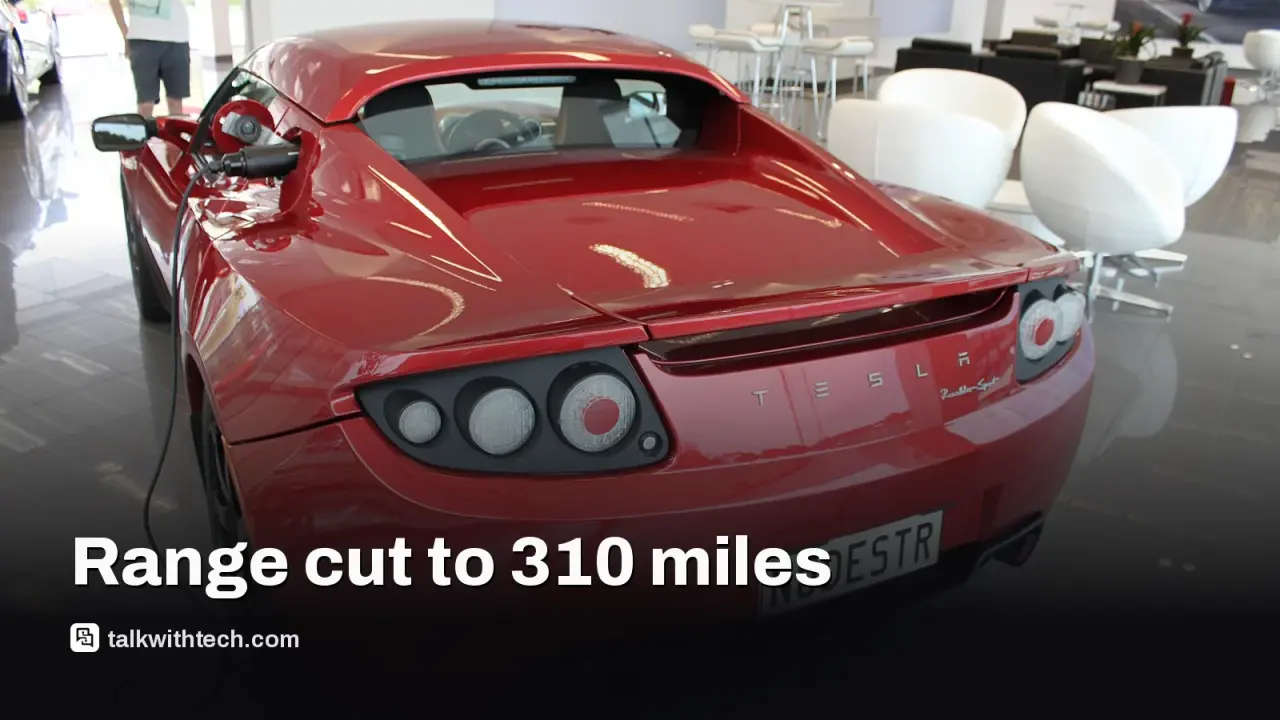
The Tesla Roadster range has been cut by more than half. When the second-generation car was first shown in 2017, Tesla said it would go 620 miles on a charge. The company’s current estimate is 310 to 320 miles.

That matters most to the people who handed Tesla a deposit years ago, many of them sold on the idea of a supercar that could also cross a state without stopping. It also says a lot about what Tesla now wants this car to be. After nearly nine years of waiting, the Roadster has turned from a long-distance tourer with crazy acceleration into an all-out performance machine that happens to have a decent range.

01

Where the new Tesla Roadster range figure came from

The number surfaced in a nearly hour-long Top Gear interview with Lars Moravy, Tesla’s vice president of engineering, and the company’s head of design. They also confirmed that production is aimed at Texas in 2028.

Tesla’s own Roadster material after the October 15 reveal near Waco, Texas, lines up with that. It lists a range of more than 300 miles for the top Rocket version, a long way short of the 2017 claim. Tesla has not said how big the battery is, so there is no way yet to check how efficient the car will be.

So why would Tesla give up half the range? The rest of the spec sheet answers that question.

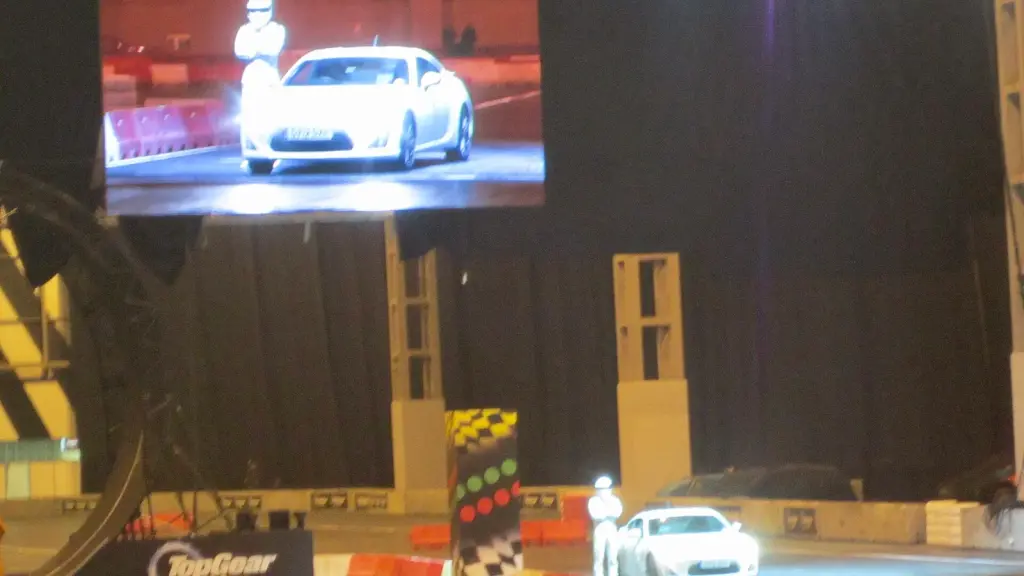
Top Gear, related to: Tesla Roadster range halved to roughly 310–320 miles now
Photo: Ank kumar / CC BY-SA 4.0 (modified)
02

Speed first: the specs Tesla chose over distance

The Roadster has been rebuilt from scratch, and almost every change pushes toward performance and low weight. Here is what Tesla has shared so far:

  • Chassis: aluminum and carbon fiber, with carbon-ceramic brakes. Tesla also mentions magnesium and titanium to trim weight.
  • Controls: steer-by-wire and brake-by-wire, which means the steering yoke and pedals send electronic signals instead of being linked mechanically to the wheels and brakes.
  • Battery: a custom pack of nickel-based lithium-ion cells running at 800V to 1,000V, which can deliver up to 1,000kW of power.
  • Power: two motors driving the rear wheels, with more than 1,073hp in the base car and above 1,341hp in higher trims.
  • Weight: the lightest version comes in at around 3,700 pounds.

Top speed is a moving target. Tesla is aiming for 330mph, but the figure it quotes today is 214mph. Its post-reveal list says the Rocket version can reach more than 230 mph. Expect these numbers to shift again before any car is delivered.

Acceleration is where Tesla wants headlines. The company lists 0 to 60 mph in under 1.6 seconds for the road-going Performance model, under 0.9 seconds for the Thrust version with cold gas thrusters (small jets of compressed gas), and under 0.59 seconds for the invite-only Rocket version that Tesla says can fly.

Play video: New Tesla Roadster: SpaceX Thrusters, 0.6sec 0-60mph & 330mph! | 4K
03

Can fast charging make up for 310 miles?

For a lot of drivers, it might. Tesla says the Roadster can take up to 500kW from a V4 Supercharger, enough to go from 15% to 85% battery in 10 minutes. That is roughly the time it takes to buy a coffee.

Around 300 miles also covers most weekend drives and plenty of longer trips with one stop. The catch is that the fastest charging speeds depend on V4 Superchargers being where you are driving, and on the car really hitting its peak rate. Neither will be clear until production cars reach owners.

There is another wrinkle. A car this light and this fast will use far more energy when driven hard. If you plan to enjoy the acceleration, the real-world range could land well under the official estimate, as it does with most performance cars.

A prototype sports car chassis in development
04

What the range cut means for Roadster buyers

If you reserved a Roadster on the strength of the 620-mile figure, the deal in front of you has changed. You are now looking at a much faster car with a far more ordinary range for a high-end EV. Whether that is a fair trade depends on how you planned to use it.

A few practical points if you hold, or are thinking about, a reservation:

  • Tesla reopened reservations after the reveal, with a $50,000 deposit in the online configurator. The limited Thrust trim costs $250,000 to reserve, and the Rocket version is by invitation only.
  • Full pricing has not been published, so a deposit does not lock in what you will finally pay.
  • Tesla notes the car is not yet approved for public road use, and the Rocket version will not be offered in every region.
  • Specs are not final. With production still targeted for 2028, range, weight and speed could all change again.

If long road trips are your main reason for wanting an electric sports car, compare the Roadster’s numbers with what is already on sale before you commit money to a car that is at least a couple of years away.

05

Why Tesla’s promises deserve a second look

The range drop is part of a longer pattern. The second-generation Roadster was first meant to ship in 2020. That date slipped, then 2022, then 2023, with further delays announced in 2023 and 2024. Elon Musk has said production would follow the October demo by 12 to 18 months, and Tesla’s site points to Giga Texas in 2027 or 2028.

Musk has also been frank that the Roadster is a halo car, a showpiece meant to make the brand look good rather than sell in big numbers. He said he is not sure it moves the needle much on revenue, and he has warned that buyers whose top priority is safety should not buy one.

None of that makes 310 miles a bad number. It just means the Roadster that eventually arrives may look quite different from the one people paid to reserve, and the gap between promise and product is worth keeping in mind.

06

Quick answers

What is the new Tesla Roadster range?

Tesla now estimates 310 to 320 miles per charge. Its post-reveal spec list says more than 300 miles for the Rocket version. The original 2017 promise was 620 miles.

When will the new Roadster go into production?

Tesla is targeting production in Texas in 2028, though its site also mentions 2027. The car has missed several earlier dates since its planned 2020 debut.

How fast does the Roadster charge?

Tesla says up to 500kW on a V4 Supercharger, taking the battery from 15% to 85% in about 10 minutes.

You're reading the quick version.