Thursday, 29 October 2026

Anduril to spend $3.7B on Maryland shipyard after Navy award

The drone and software maker is moving into submarine parts with a Navy deal worth up to $2.9 billion and a giant new yard at Sparrows Point.

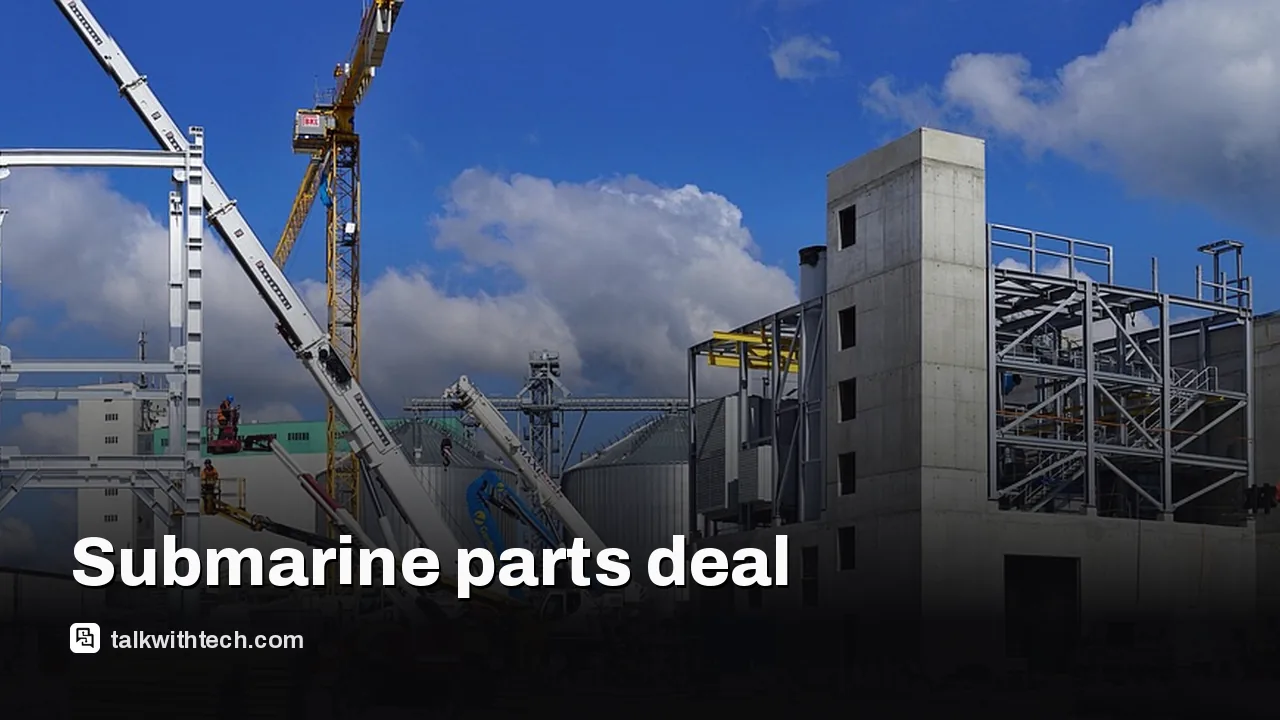
A distant view of an empty industrial site with cranes and wide-open space

The short version

  • The US Navy awarded Anduril a contract worth up to $2.9 billion, with payments tied to proven production results.
  • Anduril will spend $3.7 billion of its own money on Arsenal-2, a 187-acre submarine parts yard at Sparrows Point in Baltimore County.
  • The yard should open in 2030, add about 15% to Virginia-class production capacity and create more than 3,100 direct jobs.
  • The Pentagon dismissed conflict concerns after co-founder Palmer Luckey joined its Project Meridian advisory group days before the award.
Quick read · 1 min

Anduril, the defense tech company best known for drones and AI software, has won a US Navy contract worth up to $2.9 billion to make parts for Virginia-class submarines. It will also invest $3.7 billion of its own money in Arsenal-2, a new yard at the old Sparrows Point shipbuilding site in Baltimore County, Maryland.

The Navy needs the help. Congress pays for two of these submarines a year, but builders have been turning out closer to one. Arsenal-2 could lift capacity by about 15% once it opens in 2030.

  • More than 3,100 direct jobs are promised in Maryland.
  • Payments depend on Anduril actually delivering parts.
  • Work starts sooner at a new plant in Orange County, California.

The Pentagon says there is no conflict in co-founder Palmer Luckey joining its Project Meridian group days before the award.

Anduril built its name on drones, AI software and autonomous weapons. Now it is going into heavy steel. The defense tech company has won a US Navy contract worth up to $2.9 billion to make parts for Virginia-class attack submarines, and it says it will put $3.7 billion of its own money into a new yard in Maryland to do it.

Together that adds up to as much as $6.6 billion aimed at one of the Pentagon’s sorest problems: America cannot build submarines as fast as it has promised to. The project also brings thousands of jobs back to a historic Baltimore shipbuilding site, and it raises fresh questions about how close tech founders are getting to the people who hand out defense money.

01

What the Anduril submarine contract pays for

The Navy deal is not a fixed check. Anduril says payments are tied to demonstrated production results, so the full $2.9 billion only arrives if the company actually delivers parts.

Those parts are components and, later, large hull sections called blocks for Virginia-class boats. Anduril will not build whole submarines. Finished sections will go to the two yards that already assemble them, General Dynamics Electric Boat and HII’s Newport News Shipbuilding. Company president Christian Brose said the goal is to become a much larger part of the supply chain for those lead builders over time.

Anduril plans to run the yard with ArsenalOS, its own factory software. It links fabrication, material movement, inspections and paperwork in one system so managers can see in real time where each job stands. Welders, pipefitters and electricians still do the physical work.

Interior of a factory with large metal components and assembly lines
02

Inside Arsenal-2 at Sparrows Point

The new yard, called Arsenal-2, will sit on 187 acres at Tradepoint Atlantic in Baltimore County. That is the redeveloped Sparrows Point site, once home to Bethlehem Steel’s steelmaking and shipbuilding operations, which built military vessels for both world wars. New ship construction there stopped in 1986, and the old yard shut for good in 2003.

When finished, the complex will cover more than 2 million square feet. Plans include high-bay assembly halls, fabrication areas, production lines that can be reconfigured, and a 1,200-foot graving dock (a dry dock dug into the shore where large structures are built). Road, rail and sea links will move the huge assemblies out.

Maryland officials call it the largest private investment in the state in more than a decade. The state and Baltimore County have agreed to match up to 13% of Anduril’s planned investment through incentive programs, including money for a workforce training center near the site.
03

Why the Navy needs another submarine supplier

Congress has generally paid for two Virginia-class submarines a year. Actual output has been far lower, roughly 1.1 to 1.4 boats a year recently, held back by worker shortages and supply problems. Some deliveries are running years late.

The Navy wants to reach two a year and then about 2.33, partly to meet commitments to Australia under AUKUS, the submarine pact between the US, the UK and Australia. Components such as torpedo tubes have been named as a bottleneck slowing boats already under construction.

A senior administration official said Arsenal-2 could add about 9 million production labor hours each year at full capacity. That is roughly a 15% boost for the Virginia-class program, because more work could happen in parallel instead of queuing at the two main yards.

A conference room with people in business attire at a long table
04

What it means for jobs and taxpayers

For people in the Baltimore area, the headline is work. Anduril says Arsenal-2 will create more than 3,100 direct jobs and support over 11,000 indirect ones once it is fully running. Those are skilled trades: welders, electricians, shipfitters and inspectors.

For taxpayers across the US, the deal is a test of a different way to buy weapons. Instead of the Navy paying upfront for a new yard, a private company is putting its own billions at risk and only collecting the full contract if it produces. If it works, expect more defense tech firms to pitch the same model. If Anduril struggles to hire, find suppliers or meet the Navy’s tough quality standards, the money and the extra capacity could arrive later than hoped.

There is one catch. Arsenal-2 does not open until 2030, so it will not fix today’s delivery backlog. Its value is in the years after that, when the Navy will be trying to sustain higher output while also preparing to transfer submarines to Australia.

05

The Palmer Luckey question

The award landed days after Anduril co-founder Palmer Luckey joined Project Meridian, a Pentagon group studying technologies for future warfare. The group also includes Elon Musk and former House Speaker Newt Gingrich, and its work overlaps with products Anduril sells to the government.

The Pentagon rejected any suggestion of a conflict. Its chief technology officer, Emil Michael, said there was “nothing to see here” and argued that Meridian’s mix of academics, military staff and industry leaders brings the expertise it needs.

President Trump visited the planned Maryland site and spoke about autonomous submarines as a possible future for naval warfare, an area that plays to Anduril’s strengths in unmanned systems.

06

What happens next

Anduril says site preparation starts right away while it seeks permits and approvals. Before Maryland opens, it will start making parts, including torpedo tubes, at a new 160,000-square-foot plant in Orange County, California. The company says that gives it about a two-year head start on proving its manufacturing processes.

07

Quick answers

How much is the Anduril Navy submarine contract worth?

Up to $2.9 billion, paid as Anduril shows real production results. The company is adding $3.7 billion of its own money, for about $6.6 billion in total planned spending.

Will Anduril build submarines?

No. It will make components and large hull sections for Virginia-class boats. Electric Boat and Newport News Shipbuilding will still do final assembly.

When will the Maryland shipyard open?

Operations are expected to begin in 2030 and grow over time. Parts work starts sooner at the California plant.

You're reading the quick version.