Thursday, 15 October 2026

YouTube Music AI labels show which songs use generative tools

YouTube Music will mark tracks created with generative AI, helping listeners know when AI tools shaped a song.

YouTube image for: YouTube Music AI labels show which songs use generative tools

The short version

  • YouTube Music will add an AI label to songs created or significantly altered by generative AI tools.
  • The label appears on the player page and can be tapped for more information. It uses YouTube's detection tools and industry partners.
  • The system mirrors labeling already used for AI-generated YouTube videos and is rolling out starting today.
  • Publishers can optionally indicate how much AI was used, from fully AI-generated to none.
Quick read · 1 min

YouTube Music is adding AI labels to songs made with generative AI. The label appears on the player page and can be tapped for more details. It’s based on YouTube’s detection tools and industry partnerships, and it mirrors labeling used for AI-generated videos.

Which songs get labeled? Those created entirely with AI or significantly altered by AI. Publishers can optionally indicate how much AI was used. The labels will roll out to the main YouTube app soon.

Why it matters: it gives you transparency about AI involvement and helps you decide what to listen to. For creators, it’s a new requirement that could affect how music is marketed and perceived.
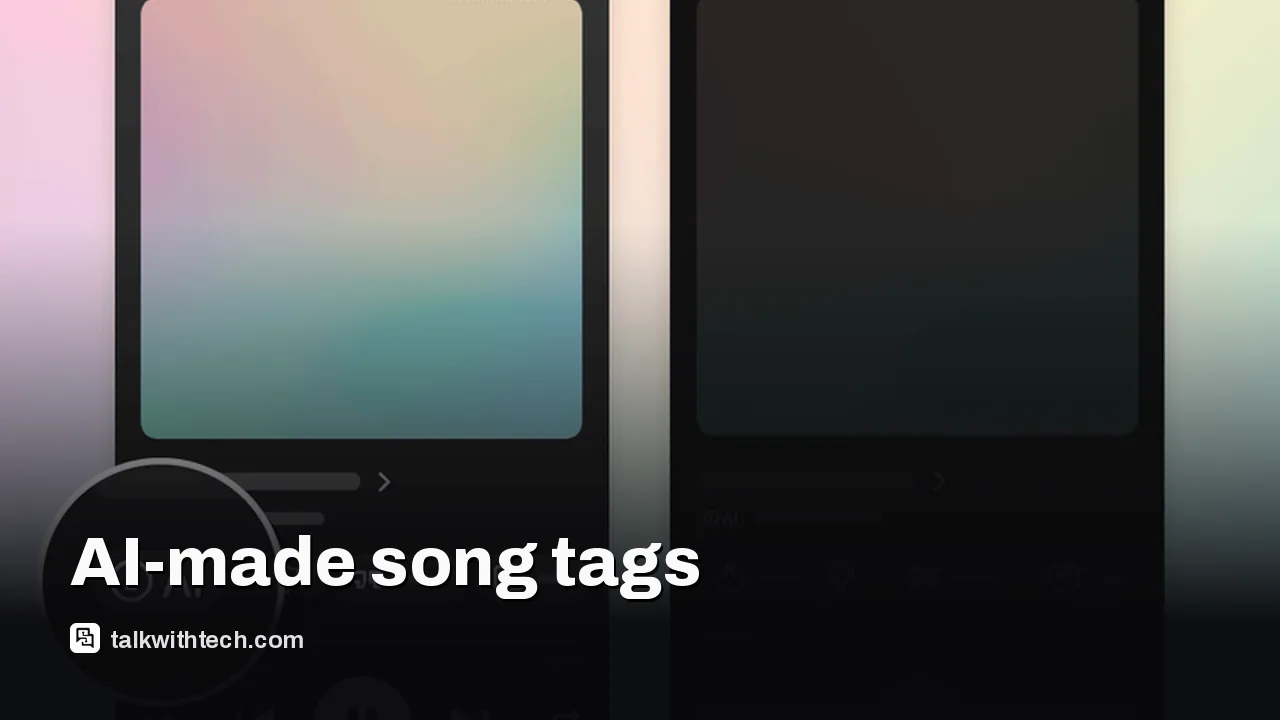

YouTube Music is rolling out new AI labels to help listeners spot tracks created with generative AI. The labels, which say something like Made with AI, will appear on the player page when a song features AI-generated compositions or AI-generated vocals. You can tap the label to learn more about how the track was created.

The labeling uses YouTube’s own detection systems and partners in the music industry. It’s a continuation of the company’s push to be more transparent about AI-generated content across its services.

01

Which songs get the AI label?

Songs that are created entirely with AI or that have been significantly altered by AI will carry the label. The process of deciding when to apply the tag is similar to how YouTube handles AI-generated videos. Publishers uploading music can also indicate how much AI was used, with options for fully AI-generated, partially AI-generated, or no AI involvement, though this portion is optional.

Hands reaching to phone next to vinyl sleeve and coffee in cafe
02

How it works in practice

When you’re listening to a track with AI involvement, you’ll see the AI label on the player screen. Tapping the label opens a menu with more details about the AI usage in that track. This makes it easier to understand why a song sounds unusual or close to something you’ve heard before and helps separate human-made work from machine-made content.

03

Why this matters to you

For listeners, the move adds clarity in a crowded streaming market where AI-generated music is becoming more common. It helps you decide if you want to explore AI-created music or support artists who built a track without AI tools. For artists and labels, it creates a framework for disclosure that could influence how fans perceive a song and how music is marketed online.

Table with CDs, synth, and smartphone suggesting choice between AI and human music
04

What could be tricky about labeling AI music

Labeling AI music raises questions about transparency and accuracy. YouTube is using its detection tools and working with industry partners, but how reliably AI usage can be verified in every case remains a challenge. The optional publisher input on AI usage adds another layer, but not every release will include it. The system mirrors the approach YouTube already uses for AI-generated videos, which has sparked debate about consistency and interpretation.

05

What this means for everyday music fans

If you’re curious about the origins of a track, you’ll have a quick way to check whether AI played a major role. If you’re a creator or artist, you’ll want to understand how your music could be labeled and whether you’ll flag AI involvement in the uploader tools.

06

What happens next

YouTube says the AI labels will appear on YouTube Music starting today and will roll out to the main YouTube app soon. As the labeling system matures, expect refinements in how AI usage is reported and how it’s presented to listeners.

07

Quick answers

Will every AI-created song get a label?

Not necessarily. Labels apply to songs created entirely or significantly with AI, and some details depend on the publisher input and detection results.

Can artists opt out of AI labeling?

Publishers can indicate AI usage, but the exact rules for opting out aren’t detailed yet.

What to watch for next: clearer guidelines on how AI involvement is measured and displayed as more tracks land on playlists and radio-ready releases.

You're reading the quick version.