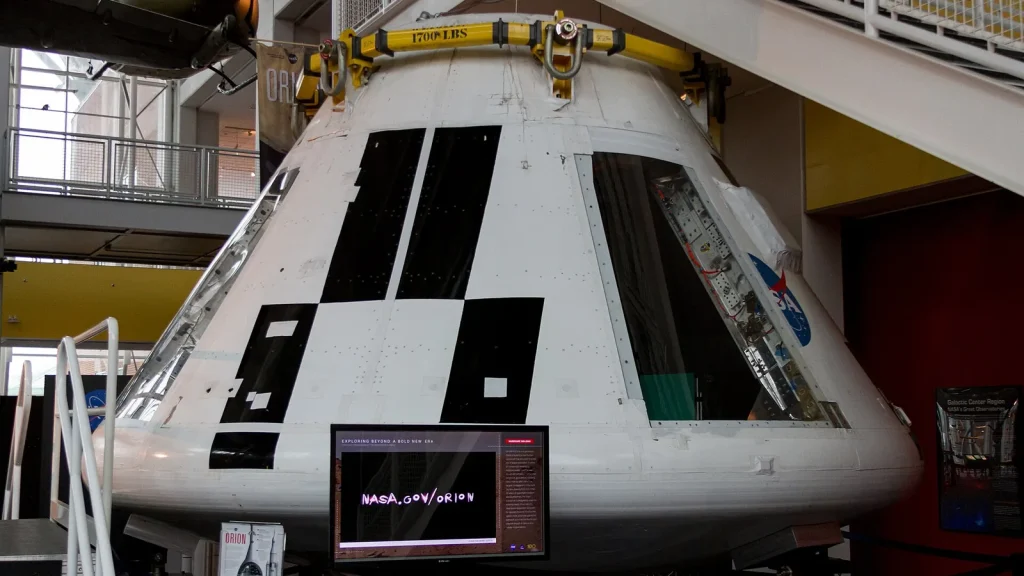
NASA has published roughly 800 gigabytes of Artemis II data, a trove that includes thousands of images and videos, plus transcripts and crew notes.
The collection is one of the first major batch of human-generated lunar data released in many decades, spotlighting how scientists study the Moon from a crewed mission.
A trio of official documents accompanies the archive to guide researchers in how to use the data.
Early analyses already note meteoroid impacts during a short lunar eclipse, offering insights for future lunar exploration.
Quick read · 1 min
NASA has released about 800 GB of Artemis II data, including 11,000 images and 8.5 hours of astronauts’ observations, plus notes and transcripts from the Orion capsule.
The library is open to researchers and the public via NASA’s Planetary Data System and the Artemis II science page. Three official documents accompany the dataset to guide users.
Early analyses note meteoroid impacts during a short lunar eclipse, a finding that helps plan for future bases and missions on the Moon.
What you’ll find: images, video, transcripts, and astronaut notes
Where to read more: the Artemis II science page and Planetary Data System
Why it matters: helps plan safer, more informed future lunar missions
NASA has opened a sizable archive from the Artemis II mission, making it available to researchers and space enthusiasts alike. About 800 gigabytes of material include thousands of images and videos, plus the astronauts’ spoken observations, notes, transcripts, and onboard photographs from the Orion capsule.
The release is notable because it represents one of the first large-scale lunar data sets gathered largely by humans outside Earth in more than five decades. Scientists, students, engineers, and hobbyists can explore the data via NASA’s Planetary Data System and a dedicated Artemis II science page. The package comes with three official documents intended to help readers understand and reuse the data, though NASA describes them in more technical terms, they serve as a user guide, a science report, and an operations-focused report for the lunar data set.
01
What’s in the Artemis II data bundle
Beyond the volume, the materials span visual media and written records. The archive includes tens of thousands of images and videos captured from the Orion spacecraft, along with astronauts’ notes and transcripts. Researchers across planetary science, aerospace engineering, heliophysics, and remote sensing will use the data to study lunar terrain, composition, and potential hazards for future missions.
02
How the data will be used
NASA frames the release as a resource to test hypotheses about the Moon’s geology, meteoroid activity, and how surface conditions change with lighting and solar exposure. Early analyses highlight several meteoroid impacts observed during a 54-minute eclipse, a detail that helps scientists estimate how often such events occur and what that might mean for planning safe, sustainable bases on the Moon.
03
Access options for the public
Anyone can access and study the files, but the primary entry point is NASA’s Planetary Data System and the Artemis II science page, which host the data, the accompanying reports, and a set of mission transcripts. Universities, space agencies, and private companies can all tap into the same dataset to verify findings or test new ideas.
04
What this means for everyday readers
For people who follow spaceflight, this is a reminder that open science has moved into orbit. You don’t need a lab to explore lunar data; you can flip through astronaut notes, skim mission transcripts, and study lunar photographs. The release also shows NASA’s push to make the engineering and science behind crewed missions more transparent and reproducible.
NASA is likely to publish further analyses and possibly new datasets as researchers mine the Artemis II archive. If you’re a student, educator, or curious reader, keep an eye on the Artemis II science page and the Planetary Data System for updates, plus any software tools that help visualize the data more intuitively.
06
Quick answers
What exactly did NASA release?
Roughly 800 GB of Artemis II data, including 11,000 images and videos, 8.5 hours of astronauts’ observations, notes, transcripts, and Orion photographs.
How can I access it?
Through NASA’s Planetary Data System and the Artemis II science page, which host the data and the accompanying guides.
Why is this important?
Open access lets researchers worldwide reanalyze discoveries, test new ideas, and inform safer, more productive future lunar missions.
New research presented at an aging meeting in Boston links GLP-1 weight-loss medications to reduced biological age in some users, while flagging a range of side effects.
Persistent rains and a stalled system left parts of Thailand under water in late September to early October 2026, with Landsat imagery capturing floodwaters and floating solar arrays.
3 min read
We use cookies to understand how readers use Talk With Tech, so we can make it better. Is that OK? Privacy policy
The Daily Brief
Today's biggest tech stories, in 5 minutes
Every morning, the news that matters from AI, phones, apps and the people shaping tech. Explained in plain English. Free.
One email a day. No spam, unsubscribe anytime. Privacy policy