Monday, 2 November 2026

Northern lights tonight UK: unlikely, but Thursday looks better

After a bright Halloween show, solar activity is fading fast. Here is where the odds stand tonight, the night to circle instead, and how to get an alert.

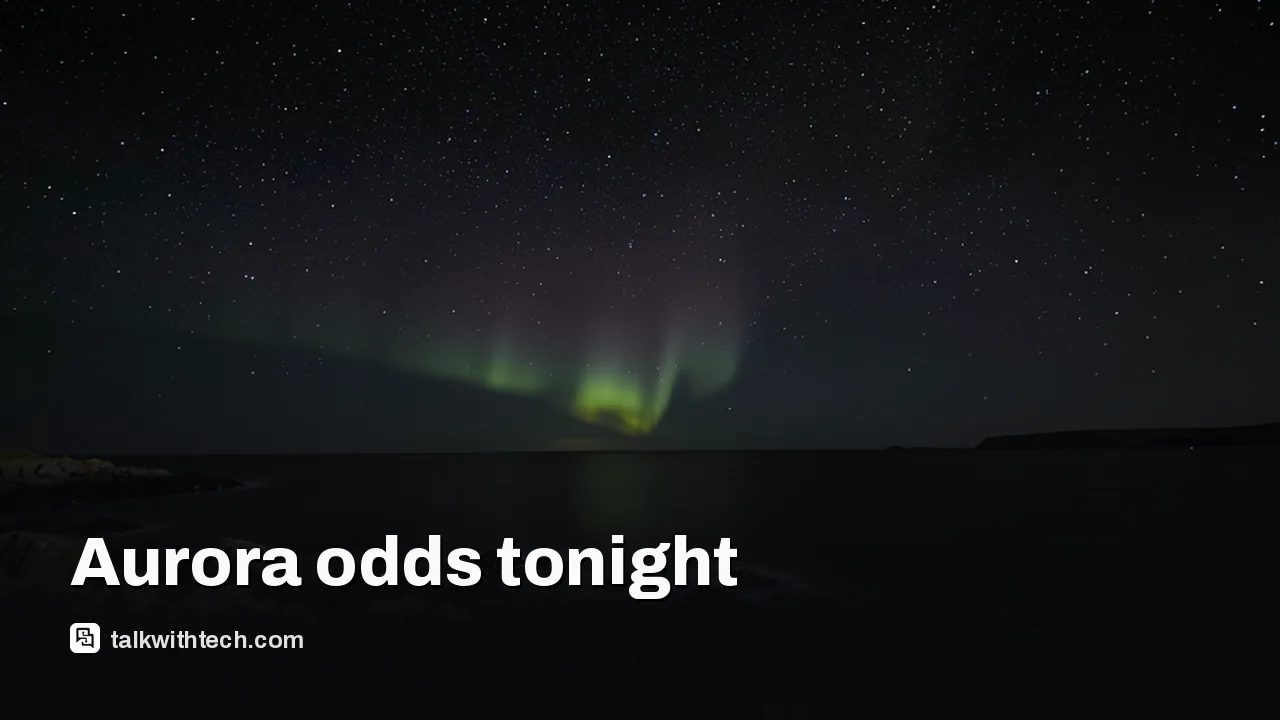
A faint green aurora glow low over a dark coastline at night

The short version

  • The Met Office expects aurora activity to sink to background levels on Monday and Tuesday nights, Nov. 2 and 3.
  • Its next chance of sightings is the night of Nov. 5, and only for the far north of Scotland.
  • A slow solar eruption may brush Earth that day and raise the odds of a minor G1 geomagnetic storm.
  • Free AuroraWatch UK alerts and a clear, dark northern horizon matter more than any set time.
Quick read · 1 min

Don't expect the northern lights over most of the UK tonight. The Met Office says the solar wind that powered Saturday's Halloween display is easing, with activity confined to high latitudes on Monday, Nov. 2, and near background levels on Tuesday and Wednesday. Only the very north of Scotland has a slim chance, under clear skies.

The better date is Thursday, Nov. 5. A solar eruption from Sunday may give Earth a glancing blow, and a small coronal hole could add speed to the solar wind. Forecasters see a chance of a minor G1 storm and possible sightings in the far north of Scotland.

  • Check the Met Office space weather page and the Kp index.
  • Sign up for free AuroraWatch UK alerts and act on amber or red.
  • Use night mode and keep your phone still, facing north.

If you are hoping to see the northern lights tonight in the UK, the honest answer is: probably not. The Met Office says the fast solar wind behind the Halloween display is easing, with aurora activity pulling back to high latitudes on Monday, Nov. 2, and dropping to near background levels on Tuesday and Wednesday.

That is a letdown after Saturday night, when a vivid green glow lit up the Highland sky above Nairn and colorful bands showed up across Scotland and Northern Ireland. But there is a better night coming. Forecasters now point to Thursday, Nov. 5, as the next real chance, at least for people in the far north of Scotland.

01

Can you see the northern lights tonight in the UK?

For most of the country, no. The Met Office’s latest outlook, issued on Monday afternoon, describes the solar wind as a little above normal but falling, with a weak magnetic field in space and quiet to unsettled conditions around Earth. That mix rarely pushes the aurora far enough south to be seen from Britain.

If anywhere has a slim chance, it is the very top of the map: Shetland, Orkney and the northern coast of the Scottish mainland, under a clear sky. Even there, any glow would likely be faint and low on the northern horizon, more easily picked up by a phone camera than by eye.

So tonight is a good night to get set up for later in the week rather than to drive out to a dark spot.

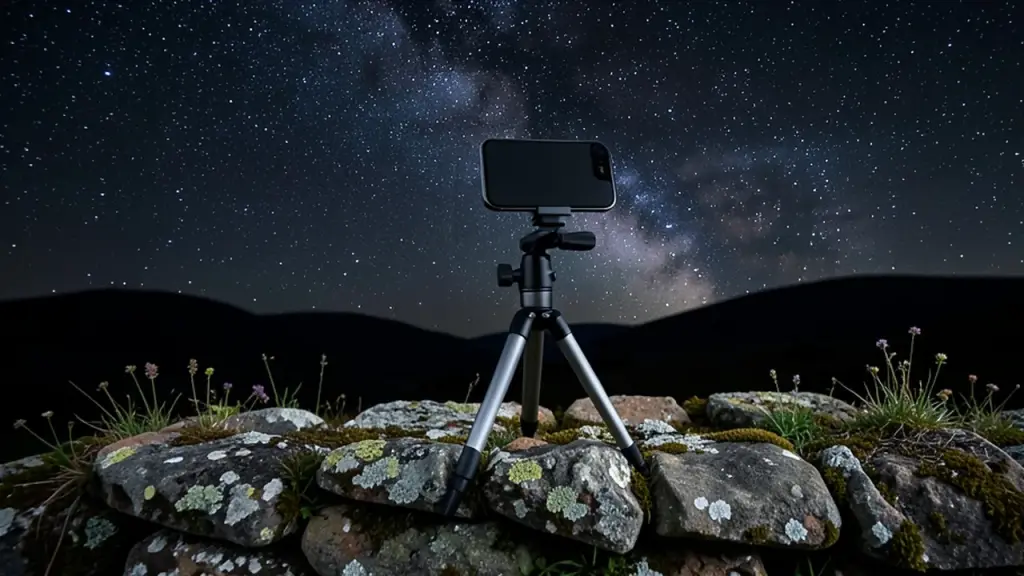
A phone on a small tripod aimed at a starry night sky
02

Why Thursday, Nov. 5, is the night to watch

Two things line up on Thursday. First, the Sun threw off a coronal mass ejection (a large cloud of charged gas) during a filament eruption on Sunday afternoon. The Met Office thinks it will most likely pass ahead of Earth, but it gives a slight chance of a glancing blow when it arrives around Nov. 5.

Second, a small coronal hole (a patch on the Sun that lets particles stream out faster) sits just west of the center of the Sun’s disc. It may add a little extra speed to the solar wind that same day, though the timing is uncertain.

Put together, the forecast headline is a chance of G1, or minor, geomagnetic storm intervals on day four of the outlook. In practice, the Met Office says that could mean sightings in the far north of Scotland on Thursday night. It is a chance, not a promise, and a near miss from that eruption would leave skies quiet.

One more local catch: Nov. 5 is Bonfire Night. Smoke and the glow from fireworks displays can wash out a faint aurora near towns, which is another reason to head somewhere dark and rural if the alert comes.
03

Where in the UK has the best chance

Latitude decides most of it. Britain sits south of the main aurora belt, which normally hangs over Norway, Iceland and Greenland. The Met Office explains that only a severe or extreme geomagnetic storm, in the Kp 8 or 9 range, can drag that belt directly over the UK, and that is very rare.

Moderate to strong storms shift the aurora toward southern Iceland or the Faroe Islands. Because the light is produced so high up, it can still be seen faintly from Scotland, northern England and Northern Ireland when that happens.

That is why the ranking almost never changes:

  • Best: Shetland, Orkney and northern Scotland, including the Highland coast around Nairn.
  • Possible during stronger activity: the rest of Scotland, Northern Ireland and northern England.
  • Rare: the Midlands, Wales and southern England, which usually need a major storm.
A dark country road under a clear night sky with a soft glow on the horizon
04

What time to look, and how to check before you go

There is no fixed showtime. Auroras flare and fade in bursts, so the best plan is to be outside once it is properly dark and to keep checking. The clocks went back on Oct. 25, which means darkness now arrives about an hour earlier in the evening and gives you a longer window.

Before you leave home, check three things:

  1. The Met Office space weather forecast. It is updated daily and says where and when sightings are likely. Look at the Kp index too: it runs from 0 to 9, and higher numbers mean better odds.
  2. An AuroraWatch UK alert. Lancaster University runs this free service using magnetometers that measure disturbance in Earth’s magnetic field. It uses four color-coded levels and posts automatically when it reaches amber or red, which are the ones worth acting on. You can follow it on X, Facebook or Telegram, or use one of the third-party phone apps built on its data.
  3. Your local cloud forecast. Thick cloud hides even a strong display, so a clear patch matters as much as solar activity.
05

How to photograph the aurora on your phone

Your phone may see more than you do. The Met Office notes that photos often make the aurora look much brighter than it appears in person, because cameras gather light over a longer exposure. A faint gray-green haze to your eye can turn into a vivid green band on screen.

To get the most from your phone:

  • Turn on night mode so the camera takes a longer exposure.
  • Keep the phone completely still. A small tripod is ideal; a wall or a car roof works in a pinch. Use the self-timer so your tap does not shake the shot.
  • Point it at the northern horizon and include something in the foreground, like trees or water, for scale.
  • Find a spot with no streetlights and give your eyes time to adjust to the dark.
  • Dress warmly. You may be standing outside for a long time, and cold drains phone batteries faster.

If you are driving to a remote spot, the Met Office also warns that strong geomagnetic activity can disrupt satellite navigation, so know your route without relying entirely on GPS.

06

What causes the northern lights, in plain English

The Sun sends out a constant stream of charged particles called the solar wind. Earth’s magnetic field funnels some of them toward the poles, where they hit gases high in the atmosphere and give off light. Oxygen produces the common green and, at greater heights, a rare red. Nitrogen adds blues and purples.

This weekend’s show came from fast wind pouring out of a coronal hole, not from a big eruption, which is why it was gentler than the major storms of recent years. The Met Office says the UK can catch sightings several times a year, especially in the darker months, so even if Thursday fizzles, there will be other nights.

07

Quick answers

Will the northern lights be visible tonight in the UK?

Unlikely for most people. Activity is near background levels on Nov. 2 and 3, with only a slim chance in the far north of Scotland under clear skies.

When is the next chance to see the aurora in the UK?

Thursday night, Nov. 5, mainly in the far north of Scotland, if a glancing blow from a solar eruption arrives as the Met Office thinks it might.

Can you see the northern lights in England?

Sometimes, during strong storms, especially in northern England. Southern England usually needs a severe storm, which is rare.

You're reading the quick version.