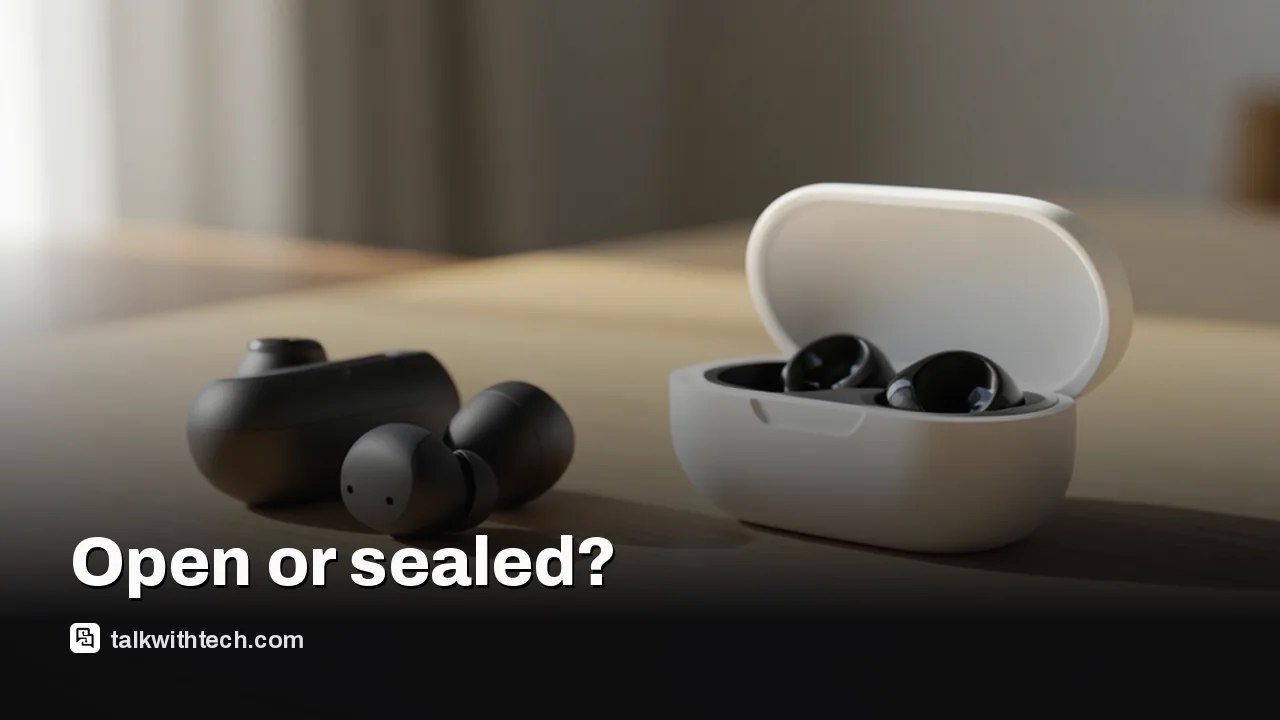
Open earbuds sit outside the ear canal, so you hear your surroundings all the time and get no real noise cancellation.
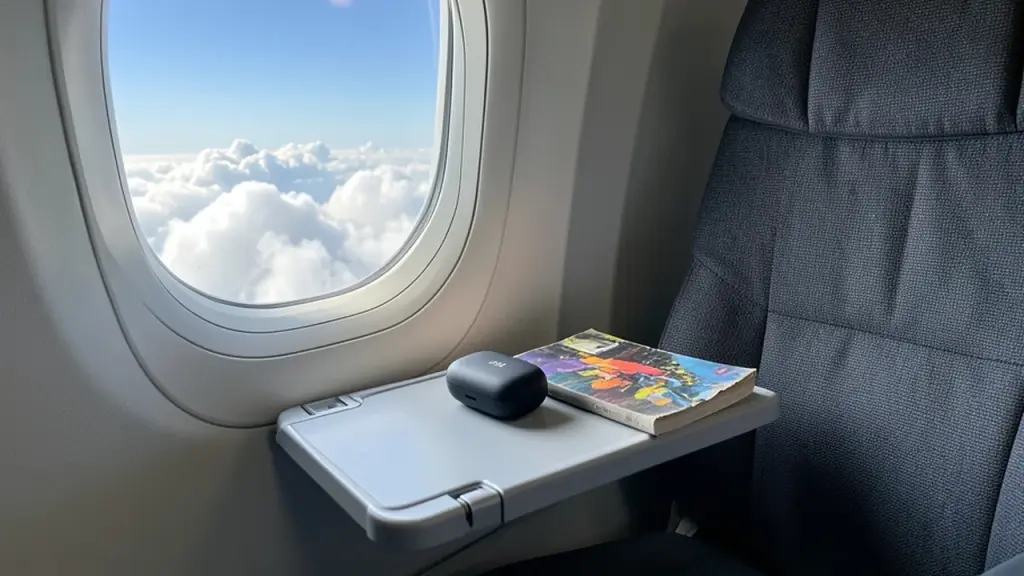
Noise-canceling earbuds seal the ear and use microphones to cancel steady sounds like engine drone, which is better for flights and focus.
Open-ear products made up more than 10% of the global personal audio market in 2025, according to research firm Omdia.
Hybrid models with noise reduction exist, but they cost more and give up battery life when that feature is on.
Quick read · 1 min
Open earbuds sit outside your ear canal, usually on a hook or clip, so you hear the world around you while music plays. Noise-canceling earbuds do the opposite: they seal the ear and use microphones to cancel steady noise like plane engines.
Choose open earbuds for running, cycling, all-day comfort and staying aware at work or home. Choose noise canceling for flights, loud commutes and focus. Open-ear products now make up more than 10% of the personal audio market, and prices run from under $100 to $299.
Open earbuds can't truly cancel noise.
People nearby may hear your music at high volume.
Hybrid models exist but cost more and lose battery life with noise reduction on.
Try a budget pair first if you're unsure.
A few years ago, earbuds came in one flavor: push them in, seal the ear, and turn the world down. Now a fast-growing share of buyers want the opposite. Open earbuds hook or clip onto the outside of your ear and leave the canal free, so you can hear traffic, your coworkers and the barista calling your name while music plays.
The category is no longer niche. Research firm Omdia says open-ear products made up more than 10% of the global personal audio market in 2025, with shipments above 30 million units. Bose, Sony, Shokz, JBL, Soundcore and now Samsung all sell them. If you’re shopping for earbuds this season, the real question isn’t which brand, it’s which type. This guide breaks down how open earbuds and noise-canceling earbuds differ, who each one suits, and what you give up either way.
01
What are open earbuds?
The name says it: these earbuds don’t sit inside your ear canal. Most use air conduction, which means a small speaker points sound toward your ear from just outside it. They usually stay put with an ear hook or a cuff that clips over the edge of the ear.
Some people also count bone conduction headphones as open, because they leave the ear canal free too. Those send vibrations through the bones of your head instead of through the air. They work on the same principle of keeping your ears open, but the fit and sound are different.
The easiest way to think of open earbuds is as a permanent transparency mode. Regular earbuds have a transparency setting that pipes outside sound in through microphones, which can sound hissy or oddly amplified. Open earbuds don’t need it, because nothing blocks the sound in the first place.
02
How noise-canceling earbuds work
Noise-canceling earbuds take the opposite approach. They seal your ear with silicone or foam tips, which blocks a lot of sound on its own. Then active noise cancellation (ANC) kicks in: built-in microphones listen to the noise around you and the earbuds play an inverted sound wave that cancels it out.
ANC is best at steady, low-pitched noise, such as the drone of a plane engine or a train. Cutting that noise means you can listen at a lower volume, which is easier on your hearing over long stretches.
That is also the hard limit for open earbuds. Because they sit outside the ear and don’t cover it, true active noise cancellation is essentially impossible. They rely on your music being loud enough to mask the background, which works far less well.
03
Open earbuds or noise canceling: who should buy which
The right pick depends far more on where you listen than on sound quality alone.
Pick open earbuds if you
Run, cycle or walk near traffic. Hearing cars, bikes and people around you is a real safety advantage.
Hate the feeling of something in your ear. With no tips pressing in, there’s no pressure or plugged-up feeling, which makes all-day wear easier.
Get ear infections or have sensitive ears. An open ear canal traps less heat and moisture.
Talk to people a lot. Office workers who hop between calls and desk chats, or parents keeping an ear on the kids, don’t have to keep pulling a bud out.
Often wear only one earbud to stay aware. Open buds let you keep both in.
If you listen mostly at home or on walks and like hearing what’s going on, open earbuds can replace your regular pair entirely.
Stick with noise canceling if you
Fly or commute on loud trains and buses. Nothing open-ear comes close to ANC for engine drone.
Need to concentrate in a noisy office, library or home.
Care about deep bass and fine detail. A sealed ear gives a quieter stage for music, and bass is where open designs usually struggle.
Make lots of calls in noisy places and want the cleanest possible sound.
04
The catches nobody mentions
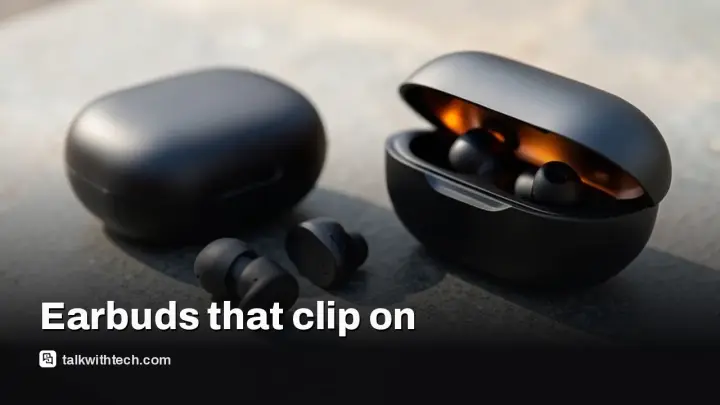
Other people may hear your music. Good open earbuds keep leakage low, but at higher volumes someone standing a couple of feet away might make out the lyrics. Some new models, including Samsung’s first clip-on Galaxy Buds On, advertise special tech to reduce that leakage.
Fit is personal. Clip designs and ear hooks feel very different, and every ear is shaped differently. Reviewers have found some clip models get uncomfortable after several hours, while some hook models feel less secure. Buy from a store with an easy return policy if you can.
The charging case can be bulky. Hook-style open earbuds in particular often come with bigger cases than standard earbuds.
Hybrids are a compromise. A few new models try to do both. Soundcore makes an open earbud that can also be worn as a semi-in-ear noise-canceling bud, though testers say it masters neither style. The Shokz OpenFit Pro stays open but adds noise reduction, which softens background clutter without creating real silence. Its battery drops from up to 12 hours to six when that feature is on, and from 50 hours to 24 with the case.
Prices range widely. Budget open earbuds under $100 now come from brands including Soundcore, EarFun, Raycon and CMF by Nothing. In the middle, the Shokz OpenDots One cost $199.95. At the top, the second-generation Bose Ultra Open earbuds cost $299 and the new Bose Sport Open cost $199.
You don’t need to spend top dollar to find out whether you like the style. Reviewers found that cheaper ear-hook models, such as the Soundcore AeroFit 2, cost about half as much as the OpenDots One and still sound decent, which makes them a sensible first try before you commit to a premium pair.
Battery life is one place open earbuds often win, partly because they don’t power noise cancellation. A few examples from testing:
Shokz OpenDots One: 10 hours per charge, 40 hours with the case.
Bose Ultra Open: 7 hours per charge (4 with immersive audio on), 19.5 hours with the case.
Shokz OpenFit Pro: up to 12 hours, or 6 with noise reduction on.
06
How to choose in three questions
Where will you use them most? Outdoors and around people points to open earbuds. Planes, trains and open-plan offices point to noise canceling.
Do in-ear tips bother you? If they hurt, itch or fall out, try open earbuds before giving up on earbuds altogether.
Do you want one pair for everything? If yes, a good noise-canceling pair with a transparency mode is still the most flexible choice. Many people end up owning one of each.
Whichever you buy, keep the volume moderate. With open earbuds it’s tempting to crank music up to drown out a noisy street, and that is exactly when noise canceling, which lets you listen quieter, earns its keep.
07
Quick answers
Do open earbuds have noise cancellation?
No, not true active noise cancellation, because they don’t seal or cover the ear. A few models offer noise reduction that softens background sound without silencing it.
Are open earbuds safer for running?
They let you hear traffic and people around you, which is why many runners and cyclists prefer them over sealed earbuds.
Can people hear what I’m listening to with open earbuds?
At high volume, someone very close by may hear your music. At normal levels, good models keep leakage low.
Samsung's first clip-on earbuds go on sale in South Korea on Oct. 27. Here's what they do differently, what they might cost, and the signs of a wider launch.
Apple's first foldable and Samsung's new passport-style Fold share a 7.6-inch screen and almost the same price. Weight, toughness and waiting times split them.
Apple's first foldable goes back to a fingerprint button. A new report says prototypes of the next model hide Face ID under the outer screen. Should you wait?
5 min read
We use cookies to understand how readers use Talk With Tech, so we can make it better. Is that OK? Privacy policy
The Daily Brief
Today's biggest tech stories, in 5 minutes
Every morning, the news that matters from AI, phones, apps and the people shaping tech. Explained in plain English. Free.
One email a day. No spam, unsubscribe anytime. Privacy policy