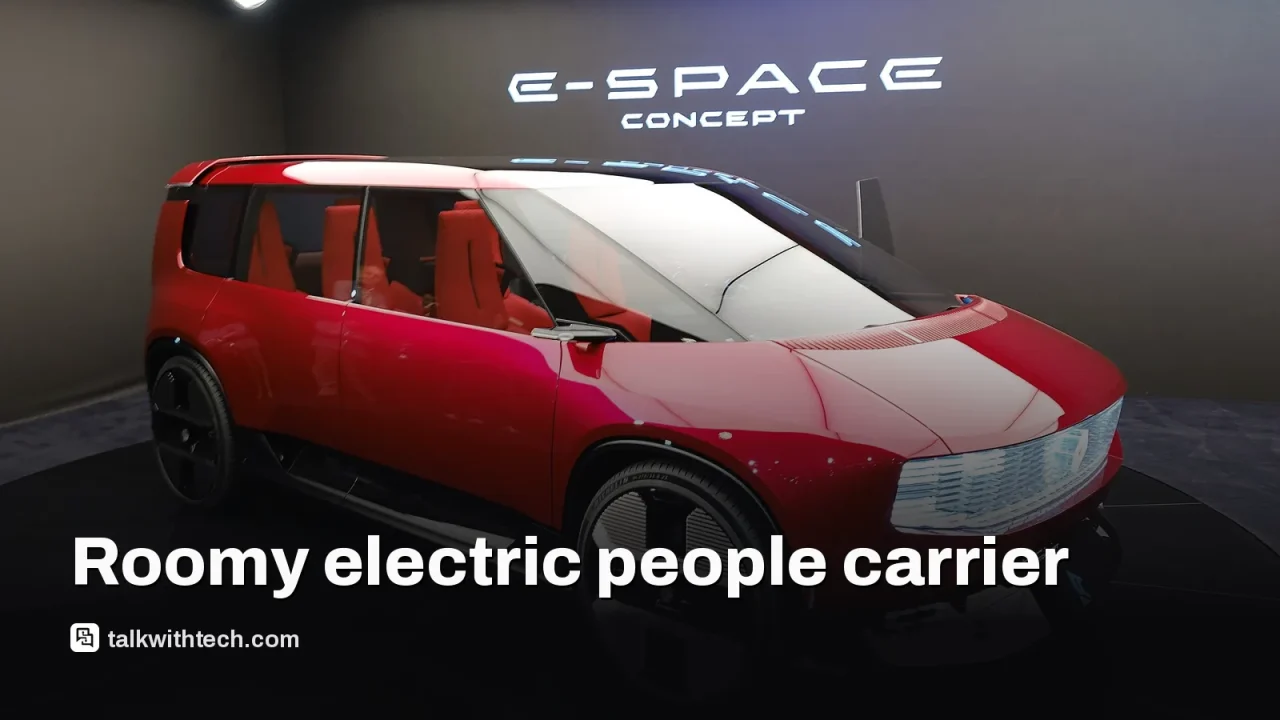
The cabin is the main event. Renault started with the interior and drew the body around it, so the floor is completely flat and there is no central pillar between the front and rear-hinged doors. Open both and you get one wide entry into the car.
There are six individual seats in three rows, all the same shape and size. Each one can swivel a little to make getting in and out easier. The two middle seats go further: they rotate 180 degrees to face the third row, a bit like the facing seats in an old European train compartment. Fold those middle seats flat and they become a large table for the people in the back.
A sliding console runs down the middle of the cabin. In the concept it holds a small fridge, an air purifier and game controllers. Folding tray tables and individual screens are there too, along with warm materials such as fabric-trimmed door handles, straw-based trim and thick wool carpet.
The driver gets a sweeping panoramic display that measures about 1,130 mm across, roughly 3.7 feet. This is the part most likely to show up in a Renault you can actually buy, since the company says the screen tech is confirmed for future production cars. A large glass roof floods the space with light.