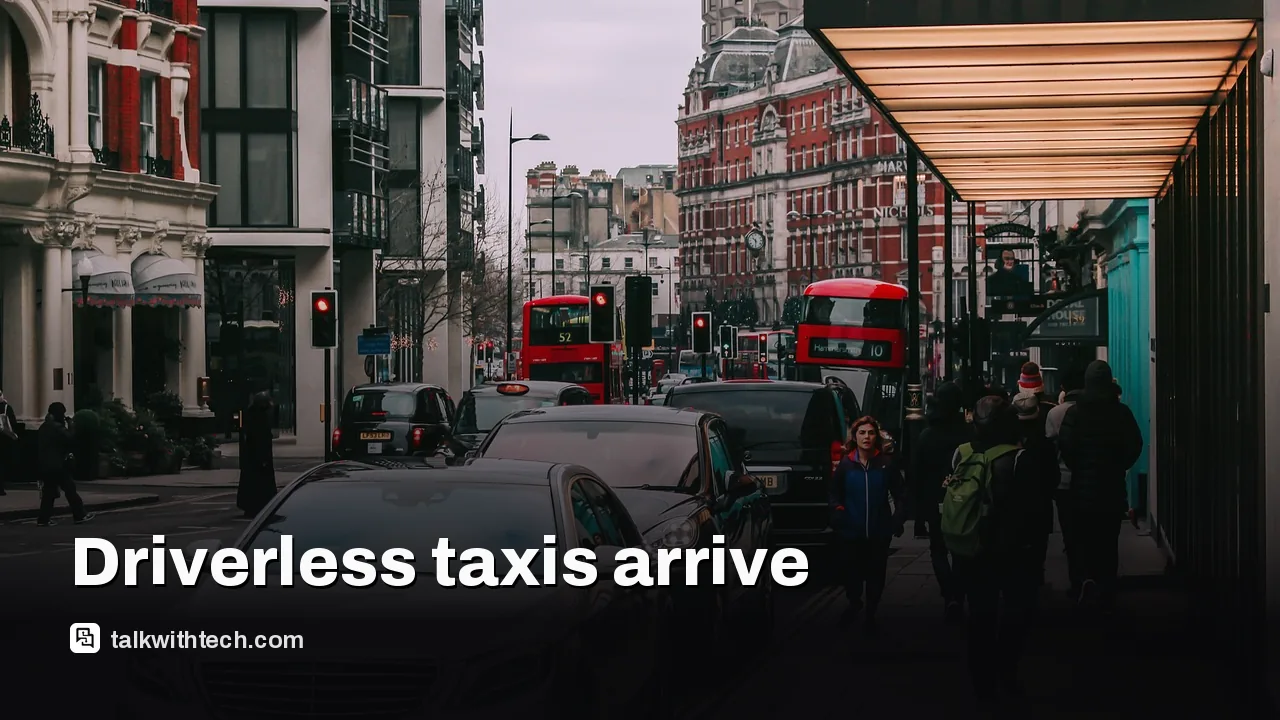
Uber and Pony.ai will begin hands-on testing of Pony.ai’s Gen-7 robotaxi in London in the near term.
The collaboration is part of Uber’s broader strategy to assemble an international mix of autonomous ride services.
London tests follow a Zagreb deployment and involve multiple partners overseeing the autonomous fleet.
Quick read · 1 min
Uber and Pony.ai are starting London tests of Gen-7 robotaxis in the coming weeks as part of a wider European effort to offer driverless rides.
The project follows a Zagreb deployment and uses a trio of partners to run the autonomous fleet, with Uber tying the service to its ride-hailing app. London testing is a step toward a broader, multi-city plan, with regulatory and safety questions to resolve first.
What this means for you is simple: driverless rides could become a real option in the future, but pricing, availability and safety oversight are still being worked out.
London tests begin soon
Partnerships span multiple players
Regulation and safety will shape timing
Uber and Chinese autonomous vehicle maker Pony.ai are moving toward real-world tests of driverless taxis in London. The two companies announced that they will start testing Pony.ai’s Gen-7 robotaxi in the city in the coming weeks. This marks a concrete step in Uber’s ongoing effort to build a diverse network of autonomous ride options through partner ecosystems.
Uber has been building a broad slate of partnerships to push driverless tech into the market. The company has signaled an ambition to offer autonomous trips in a sizable number of cities by the end of 2026, with a roughly even split between the United States and international locations. The London tests are positioned as part of a wider European push, where Uber is pursuing several collaborations to bring robotaxis into operation.
The London effort mirrors the model used in Zagreb, Croatia, where Pony.ai provides the autonomous driving system and a partner operates the fleet. A third partner handles rider access and network management, while Uber ties the service into its ride-hailing app to connect passengers with the autonomous fleet.
Beyond this project, Uber has invested in and partnered with other UK autonomous ventures, including Wayve. Wayve’s latest funding round attracted contributions from major tech names, including Microsoft and Nvidia, with Uber contributing as well. The network of partnerships aims to create a European path for robotaxis that isn’t owned by a single company or driven by a single technology stack.
For everyday readers, the immediate questions are practical: if and when a London robotaxi service becomes publicly available, how it will be priced, and who oversees safety and insurance when a robot is behind the wheel. These pilots are steps toward answers, not a guaranteed consumer rollout.
Uber wants a multi-partner approach to autonomous rides, spreading the work across several tech and operational partners rather than relying on one company to supply everything. The London tests are part of a broader European expansion that could scale up in the years ahead, depending on regulatory approvals and public safety outcomes.
02
What Gen-7 implies
Gen-7 refers to the latest generation of Pony.ai’s autonomous driving stack. While specifics aren’t laid out in the initial briefing, the label signals improvements in sensing, decision-making and safety features compared with earlier versions used in pilots and tests globally.
03
What this means for you
If these tests eventually translate into a public service, London riders could see rides offered through Uber’s app without a human driver present. But pilots will still navigate strict safety rules, local regulations, and insurance requirements before a wider rollout can occur. Pricing and accessibility remain to be announced as pilots progress.
04
What happens next
The immediate next step is the London testing phase, expected in the coming weeks. After the pilot period, regulators and operators will evaluate safety and integration with city services, which will shape any future consumer availability. Local neighborhoods, rider eligibility and cost structures will all be clarified as the program evolves.