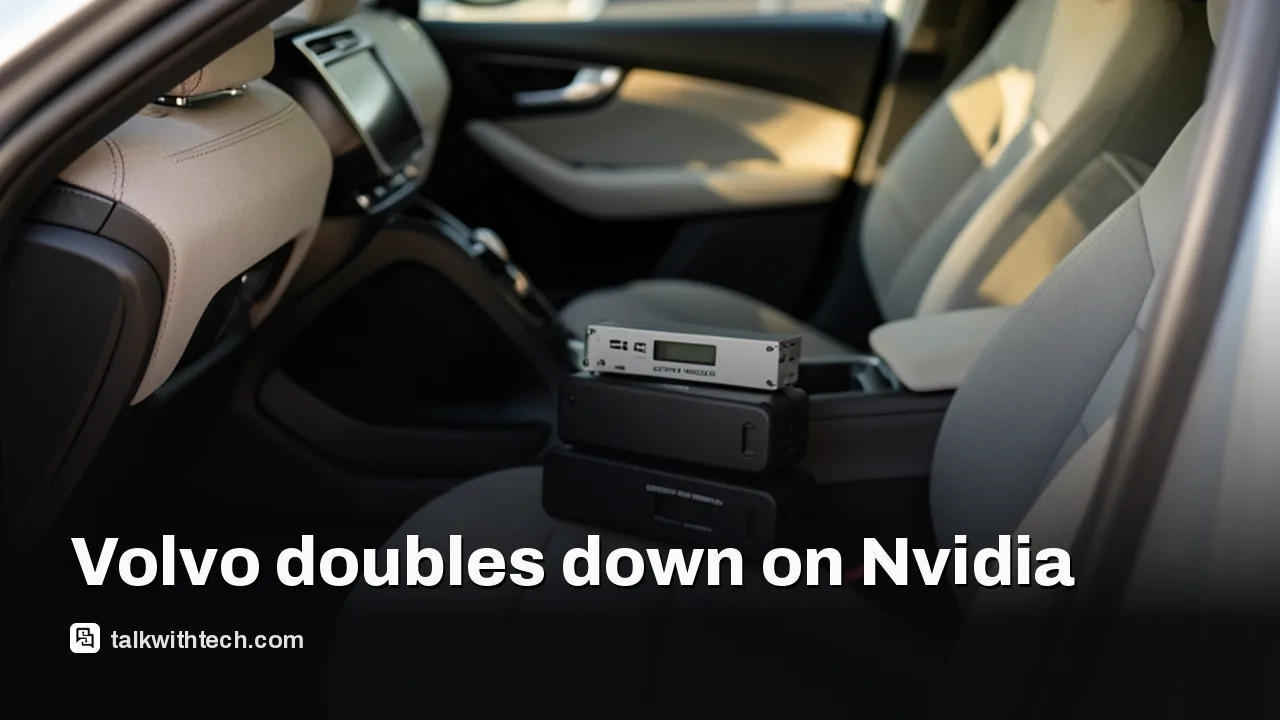
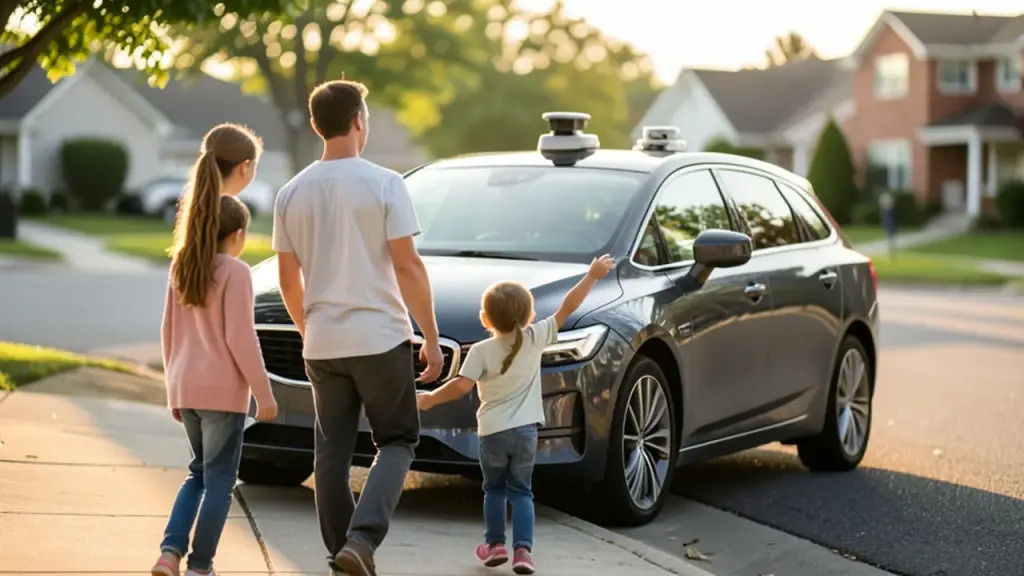
Volvo extends its decade-long partnership with Nvidia to use three Nvidia technologies for automated driving: Hyperion, Alpamayo, and Halos.
The stack combines Nvidia’s sensor/compute hardware with Volvo’s safety and engineering software to operate in urban and highway environments.
Volvo wants to standardize a broader tech stack across its vehicles, not just electric models, with the first deployment planned within the next decade.
Quick read · 2 min
Volvo is expanding its long-running partnership with Nvidia to run automated driving on more of its cars. The plan centers on Nvidia’s Hyperion sensor and compute system, the Alpamayo AI stack, and Halos safety layer. Volvo says it wants a single, standardized tech platform across its entire lineup, not just its electric models. The first vehicle to use the expanded tech is expected within the decade.
What this means for you: expect more capable driver-assistance features and, eventually, more robust automated driving options in Volvos as the stack matures. The move also signals a broader push in automotive tech toward shared platforms rather than model-by-model tooling.
Next steps: Volvo and Nvidia will begin integrating the tech into upcoming models and will validate safety and performance across urban and highway driving before a wider rollout.
Volvo expands Nvidia tech like Hyperion, Alpamayo, Halos
Standardized stack across more vehicles
Rollout planned over the next several years
Volvo is deepening its collaboration with Nvidia to build a more capable automated driving system that can handle city streets and highways. The two companies announced on Thursday that Volvo will deploy three pieces of Nvidia technology across its future vehicles: the Hyperion sensor and compute architecture, the Alpamayo driving software stack, and the Halos safety evaluation layer.
Volvo describes Alpamayo as a broad family of AI models, datasets, and simulation tools used to train and develop autonomous-driving software. The system will run alongside Volvo’s traditional software, which relies on camera and radar perception and machine learning. Nvidia’s idea is to run both stacks at the same time, with multimodal sensors guiding decisions for safer driving. Nvidia’s Ali Kani noted that the Alpamayo open-source software has been downloaded by more than 650,000 developers, underscoring its reach in the auto industry.
Volvo’s leadership team hinted that this isn’t just about electric vehicles. Alwin Bakkenes, Volvo’s head of software development, said the move marks a shift toward a full tech stack that spans Volvo’s entire lineup, including gas-powered cars and hybrids, not just its EVs. He suggested that Volvo is moving away from a model where each carline builds its own tech ecosystem toward a standardized, brand-wide stack. The first vehicle to use the expanded Nvidia tech will arrive in the not-too-near future, with a debut expected within the decade.
All battery-electric Volvos currently rely on Nvidia’s Orin computer chip to process sensor data and help the car understand its surroundings. The new plan aims to “standardize more on Hyperion, also from a sensor set perspective,” according to Bakkenes, expanding Nvidia’s role beyond a single compute platform to a more integrated system across Volvo’s vehicles.
What this means for everyday drivers is simpler: Volvo wants automated driving that can handle more real-world driving scenarios with safeguards built into the software stack. It also signals a broader push in the automotive industry to consolidate suppliers and software into a single, scalable platform rather than piecing together disparate parts for different models.
01
Which features might appear first
Volvo did not specify exact features or the first model to receive the expanded Nvidia tech. The company emphasized that the new stack will be designed to work across urban streets and highways, suggesting city-edge features could come early in the rollout while broader highway driving could follow later as the software is validated in more situations.
02
What changes for Volvo’s business and customers
The core change is Volvo’s shift toward a standardized tech stack that can be deployed across more vehicles, potentially reducing development time and enabling faster updates as Nvidia and Volvo refine the software. This could influence the resale value of Volvo cars, maintainers’ familiarity with a single, scalable platform, and the speed at which Volvo can push new automated-driving features to customers.
03
What it means for the AI and auto tech world
By tying together Nvidia’s Hyperion hardware, Alpamayo AI stack, and Halos safety layer with Volvo’s safety engineering, the partnership frames a more cohesive approach to autonomous driving. It reflects a growing trend: automakers aim to treat driving software and sensor systems as a shared platform, not a one-off in each model.
04
Real-world impact for readers
For drivers, this could translate to more capable driver-assistance features and smoother autonomous functions in Volvo cars over time. It also highlights how large automakers are increasingly betting on specialized hardware from a few key tech partners to power next-generation vehicles.
Volvo and Nvidia will start integrating the three Nvidia technologies into Volvo’s upcoming vehicles, with the rollout timing spread across models and regions over the next several years. The companies plan to expand the use of Hyperion, Alpamayo, and Halos as the software matures and safety evaluations prove reliable in more driving scenarios.
06
Quick answers
What did Volvo and Nvidia announce?
They announced a broader collaboration to use Nvidia’s Hyperion, Alpamayo, and Halos across Volvo’s future vehicles to power automated driving that works on city streets and highways.
When will we see this in cars?
Volvo says the technology will appear in a first vehicle within the next decade, with broader deployment across its lineup over time.
Anthropic told investors its third-quarter revenue hit $16.8 billion as it eyes a stock market debut before Thanksgiving, though the company has not publicly published the results.