YouTube Music will label AI-generated music in player
Two major streaming services are adding tools to show when songs are AI-made or let you filter them out from search results.
Talk With Tech Newsroom
The short version
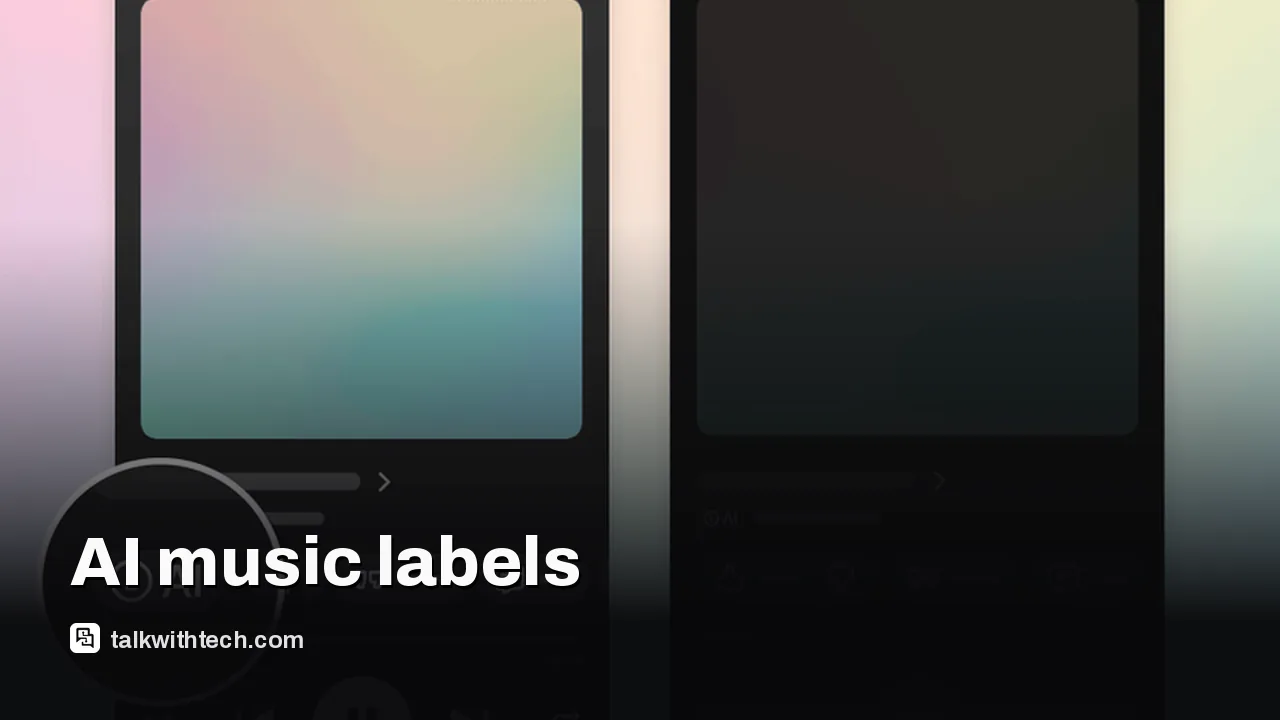
YouTube Music will label AI-generated tracks in the player starting Oct. 14, with more details available by tapping the label.
Deezer will let users filter AI-generated music out of search results by the end of 2026.
Other services like Spotify and Apple Music have some AI labeling features, but methods vary and are not as uniform.
Experts say labeling helps with transparency and copyright concerns, but the field of AI music governance is still evolving.
Quick read · 1 min
YouTube Music will label AI-generated songs in the player starting Oct. 14, so you’ll know when a track is AI-made. Deezer adds a toggle to filter out AI-generated music from search results by the end of 2026.
Why it matters: more transparency around how music is created, and more control if you want to avoid AI-made tracks altogether. The field among services varies, with Spotify and Apple Music also rolling out AI-related labels in different forms.
What comes next: try the new labels on YouTube Music, test Deezer’s filter when it lands, and watch how other services respond as AI writing and singing tools become common in music.
YouTube Music is rolling out labels on AI-generated songs, starting today, that mark tracks created primarily with generative AI. If a track fits that description, you’ll see a tag in the player and you can tap it to learn more about how the AI contributed to the music. The feature is designed to help listeners know when what they’re hearing wasn’t created by a human alone.
Deezer takes transparency a step further with a toggle that will filter fully AI-generated music out of search results. When turned on, fully AI-generated tracks, albums, and related artists disappear from your search results. Deezer says this option will be available worldwide by the end of 2026. The company already blocks AI-generated songs from recommendations, so the new toggle extends that control to what you actively search for.
Other big music platforms are moving similarly, though with their own twists. Spotify has an AI Persona badge on certain artist profiles to indicate synthetic presentation, and Apple Music has talked about broader transparency tags, but each service uses different rules about what gets labeled and how it’s shown. For listeners, the upshot is more information, but also a more complicated field to navigate as AI tools become capable of producing realistic music at scale.
For everyday users, these changes could affect what you hear and what you discover. If you care about knowing who created a song or want to avoid AI-made music entirely, you now have some built-in controls across popular services. If you’re curious about the music you like, you may also see more AI-created content without the extra labels, depending on the service and how they classify a track.
In the broader picture, labeling and filtering reflect ongoing debates about fairness, copyright, and the money involved in AI-generated music. As more songs are produced with AI, the industry is experimenting with ways to disclose origin and manage royalties, while trying to keep discovery simple for listeners.
What happens next is straightforward: try the new labels on YouTube Music and check out Deezer’s filter by late 2026. If you rely on a different service, keep an eye on their announcements, because the labeling conversation is far from over.
Munich startup CedarDB debuts a single database that handles both transactions and analytics, aiming to feed AI agents with instant, natural-language data access.
ChatGPT is an AI chat tool that can answer questions, draft text, and help with tasks. Here’s how it works, why it’s in the news, and what it means for everyday life.
3 min read
We use cookies to understand how readers use Talk With Tech, so we can make it better. Is that OK? Privacy policy
The Daily Brief
Today's biggest tech stories, in 5 minutes
Every morning, the news that matters from AI, phones, apps and the people shaping tech. Explained in plain English. Free.
One email a day. No spam, unsubscribe anytime. Privacy policy