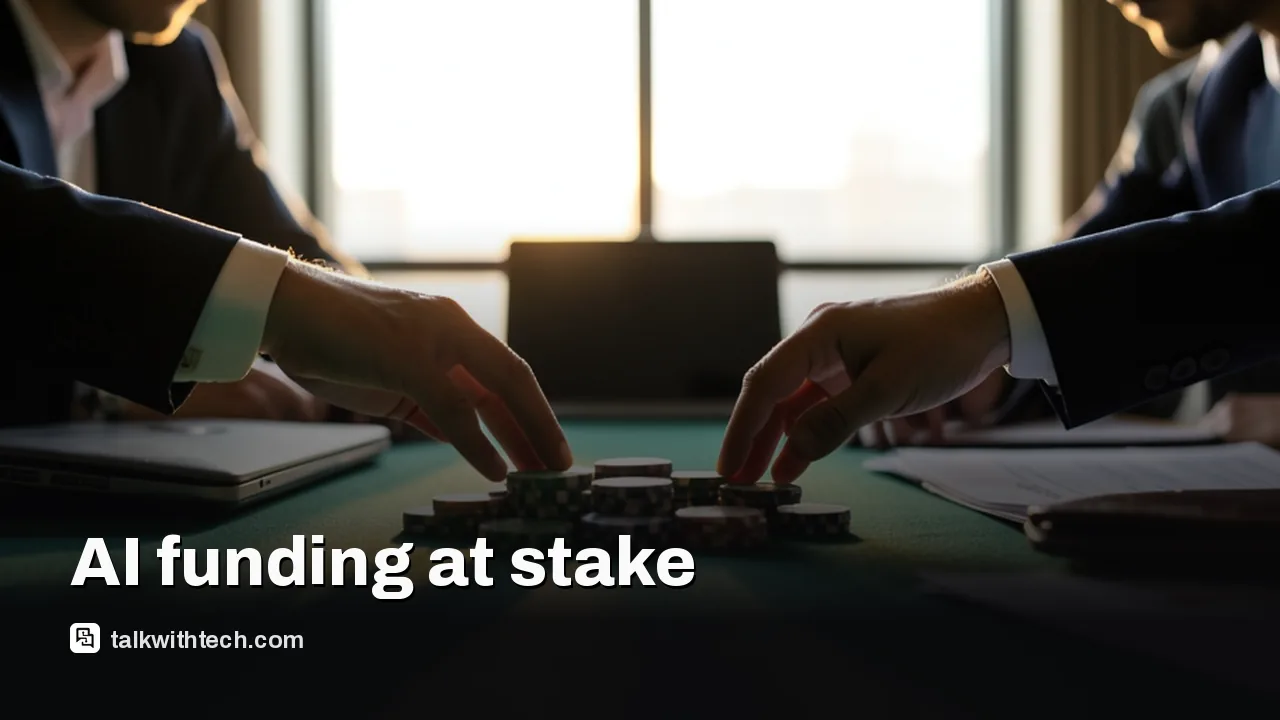
Broadcom CEO Hock Tan says many AI investors act like casino gamblers chasing quick bets.
He argues capital, not chips or chips’ cost, could be the biggest constraint for AI development.
Elon Musk responds with a popular line, stirring public discussion about AI funding and priorities.
The debate centers on how much money is needed now and who will finance the next wave of AI technology.
Quick read · 1 min
Broadcom CEO Hock Tan said AI investors look like casino players, spending tokens without clear payoffs. He warned that capital could be the biggest bottleneck for AI, not tech itself. Elon Musk replied on X with a short mayor-like line, “No crying in the casino.” The discussion matters because it frames who pays for the next wave of AI and how fast new AI features may appear in consumer tech. Expect more funding talks, partnerships, and announcements around AI projects that balance risk with real-world use.
What it could mean for you: if capital tightens, manufacturers may favor AI ideas with clearer near-term benefits, affecting upcoming devices and software features. Keep an eye on practical AI updates in products and services you use daily.
Broadcom CEO Hock Tan sparked a lively, and somewhat heated, debate about how money flows into artificial intelligence. Speaking at the DBS Asia Future Forward Conference in Singapore, Tan compared AI investors to players in a casino, spending tokens with little sense of what they’re betting on. He said many companies have not yet found AI use cases that pay off, and that some money going into AI looks more like token-wasting than productive investment.
Tan’s point was not that funding should dry up, but that capital could become the bottleneck before chips, memory, or power. He described OpenAI’s recent revenue figures as “by itself, not that bad” for a startup, while noting the company spends heavily on training. His takeaway: the big constraint may be the cost and availability of capital for frontier AI work, not just the tech itself.
Elon Musk weighed in on X with a quick quip that has become a type of shorthand in tech circles: “No crying in the casino.” The line, posted in response to Tan’s remarks, underscored the back-and-forth among industry leaders about who should finance the next stage of AI and how tightly investments should be managed.
Tan argued that many AI bets are still uncertain and that investors should expect more disciplined capital allocation. He also touched on the broader market, suggesting frontier model builders will attract the funding they need more reliably than those building the underlying infrastructure. In his view, the biggest constraint could be the cost of capital itself rather than the raw capability of the technology.
02
Why Musk’s reply matters
Musk’s response, while brief, keeps the public focus on who pays for AI’s next leaps. His statement is consistent with a pattern of provocative social posts that draw attention to tech debates. The exchange matters because it frames a public discussion about risk, funding, and accountability in AI development, not just what machines can do.
03
What this means for everyday tech users
For most people, the thread highlights a practical concern: how quickly AI advances will reach products and services you actually use. If capital remains tight or investors demand higher returns, some ambitious AI ideas could slow down or shift toward projects with clearer near-term payoffs. That could affect consumer devices, software, and services that rely on AI features, including pricing, feature timelines, and even the kinds of AI safety and bias controls that accompany new tech.
04
What happens next
Industry leaders will likely continue debating the best way to finance the next wave of AI innovations. Watch for announcements about funding rounds, partnerships, and backers willing to take longer bets on more speculative AI models. If you’re curious about how this could affect your tech purchases, expect to hear more about practical AI features tied to proven use cases rather than moonshots.
Apple inches ahead in a shrinking market, capturing about 22% of worldwide smartphone shipments in Q3 2026 as overall volumes fall to the lowest in years.