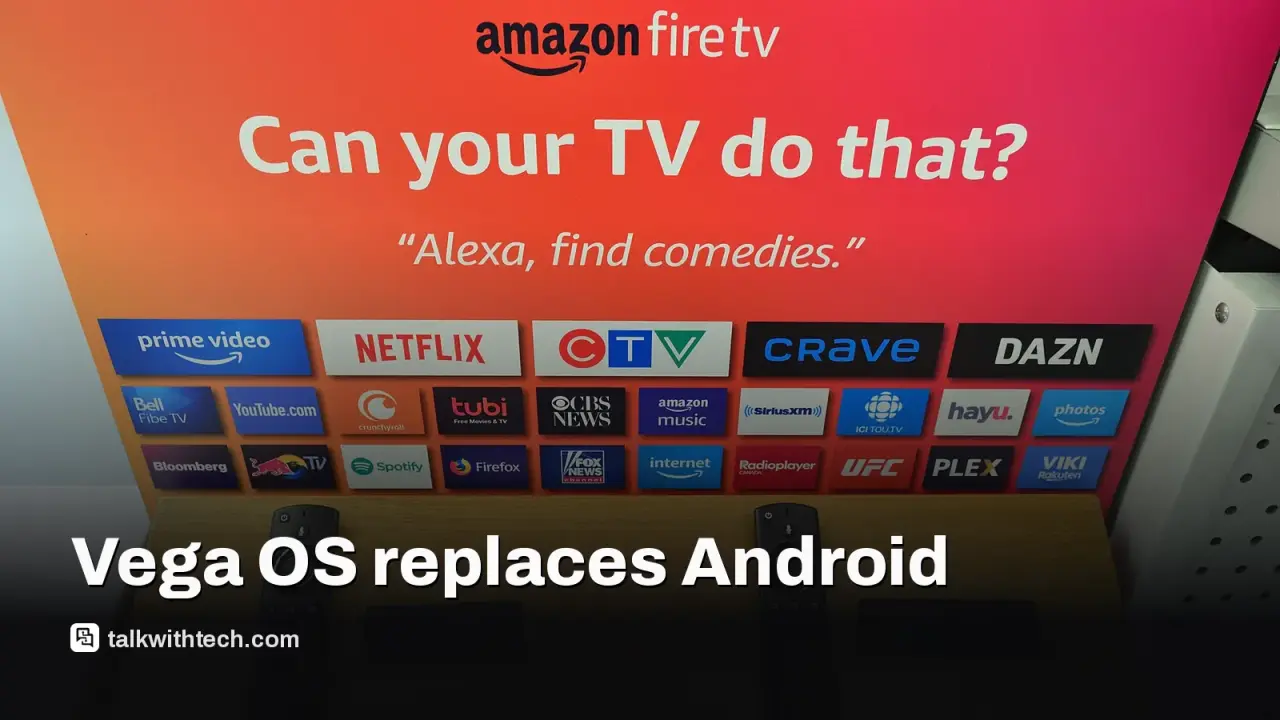
Fire TV Vega OS replaces Android on Fire TV Stick HD and 4K
Amazon is phasing out Android-based Fire OS on new Fire TV Sticks in favor of Vega OS, a Linux-based system that promises efficiency but limits sideloading and app choices.
Amazon is replacing the Fire TV Stick HD and 4K with Vega OS, moving away from Android-based Fire OS.
Future Fire TV Sticks will run Vega OS only, though existing Android models will continue to receive updates.
This shift could limit sideloading and the use of custom launchers, affecting power users who value Android flexibility.
Readers should watch whether the Fire TV Cube stays on Android or also shifts to Vega OS.
Quick read · 2 min
Amazon is switching all new Fire TV Sticks to Vega OS, its Linux-based system, ending new Android-based models. The HD and 4K sticks already run Vega OS, with the 4K Max still in the mix for many power users. This move simplifies the lineup but could limit sideloading and Android app support for future devices. If you value customization, you may want to hold off on upgrading. Expect more Vega OS sticks in the future, while the Cube’s status remains unclear.
What this means for you: you’ll see a simpler lineup and potentially faster updates, but fewer ways to tweak the device or run non-official apps. If Android freedom matters to you, keep an eye on future hardware, and consider sticking with your current Android-based stick for now.
Vega OS is here on HD and 4K sticks
4K Max may get Vega OS later
Cube status is still up in the air
The Fire TV Stick lineup just got a major reset. Amazon announced that future Fire TV Sticks will run Vega OS, its Linux-based system, effectively replacing the Android-based Fire OS for new models. The change began rolling out last year with the Vega OS-powered entries in the lineup, and Amazon has since pared the lineup down to three models: the Fire TV Stick HD, the Fire TV Stick 4K, and the Fire TV Stick 4K Max.
In short, Android-friendly Fire OS is being phased out for new sticks. Amazon has said it will keep supporting both Fire OS and Vega OS for the time being, but the long-term plan is to move everything to Vega OS. That means no new Android-based Fire TV Sticks in the future, even as existing Android sticks still get updates for now.
For everyday users, Vega OS promises efficiency and quicker performance, but it also drops some capabilities fans rely on, like sideloading apps or using custom launchers. If you enjoy tinkering with your streaming setup, that’s a meaningful trade-off to consider.
Amazon isn’t promising a hard deadline for the full Vega OS transition. It’s framed as a gradual, multi-year shift. Still, the practical effect is clear: new sticks will lean into Vega OS, and Android fans may want to think twice about upgrading if they rely on Android features that Vega OS currently doesn’t support.
01
Which Fire TV Sticks get Vega OS first
The Vega OS rollout has touched both the Fire TV Stick HD and the Fire TV Stick 4K. Those models now ship with Vega OS, while the 4K Max remains a question mark for many power users who value the extra RAM and storage and the Android-based Fire OS heritage.
The next hardware refresh could bring Vega OS to the 4K Max eventually, but Amazon has not confirmed a timeline. The Fire TV Cube, priced around $200 earlier this year, has not been officially stated to switch to Vega OS, leaving its OS status unclear for now depending on future updates.
02
The catch nobody mentions
Fans who like Android-style freedom could lose some options. Vega OS does not support Android apps or sideloading, which is a big appeal for people who want to customize the streaming experience beyond the official app lineup. If you’re used to launching your own apps or trying out alternative launchers, Vega OS could feel limiting.
Amazon has described the move as part of becoming a “multi-OS company” that can offer both Fire OS and Vega OS. The practical effect, though, is that you’ll have fewer ways to tailor the device if you want to go beyond Netflix, Hulu, or Disney+.
03
What this means for your wallet and your setup
Hardware continues to center on affordability and simplicity. The new Vega OS sticks are designed to be compact and USB-C powered, with the HD and 4K models taking on the Vega OS flavor. The Cube’s price rose to $200 earlier this year, which keeps it in the same ballpark as competing streamers, but its future OS could decide whether people choose it over a Vega OS stick.
For most casual streamers, Vega OS might be a non-issue. You’ll still get the same streaming apps and performance as today, just with a different operating system under the hood. For power users who want Android’s freedom, the shift could push you toward sticking with older Android sticks longer or exploring other platforms like Google TV devices that support Android apps more openly.
04
What happens next
Amazon hasn’t promised a hard deadline for the full Vega OS transition. It’s possible we’ll see more Vega-powered sticks in the coming quarters and perhaps a higher likelihood that the Fire TV Cube stays Android-based for a while longer. If you’re shopping now, consider whether the Android-app ecosystem matters to you before you buy a Vega OS model.
If you want maximum flexibility today, you might prefer sticking with an Android-based Fire TV Stick as long as you can. If you’re comfortable with Vega OS and you want the most streamlined experience, the Vega-powered sticks are decent options and will likely get updates alongside the rest of the lineup.
06
Quick answers
Which devices are Vega OS now?
The Vega OS version is present on the Fire TV Stick HD and Fire TV Stick 4K; future sticks will run Vega OS as well.
Will the Fire TV Cube switch to Vega OS?
Amazon hasn’t confirmed a Vega OS switch for the Cube, leaving its OS status unclear for now.
Do I lose features with Vega OS?
Sideloading and access to Android apps are not supported on Vega OS, which may reduce customization options.