Wednesday, 14 October 2026

Google AI for Science funding backs 17 teams with $36M

Google.org's Impact Challenge selects 17 groups to advance scientific breakthroughs with AI, backed by $36 million in funding and six-month accelerators.

Google image for: Google AI for Science funding backs 17 teams with $36M

The short version

  • Google.org announced 17 recipient organizations for its AI for Science Challenge, with a total of $36 million in funding.
  • Recipients come from climate, health and foundational science, spanning universities and research institutes worldwide.
  • Selected groups will participate in a six-month accelerator providing engineering support, mentorship, and Google infrastructure.
  • The program aims to speed scientific breakthroughs by combining AI with domain expertise across multiple disciplines.
Quick read · 1 min

Google.org has named 17 organizations to receive a total of $36 million for AI-powered science projects. The winners will also join a six-month accelerator offering engineering help, mentorship and access to Google infrastructure to scale their ideas.

Projects cover climate resilience, health and foundational science, including a digital ocean model, AI-driven materials discovery and fusion energy research. The goal is to move from ideas to real-world solutions faster than traditional research paths allow.

What happens next? The groups begin the accelerator, and Google.org will track progress and potential scale-up opportunities. Readers should watch for updates on any breakthroughs that translate into practical tools or policies.
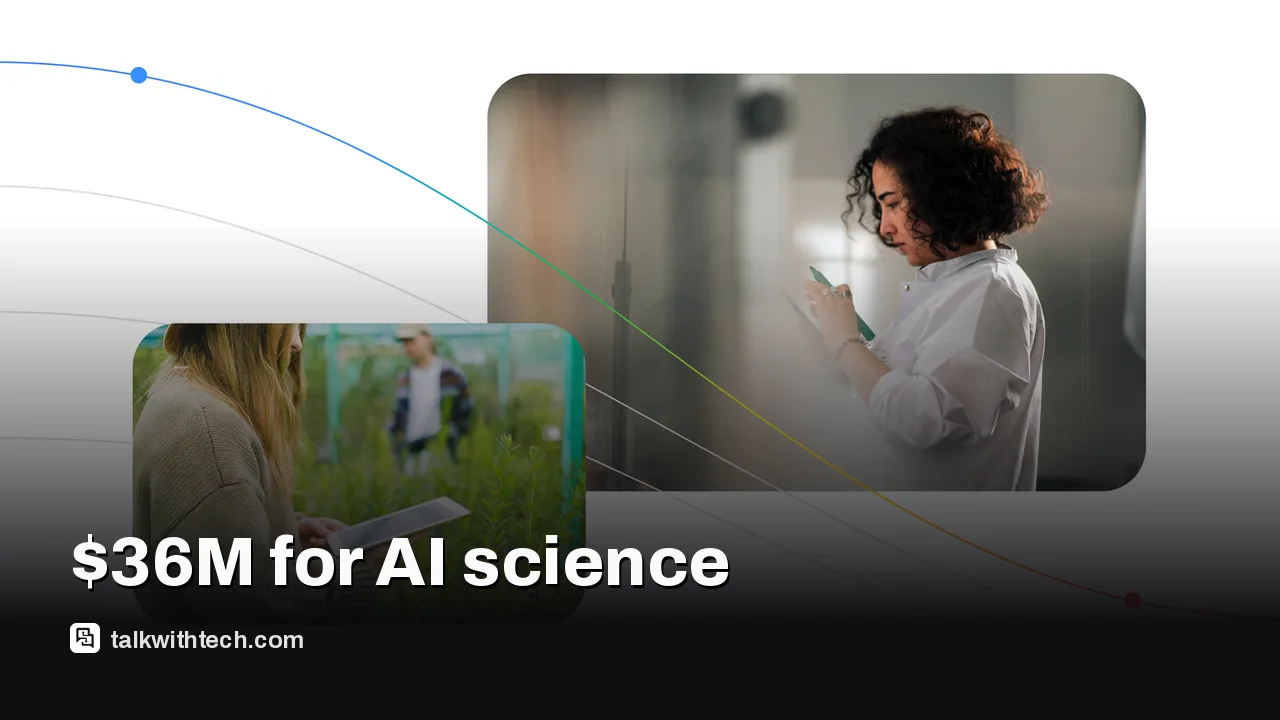
Google.org isBacking a new wave of AI-powered science. The organization announced 17 recipient groups for its Impact Challenge: AI for Science, a program that pairs funding with hands-on support to accelerate research and discoveries that could affect health, climate and fundamental science.

In all, the recipients will share $36 million in funding. Teams can opt to participate in a six-month Google.org Accelerator, a package that includes engineering help, technical mentorship and access to Google infrastructure to scale their ideas into real-world solutions.

01

Which groups got picked, and what are they working on?

The 17 organizations span climate resilience, energy research and life sciences. Examples include AfriClimate AI Limited, which is exploring atmospheric precursors of deadly storms in Africa to extend flash-flood warnings. Inria Chile Research Center is building a multimodal ocean model and a digital twin of Earth’s marine ecosystems. MIT is pursuing AI-driven autonomous interpretation of microscopic imagery to speed materials discovery.

Other notable recipients include the Max Planck Institute for Plasma Physics, collaborating with TU Eindhoven to use physics-informed AI for fusion reactor simulations; the University of Texas at Austin to accelerate compact fusion reactor design, and UC San Diego, which is combining climate observations with AI to produce more interpretable climate models and better data collection decisions. Across the board, projects aim to turn complex data into actionable insights faster than traditional research paths allow.

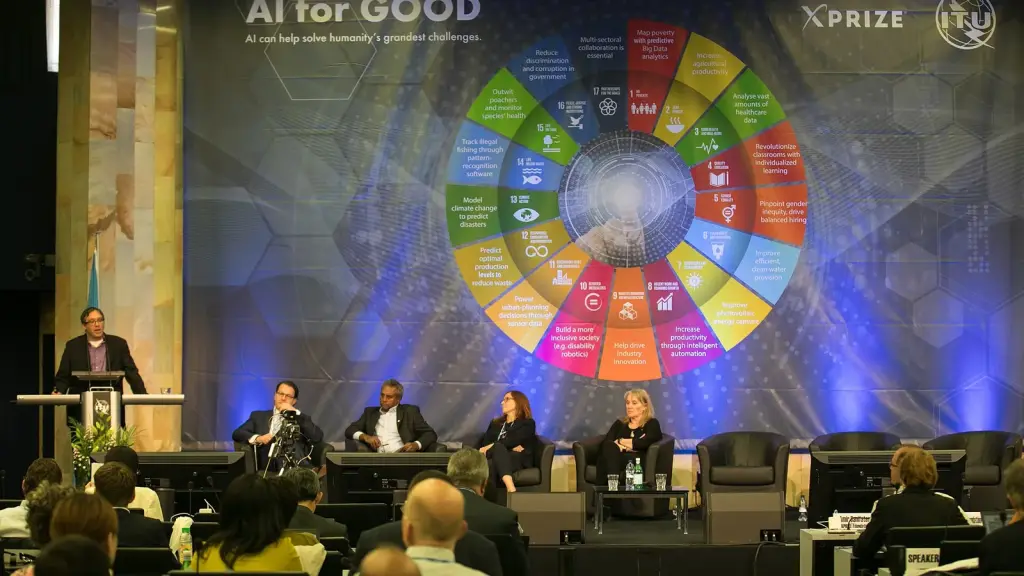
AI for Science
Photo: ITU Pictures / CC BY 2.0 (modified)
02

What this means for science and everyday readers

For everyday readers, the core idea is simple: AI is being used as a tool to speed up discovery in areas that touch the air we breathe, the medicines we rely on and the energy we use. By funding and mentoring these projects, Google.org hopes to turn theoretical AI ideas into practical breakthroughs that could, for example, improve weather forecasts, speed up drug discovery or help design cleaner energy systems.

03

What happens next

The selected groups will enter the six-month accelerator program, after which Google.org and partners will monitor progress and potential scale-up opportunities. The company says the accelerator will provide “engineering support, technical mentorship, and Google infrastructure” to help move early-stage ideas toward real-world impact.

04

Quick answers

What is the Google.org Impact Challenge: AI for Science?

The program funds and mentors projects that apply AI to accelerate breakthroughs in climate, health and foundational science.

How much money is involved?

Recipients share a total of $36 million in funding, with the option to join a six-month accelerator for extra support.

You're reading the quick version.