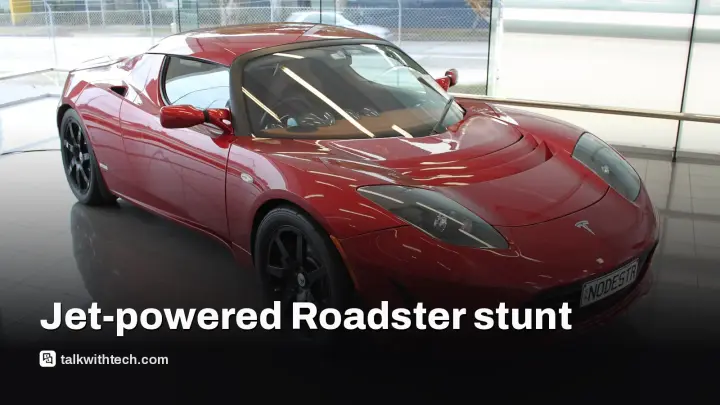
Tesla Roadster 2 flying stunt uses nitrogen thrusters and grip
Tesla’s Roadster 2 prototype staged a ground-breaking hop and hover show using rocket-like thrusters. Here’s how it works and what it could mean for future cars.
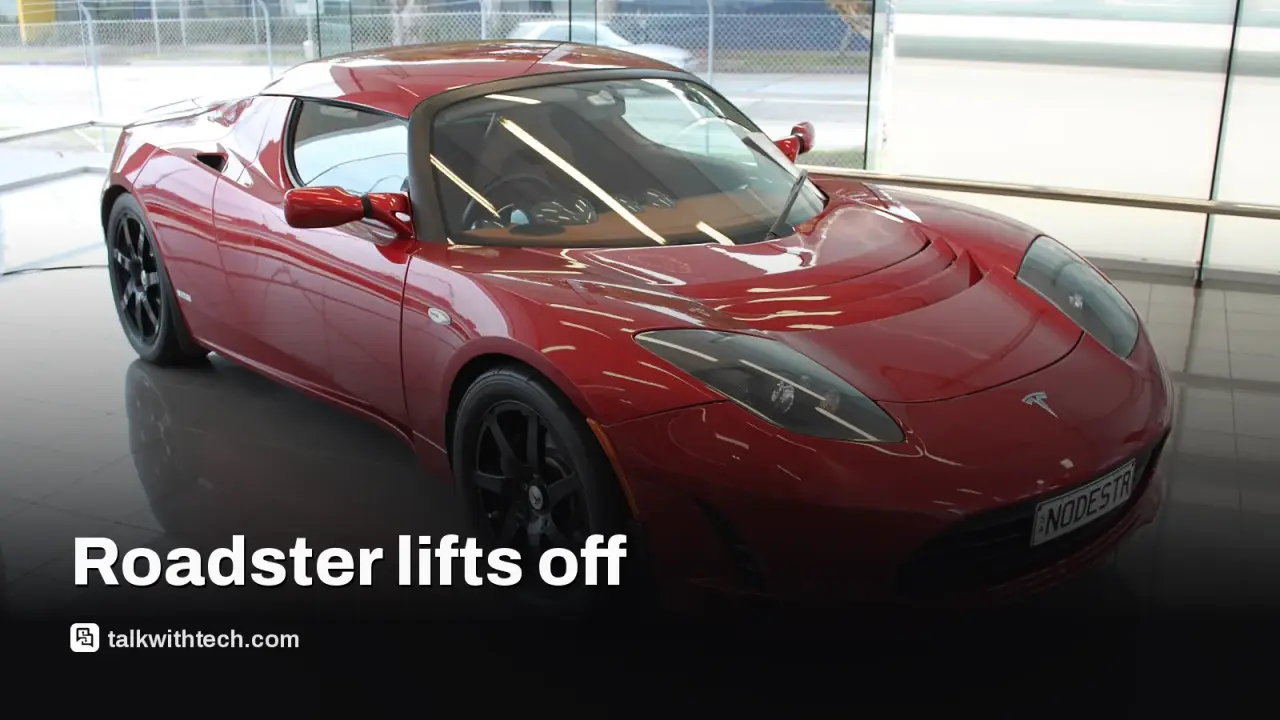
Tesla unveiled a Roadster 2 prototype that can launch upward briefly and land back on its wheels using a SpaceX-inspired system.
The car relies on a combination of rear-wheel power, suction-like grip, and nitrogen thrusters to manage flight and landing.
Officials say the flight system will taper as gas is used, and refueling or recharging logistics will influence when, or if, such tech reaches customers.
Quick read · 1 min
Tesla unveiled a Roadster 2 prototype that can launch into the air and land upright using a SpaceX-inspired system. The car combines rear-wheel drive power with four side skirts and large fans to grip the surface, plus cold gas thrusters to push and steer in flight. Refueling the nitrogen thrusters currently takes hours, but Tesla aims for faster turnaround. This is a prototype, not a ready-for-sale vehicle, and no pricing or release date has been shared.
What it means for you: this is more about tech windows into future EVs and aerospace integration than a new everyday car. If and when it lands in the showroom, it would require new safety rules and likely a different kind of licensing for road use.
Next steps: keep an eye out for more official updates from Tesla on timelines and safety tests.
The surprise at Tesla’s latest reveal wasn’t just a faster, flashier Roadster 2. It was how the car moved, almost like a rocket car that can briefly fly. At a SpaceX facility in McGregor, Texas, Elon Musk’s team showed a two-seat Roadster 2 launch, pop a wheelie in midair, and then land back on its wheels after a controlled flip. The moment drew gasps and a wave of social clips, but the engineering details behind the stunt are what really matter for everyday readers.
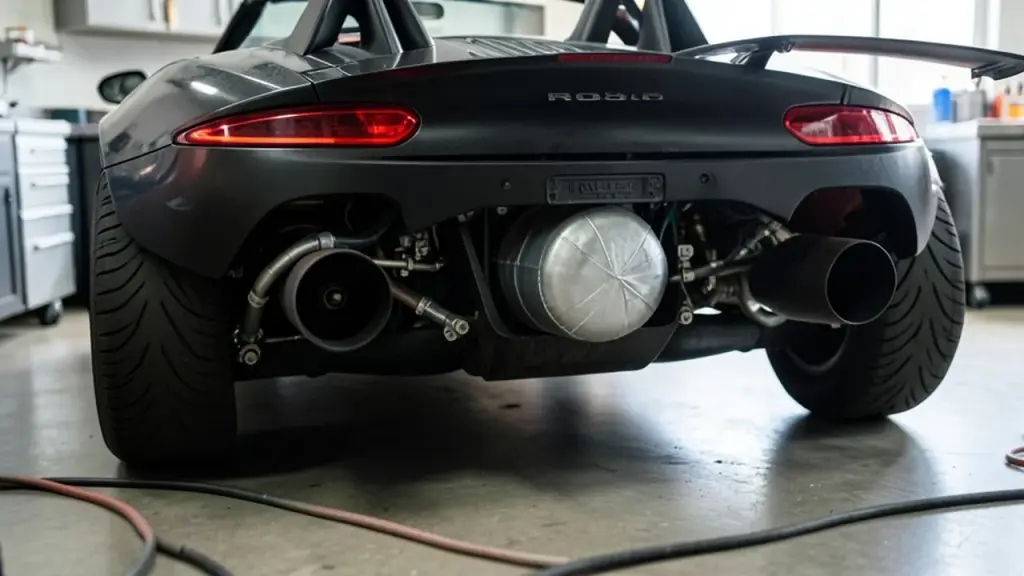
In plain terms, Tesla says the Roadster 2 relies on a mix of suction-like handling and rocket-style thrust. Two rear motors push power to the wheels, while a pair of large fans and four side wings help the car grip and “suck” toward the surface at low speeds. That suction, combined with a rocket-like thrust from cold gas thrusters, lets the car hover and self-right during the show. Tesla describes this as a “SpaceX system.”
Chi-chi numbers aside, the practical questions are bigger. How long can the car stay aloft, how much fuel does it need, and what does this mean for road use and safety? The Roadster 2 is described as having a top speed above 230 mph in the Thrust model and 210 mph in the Performance variant, with a 0-to-60 time claimed in under one second for the first hop. The device that actually makes it hover, a COPV carbon-wrapped pressure vessel holding up to 10,000 psi, sits behind the seats in a single-seater configuration for the flight mode, pushing cold gas thrusters to provide thrust and maneuverability.
Where this matters for you: it doesn’t mean a flying daily driver is around the corner. Even Tesla notes that the “flight system” fuel is finite and will taper off as gas runs out, much like a balloon losing air. Refilling those tanks is said to take six to seven hours today, though the company is aiming for a 30-minute turnaround. Until such refueling is practical, this remains a spectacle and a showcase of what advanced propulsion, aerodynamics, and materials science could enable in the future.
Behind the scenes, the Roadster 2 is still a prototype. Tesla’s engineers compared it to high-performance track cars, but with aerospace tricks borrowed from SpaceX. The car will be light, “just under 1,700 kilos” according to the team, and powered by a rear-drive setup with more than 1,300 horsepower and substantial torque. The design uses retractable thrust and gyroscope-like stabilization to achieve the quick flip and controlled descent. How soon any version of this car will reach customers remains unclear, and official pricing or a release date has not been announced.
For now, the Roadster 2 is a talking point about where EVs and space-grade tech might collide. It’s not a practical daily driver yet, but it does show a path toward vehicles that blend road performance with advanced stabilization tech. The question readers will want answered next is when, or if, Tesla plans to offer any version of this flight tech outside staged demos, and how the company will handle safety, licensing, and real-world use cases.
What happens next: watch for more official Tesla details on safety demonstrations, flight fuel logistics, and possible production timelines as the company refines the system.
Apple increases the entry price for the Apple TV 4K and HomePod mini 2, moving to $299 and $149 respectively, with critics calling the jump sharper than the feature tweaks.