Sierra Space proves 90‑minute delivery of 5–10 ton cargo pods
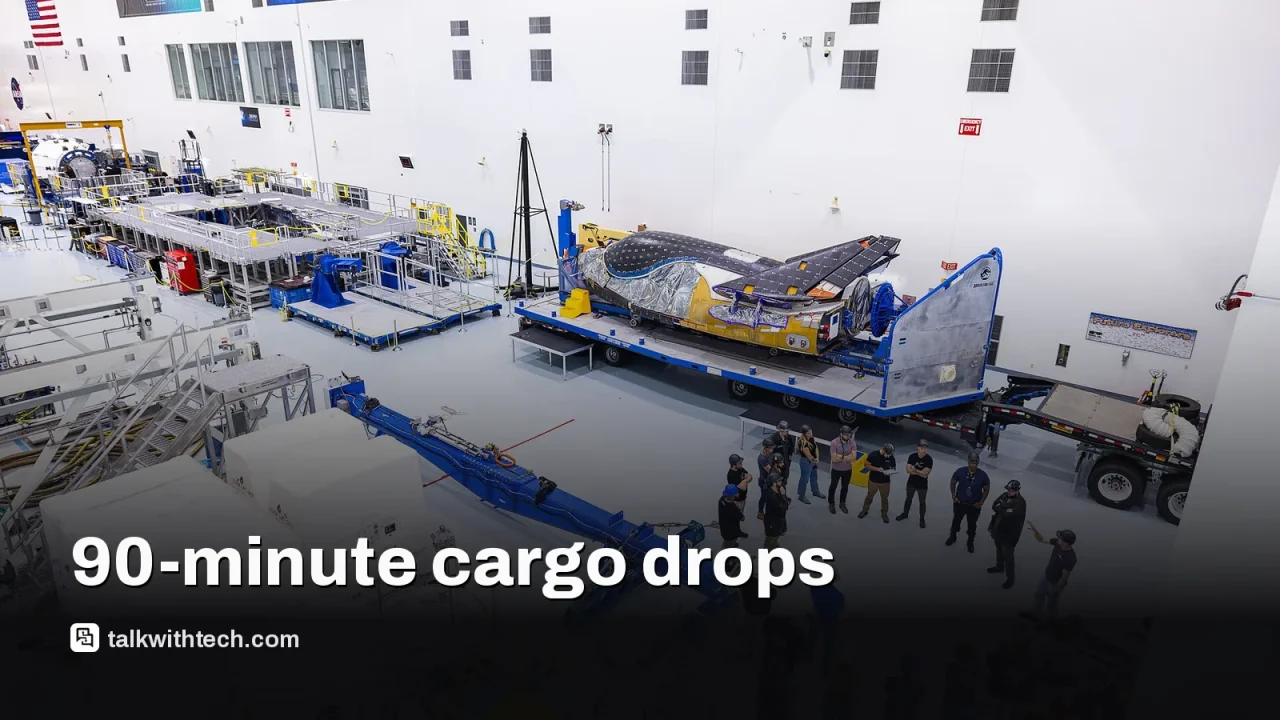
A Sierra Space project demonstrates a 5- to 10-ton Ghost reentry pod returning supplies to any point on Earth within 90 minutes, as part of a broader space-based logistics concept.
Sierra Space conducted real-world tests of the Ghost reentry vehicle as part of a U.S. Space Command exercise.
Ghost can deliver 5–10 tons of cargo to any point on Earth within 90 minutes after being called down from space.
The system would keep supplies in orbit for up to five years and would not transport heavy combat vehicles like tanks.
This is framed as a logistics node for reach, resilience, and rapid deployment in denied or remote theaters.
Quick read · 1 min
A Sierra Space project tests a space-based cargo pod that could deliver supplies to any point on Earth within 90 minutes. The goal is a resilient logistics node in space rather than a new weapon system.
Tests used a small payload (like a whiskey bottle and a radio) dropped from high altitude to prove the vehicle can survive reentry and be recovered. The effort is part of the Apollo Nexus exercise with the U.S. Space Command.
What this could mean for you: if someday deployed at scale, this could speed up disaster relief and military logistics in hard-to-reach areas. Future tests will clarify costs, maintenance, and how it would fit with other delivery channels.
Sierra Space, a subsidiary of the Sierra Nevada Corporation, has publicly demonstrated a space-based cargo concept called Ghost. In a pair of test drops, Ghost carried a small payload, a whiskey bottle and a software-defined radio, from high Altitude Balloons up to the vehicle, then returned to the surface. The tests took place during the U.S. Space Command’s Apollo Nexus training exercise, which is designed to show how multiple units can coordinate in complex operations.
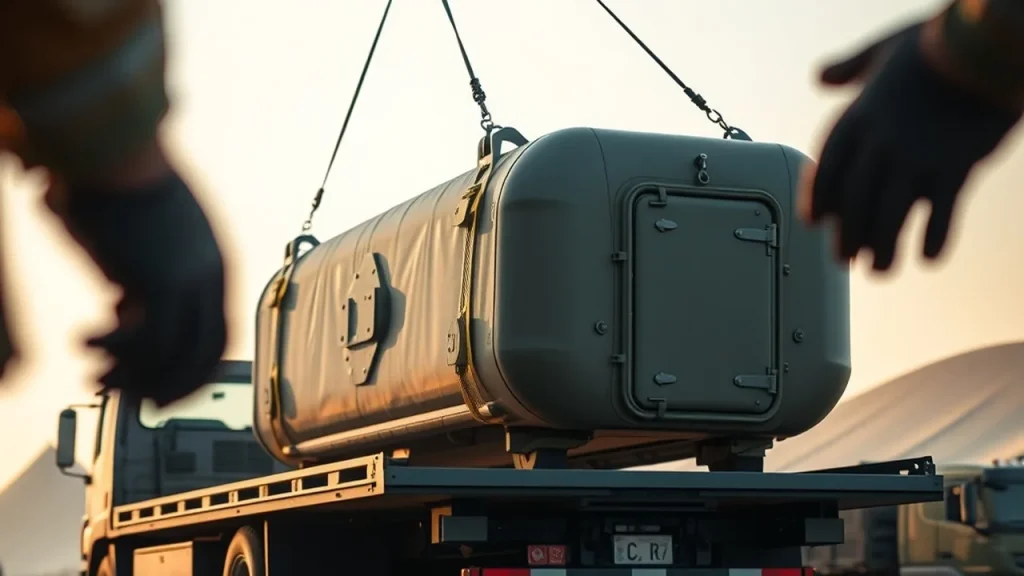
Ghost is not meant to launch from orbit and deliver heavy weapons. Instead, its mission is to preposition assets in space and call them down to any point on Earth within 90 minutes. The project envisions keeping Ghost in orbit for up to five years before it’s needed on the ground. While the payload capacity is cited as five to ten tons, officials say it’s intended to deliver supplies, electronics, and other materials to warfighters or responders when traditional aircraft or ground routes are unavailable or too risky.
Developers emphasize that the system is about rapid, flexible logistics rather than battlefield firepower. The Ghost vehicle would exist as a reusable node, an alternative to pre-positioning conventional cargo ships or relying on vulnerable airlift, in places where access is limited or contested.
01
What this could mean for military logistics
In plain terms, this is a space-enabled way to get supplies to a distant theater quickly, without depending on aircraft that might be slowed by weather, airspace restrictions, or hostile action. The concept is more about resilience and speed of re-supply than replacing existing logistics channels. The weights involved (5–10 tons) mean it’s suited for ammo, equipment, and critical electronics rather than large vehicles or heavy artillery.
02
How the tests were done
The Ghost reentry vehicle was dropped from high-altitude balloons at two different heights (35,000 feet and 68,500 feet) to prove it could survive reentry and be recovered on land. The payloads were intentionally small and simple to validate the basic physics of a controlled descent and recovery. Sierra Space described the exercise as a step in proving the system can survive the hostile conditions of descent and still be recoverable by ground teams in a timely fashion.
03
What happens next
Officials say the concept remains in testing and planning phases. The 90-minute delivery claim depends on anticipating what supplies are needed, launching them, and keeping them in space up to five years. If future tests validate the end-to-end process, the Ghost system could become a flexible node in a broader strategic logistics network, not a standalone replacement for existing airlift or sealift capabilities.
04
What everyday people should know
For most people, this is a glimpse at how military and defense logistics could evolve. It’s not about personal shipments or consumer tech. The main takeaway is that space-based logistics could offer faster, more resilient access to critical supplies, especially in hard-to-reach areas, if and when such systems become operational.
Watch for further demonstrations and more detailed timelines from Sierra Space and the Space Command as they assess how the Ghost system might fit into real-world operations, including cost, maintenance, and integration with existing logistics networks.
06
Quick answers
What is Ghost exactly?
A small reentry vehicle designed to be prepositioned in space and called down to deliver payloads within 90 minutes of request.
How much can it carry?
Reportedly five to ten tons of cargo per mission, not heavy military vehicles.