NTangible clutch factor could reshape recruiting and NIL deals
NTangible is pitching a psychological assessment that claims to forecast how athletes perform under pressure, potentially changing recruitment and training.
NTangible launched a psychological assessment called the Clutch Factor to predict how athletes perform under pressure.
The score ranges from 0 to 1,000, with higher scores said to correlate with better decision-making in high-stress moments.
Co-founders Dan Connerty and Dr. Ed Levine say the tool could influence recruiting, rankings and NIL decisions, not just training.
There are concerns about truthful answers and how the score could be used or misused in competitive sports.
Quick read · 1 min
NTangible is trying to quantify “clutch” moments in sports with a new assessment called the Clutch Factor. The score, 0 to 1,000, aims to predict how athletes perform under pressure and could influence recruiting and scholarships. There are concerns about honesty in responses and how the data could be used. The company plans to show demos at TechCrunch Disrupt in San Francisco this week, with broader ambitions to apply the tool in corporate settings too.
What it is: a psychology-inspired scoring system for athletes under pressure.
Why it matters: could change who gets offers and how they’re trained.
Next step: live demos at Disrupt; watch for data and ethics details.
The question behind NTangible’s Clutch Factor isn’t sports lore but data: can a person’s words, phrasing and self-description predict how they’ll perform when the pressure is on? The idea, from NTangible co-founder Dan Connerty and psychologist Dr. Ed Levine, is that a structured set of prompts inspired by the Thematic Apperception Test can yield a single score that reflects an athlete’s likely response to high-stakes moments.
Connerty describes the Clutch Factor as a tool to quantify what used to be a vague “how will they respond under pressure?” question. The score runs from 0 to 1,000, with officials claiming athletes who score above 750 are twice as likely to land in Division I programs. Whether that actually translates to recruiting success is part of the current debate around the product.
NTangible’s approach sits at the intersection of sports science and psychology. It relies on neurolinguistic patterns, the way a person talks about a scenario and the language they use, to generate a score that potential coaches could use alongside traditional metrics. Connerty says the score could be used for rankings, leaderboards, NIL talks and scholarships, especially in a market where big checks for quarterbacks and top players are commonplace.
The company emphasizes that the Clutch Factor is not a training tool by itself; rather, it’s a lens to better understand an athlete’s mental game. Still, there’s a clear path to using this data: teams might pair the score with drills designed to improve composure and decision-making under pressure, potentially guiding both who to recruit and how to coach them once they’re on campus.
One notable caveat is the risk of athletes gaming the assessment. If players tailor answers to appear steadier under pressure, the score could be inflated. In a self-test, a TechCrunch journalist got a much higher score when answering as a level-headed top recruit would, suggesting honesty and self-awareness are crucial for the tool to work as advertised.
Beyond sports, NTangible envisions applying the same framework to corporate settings, helping HR departments gauge how employees handle feedback and instruction under pressure. That broader ambition underscores the software’s “AI meets psychology” posture and signals why investors and sports programs alike are watching closely.
NTangible plans its next big moment on stage at TechCrunch Disrupt in San Francisco, where it’s among the top contenders for Startup Battlefield. If the Clutch Factor proves durable, it could alter conversations around recruitment, scholarships and even how teams build mental training into their schedules.
01
What this means for everyday readers
For fans, the most tangible impact would be how players are scouted and paid. If schools and sponsors start leaning on a psychological score to predict who handles pressure best, it could change who gets offers and how much those offers are worth.
For athletes, it could mean more attention to the mental side of the game in addition to physical training. And for fans, it raises questions about fairness and privacy: who sees your Clutch Factor score, and how might it affect your future in sports or business?
02
What happens next
Watch NTangible at Disrupt to see how the Clutch Factor performs in live demos, and listen for details on sample sizes, test conditions and the ethics guardrails the company plans to publish. The next steps will hinge on how coaches and institutions actually use the data in real-world recruiting and development.
The Clutch Factor is NTangible’s psychological assessment intended to predict how well an athlete performs under pressure, scored 0 to 1,000.
How could this affect recruiting?
If teams rely on the score alongside traditional metrics, some players could gain an advantage in scholarships and NIL discussions, while others might be overlooked.
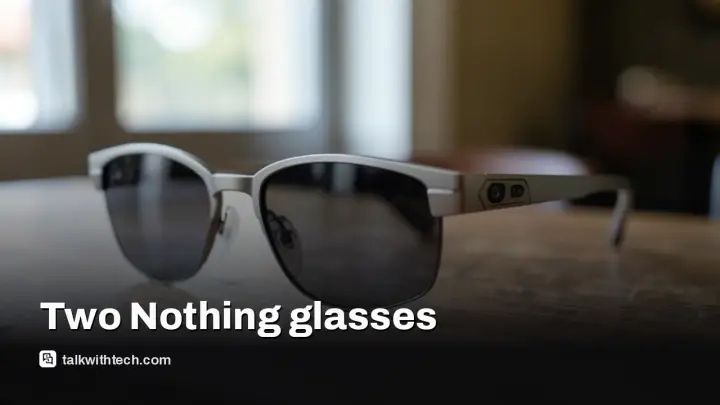
Nothing is reportedly developing two very different smart glass products: a camera-enabled model with ChatGPT integration and a simpler, camera-free pair that acts like smart headphones.
4 min read
We use cookies to understand how readers use Talk With Tech, so we can make it better. Is that OK? Privacy policy
The Daily Brief
Today's biggest tech stories, in 5 minutes
Every morning, the news that matters from AI, phones, apps and the people shaping tech. Explained in plain English. Free.
One email a day. No spam, unsubscribe anytime. Privacy policy