Tesla Roadster airborne thrusters give sub‑1s 0‑60 sprint
Tesla unveils a redesigned Roadster that can launch into the air and glide using cold-gas thrusters, with a 0-60 mph under a second and 230 mph top speed.
Tesla unveiled a redesigned Roadster with a system that can lift and stabilize the car in mid-air using suction and thrusters.
The Roadster can accelerate from 0-60 mph in under one second and reach speeds over 230 mph, with a 300-mile range per charge.
Production timing and price are not yet disclosed, but reservations have begun.
The design draws inspiration from high-performance aircraft and uses carbon fiber vessels and a glass roof.
Quick read · 1 min
Tesla unveiled a redesigned Roadster that can fly. It uses a suction system under the car and side and rear thrusters to lift off, hover, and maneuver in air. Production version expected next year, but pricing and final details aren’t announced yet.
The car promises 0-60 mph in under a second, speeds over 230 mph, and a 300-mile range. Design highlights include carbon fiber components and a glass roof inspired by astronaut visors. For now, reservations are open, with no word yet on cost.
What this means for you: a future where an electric sports car could briefly take flight, but you’ll have to wait for official pricing and safety details before considering a purchase.
Tesla just pulled off a jaw-dropping reveal in Texas: a redesigned Roadster that can actually fly. The company described a drive-and-fly concept that uses a multi-mode suction system plus side-mounted and rear thrusters to launch, stabilize, and control the car mid‑air. It’s not just a stunt car. Tesla says the tech will be available on the production Roadster when it enters production next year, though pricing and final specs remain to be confirmed.
In practical terms, the car uses a suction system that pulls air from beneath the chassis to create a strong grip to keep the vehicle upright, even when it isn’t moving. Then, cold-gas thrusters with electric actuators handle forward, upward, and lateral movement, letting the Roadster lift off and hover with rapid adjustments. The company describes the setup as a combination of multi-mode suction and perimeter thrusters designed for quick, precise control in the air.
On the performance side, Tesla says the Roadster can accelerate from 0 to 60 mph in under a second and top out at more than 230 mph. The stated range is 300 miles per charge, a number that will matter most if you’re thinking about real-world driving after a flight. The car’s structure includes multiple motorized parts, from rear to side vents, and a carbon fiber overwrapped pressure vessel approach to store gases for the thrusters and systems.
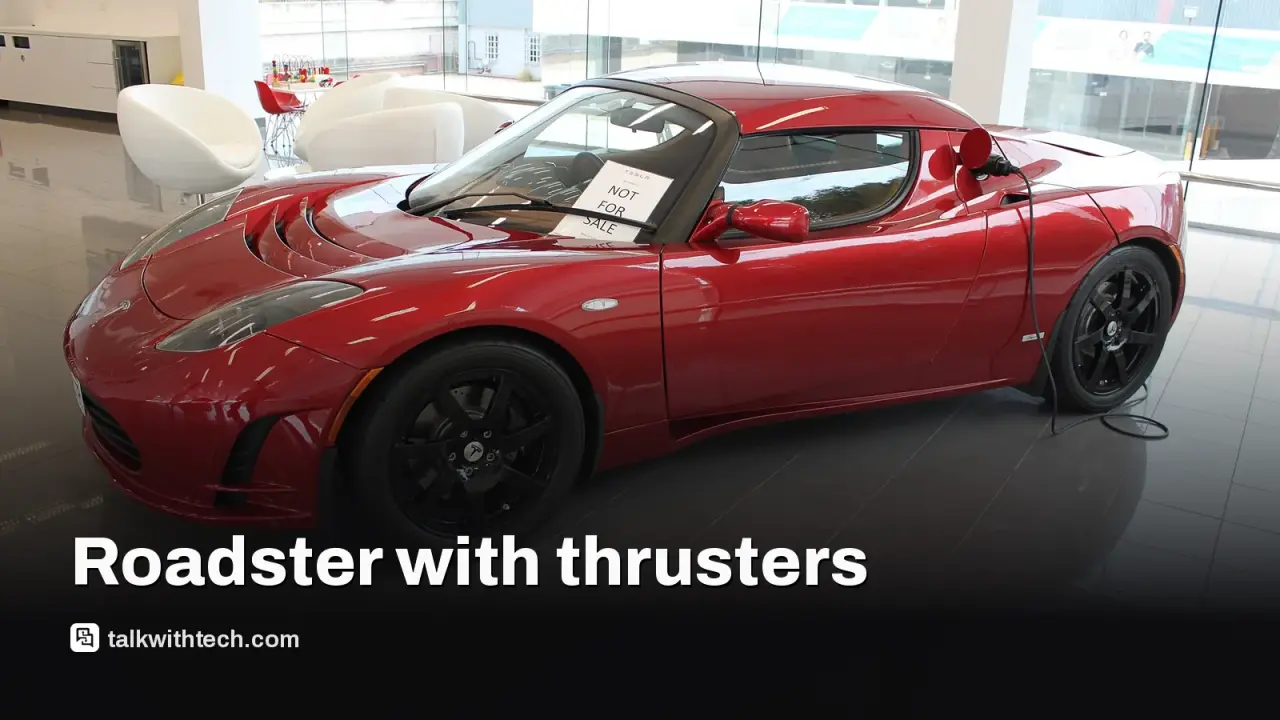
The new Roadster’s exterior leans into aero-heavy styling with a single Ano White color and a gold-glazed glass roof inspired by astronaut visors. Tesla says the design is meant to evoke both performance aircraft and space-age aesthetics, channeling the brand’s love of bold, headline-worthy engineering. The company has not provided a price range, and the production schedule beyond the broad note that it will go into production next year remains to be announced.
For readers, the headline here isn’t just the fancy tech. It’s a reminder of how far EV performance concepts can bend what we consider possible on public roads. It also raises questions about practicality, safety features, and how soon a road-legal car can truly function as a vehicle that leaves the ground at speed, and then lands safely.
What this means for everyday drivers is largely about how automakers push the envelope while you’re deciding what to buy. If you’re curious about the Roadster’s flying capabilities, you’ll want to watch how Tesla defines “production spec” next year and what kind of safety certifications it targets before you even think about reservations becoming a real purchase.
Samsung says its Odyssey OLED monitors are the official gaming display partner for Call of Duty: Modern Warfare 4, promising glare-free visuals and ultra-fast response times.