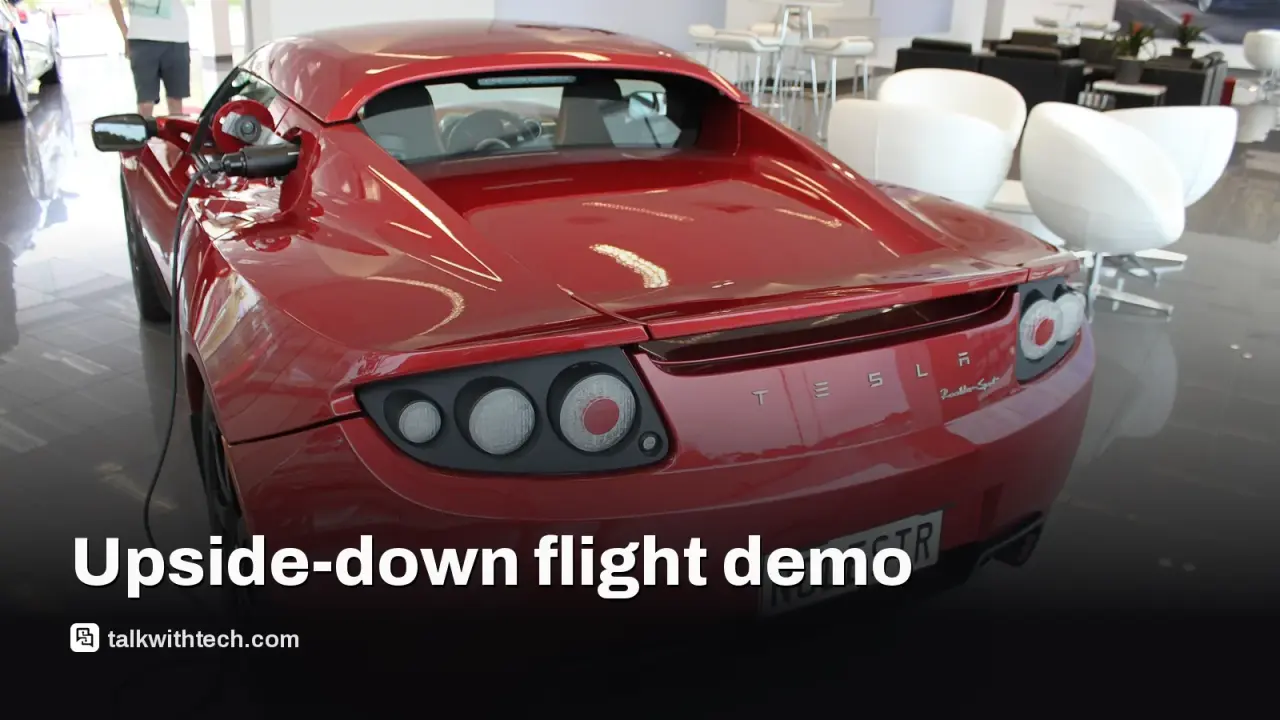
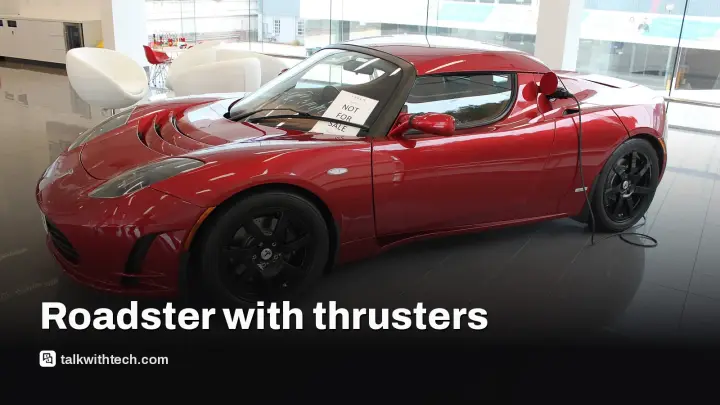
Tesla unveiled the next-generation Roadster in Waco, Texas, highlighting dramatic demonstrations including upside-down driving and a brief flight.
Despite the showy demos, Tesla says deliveries aren’t expected until 2028, keeping the car far from real-world availability for years.
The Roadster’s legacy as a high-performance, rocket-era fantasy informs ongoing investor and consumer interest, even as production hurdles persist.
Quick read · 1 min
Tesla teased its next-generation Roadster in Texas with dramatic stunts, driving upside down and a momentary flight, alongside a 0–60 mph pace that aims to impress. But the car won’t reach customers until 2028 at the earliest.
Why it matters: the Roadster remains a magnet for attention in a crowded EV landscape, even as real-world buying timelines slip. For most readers, this is a reminder that ultra-high-performance EVs are still a long way from being everyday options.
What happens next: Tesla will likely share more about timing, price, and specs as 2028 approaches, but for now, expect gradual updates rather than a quick sale.
Tesla just gave the world a reminder that electric performance can still carry a whiff of spectacle. At an event in Waco, Texas, the company showcased its next-generation Roadster, a car that has lingered in development for nearly a decade. The demos included moments where the car drove upside down and briefly appeared to fly, followed by a blistering 0–60 mph acceleration that underscored the car’s high-performance ambitions.
All the thrill, however, comes with a long road ahead. Tesla confirms that deliveries aren’t planned to start until 2028, a reminder that a lot can change between a flashy reveal and an actual customer receiving a car. The Roadster’s release timeline mirrors the company’s broader shift toward scaling its mass-market lineup while juggling high-end, low-volume projects that push the envelope in engineering and propulsion.
The Roadster has long sat at the edge of what many see as possible for electric supercars. Its past promises, 1.9 seconds to 60 mph, a top speed well beyond most sports cars, and an extreme battery setup, have evolved through years of tweaks and delays. This latest demonstration is less a practical preview than a public relations moment, a reminder that Tesla still leans on bold, attention-grabbing performance to keep its high-end dreams alive in a crowded EV market.
What this means for everyday readers is simple: if you were hoping to buy a Roadster this decade, you’ll need to manage expectations. If you’re curious about how Tesla is pushing tech forward, this is a sign of the company’s ongoing experimentation with propulsion, materials, and takeoff-style performance. For now, the next Roadster is a long-range project, not a quick purchase.
Next steps for interested buyers and fans are mostly around watching how Tesla communicates progress over the coming years. The company has not released new cost or exact spec details beyond the performance vibe. For prospective buyers, the best move is to keep an eye on official updates and to monitor how Tesla allocates resources between its more affordable models and this ultra-rare, high-performance project.
Tesla unveils a redesigned Roadster that can launch into the air and glide using cold-gas thrusters, with a 0-60 mph under a second and 230 mph top speed.
Samsung says its Odyssey OLED monitors are the official gaming display partner for Call of Duty: Modern Warfare 4, promising glare-free visuals and ultra-fast response times.
Porsche unveils the Mission S concept, a mid‑engine model planned as a regular production car above the 911, signaling a shift toward higher‑margin sports cars.
3 min read
We use cookies to understand how readers use Talk With Tech, so we can make it better. Is that OK? Privacy policy
The Daily Brief
Today's biggest tech stories, in 5 minutes
Every morning, the news that matters from AI, phones, apps and the people shaping tech. Explained in plain English. Free.
One email a day. No spam, unsubscribe anytime. Privacy policy