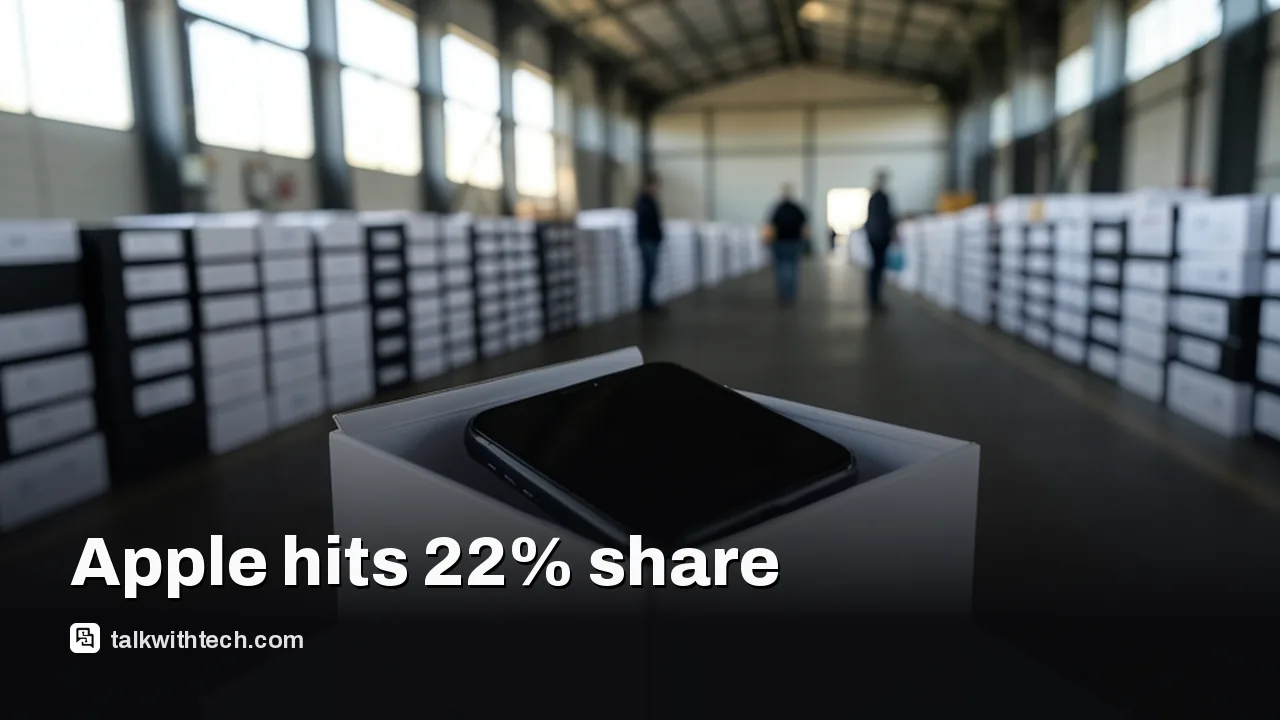
Apple captures a 22% slice as global phone shipments fall 20%
Apple inches ahead in a shrinking market, capturing about 22% of worldwide smartphone shipments in Q3 2026 as overall volumes fall to the lowest in years.
Apple reached about 22% of global smartphone shipments in Q3 2026, a quarterly high for the company.
The overall smartphone market declined roughly 20% year over year, the lowest since 2012.
Samsung led with around 23% of shipments, leaving Apple in a tight top-two race.
Demand remained strongest for newer iPhone models in key markets like China and India.
Quick read · 1 min
Apple captured about 22% of global smartphone shipments in Q3 2026, while the total market fell about 20% year over year. Samsung led with 23% of shipments. The shift comes as higher prices and fewer new models shape buyer choices. For shoppers, watch pricing trends and promotions across brands in the coming weeks. The next quarter will reveal whether demand stabilizes or slides further.
Apple boosted its slice of the global smartphone market in the third quarter of 2026, even as overall device shipments contracted to levels not seen since 2012. Counterpoint Research’s preliminary figures place Apple at about 22% of worldwide smartphone shipments for Q3, a new quarterly high for the company. Samsung stayed in the lead with roughly 23% of shipments, keeping the two giants in a close race for the top spot.
Industry-wide, total smartphone shipments fell by about 20% year over year. Analysts point to higher device prices, ongoing supply challenges for memory components, and a slower cadence of fresh model launches as key drivers of the drop. Apple’s strategy this year leaned on the core iPhone lineup, plus steady demand for earlier generations, helping it maintain share even as volumes declined.
In China and India, Apple saw stronger sales for the iPhone 18 Pro series and continued momentum from the iPhone 17 family, which helped offset softer performance in other regions. Market observers note that Apple benefited from relatively tighter supply in some markets, while competitors faced stockouts and pricier devices.
Overall, the numbers paint a picture of a challenging year for device makers rather than a sudden shift in consumer taste toward rival brands. Factors like pricing dynamics, component costs, and the timing of model releases all influenced where buyers ended up purchasing their next phone.
01
Which models helped Apple hold and grow share
Demand for the Pro models and the ongoing appeal of newer performance features helped Apple stay competitive. The company also benefited from continued interest in older iPhone models in markets where price sensitivity remains high, supporting its shipment share even as total volumes fell.
02
Why the market shrank this quarter
The roughly 20% drop in shipments underscores a broad slowdown tied to higher prices and persistent supply constraints in memory and other components. The decline wasn’t confined to a single region; some areas in Asia-Pacific showed mixed results depending on local demand, inventory, and price pressures.
03
What this means for everyday shoppers
For consumers, the takeaway is simple: quarterly shifts can affect deals, model availability, and promotions. If you’re buying a phone this fall, compare current promos across brands and consider not just the sticker price but long‑term software updates and after‑sales support.
04
What happens next
Analysts will be watching the next quarter for signs of demand recovery or further drag from higher costs. If demand softens again, expect more aggressive promotions and possible price adjustments on older models as retailers work through inventory.
At Paris 2026, Fiat showcases Multiplay, a 4.45-meter concept that reconfigures from a family car into a pickup with a bike rack and flexible interior ideas.
4 min read
We use cookies to understand how readers use Talk With Tech, so we can make it better. Is that OK? Privacy policy
The Daily Brief
Today's biggest tech stories, in 5 minutes
Every morning, the news that matters from AI, phones, apps and the people shaping tech. Explained in plain English. Free.
One email a day. No spam, unsubscribe anytime. Privacy policy