Edinburgh-based Danu Robotics is bringing HERO, a recycling sorter, to market to speed up and cheaper sorting.
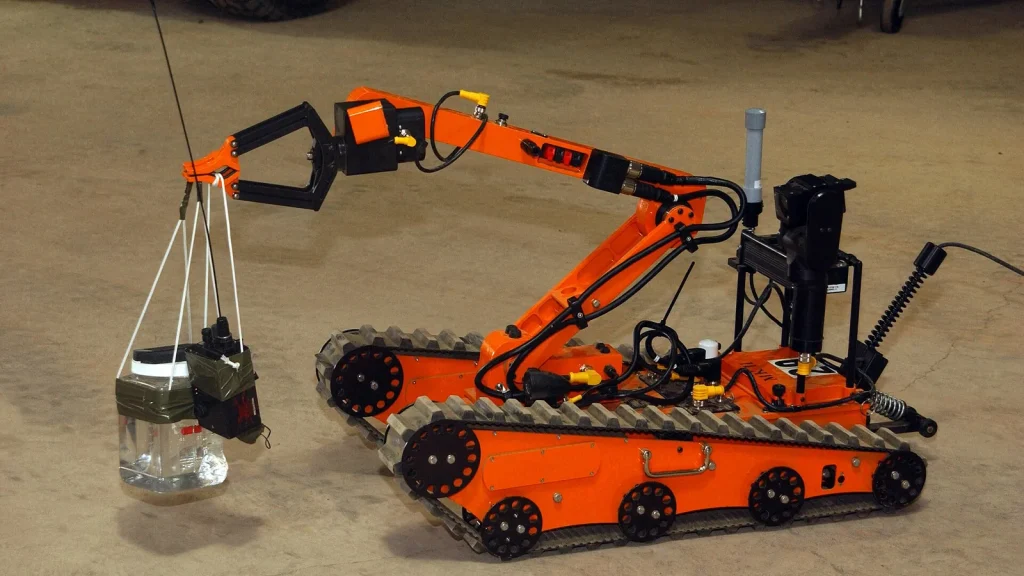
HERO relies on a claw grip and AI that learns from every item it handles to improve accuracy over time.
The company reports two large customers expressing interest and $500,000 in signed contracts, with over 200 potential buyers in the pipeline.
Plans call for shrinking HERO and enabling standalone use outside dedicated facilities, such as events or airports.
Quick read · 1 min
Danu Robotics in Edinburgh is commercializing HERO, a robotic waste sorter that uses a claw and AI to improve sorting speed and accuracy. Early traction includes two large customers expressing interest and $500,000 in signed contracts, with more than 200 potential buyers in the pipeline.
The plan is to shrink HERO for standalone use outside dedicated recycling facilities, opening up opportunities at events, airports and other sites. This could boost Europe and North America’s $20 billion recycling sorting market.
Two large customers showing interest.
200+ potential buyers in the pipeline.
Disrupt 2026 in San Francisco is the next milestone.
Danu Robotics, an Edinburgh startup, is pushing a six‑year effort toward a practical, AI‑driven answer to one of recycling’s stubborn bottlenecks. Founder Amy Ma says the idea grew from a simple observation: many recycling bins are emptied into the trash because the sorting line can’t keep up or be consistent. HERO, the company’s recycling sorter, is designed to change that equation by combining a claw grip with software that learns as it operates.
HERO’s standout feature is its pincer claw, which differs from suction‑based rivals. More importantly, its software relies on artificial intelligence that continuously tweaks how items are sorted, aiming to cut costs per ton and boost throughput without sacrificing accuracy.
01
How HERO works and why it matters
Recycling centers earn from the value of properly sorted materials, so even modest improvements in efficiency can translate into bigger profits. HERO’s speed and learning loop could help centers process more material with fewer errors, potentially lowering operating costs over time.
02
Early traction and what it signals for customers
Danu reports letters of interest from two large buyers and $500,000 in signed contracts. With more than 200 potential customers in its pipeline, the company signals strong demand as centers seek automation that provides quick returns on investment.
03
Beyond fixed facilities: a portable future for HERO
Ma envisions a version of HERO small enough to deploy outside traditional plants. Possible use cases include events, shopping centers, hospitals, and airports where on‑site sorting would cut handling and transport costs. The target is to make HERO versatile enough for stand‑alone deployment rather than a permanent installation.
04
What this means for everyday life
For consumers, better sorting means cleaner recycling streams and potentially lower costs for local programs. If HERO delivers on its promises, cities could see higher material recovery rates and a more predictable path to recycling goals, driven by AI that keeps improving with real world data.
Danu will present HERO at TechCrunch Disrupt in San Francisco, Oct. 13–15, as part of its push to secure more customers and scale production. Look for updates on deployment timelines and any new contracts as the product moves toward broader rollout.
06
Quick answers
What is HERO?
A waste‑sorting robot from Danu Robotics that uses a claw and AI to learn and improve sorting decisions over time.
Where is the company based?
Edinburgh, Scotland.
When is the next milestone?
The company will appear at Disrupt 2026 in San Francisco on Oct 13–15.