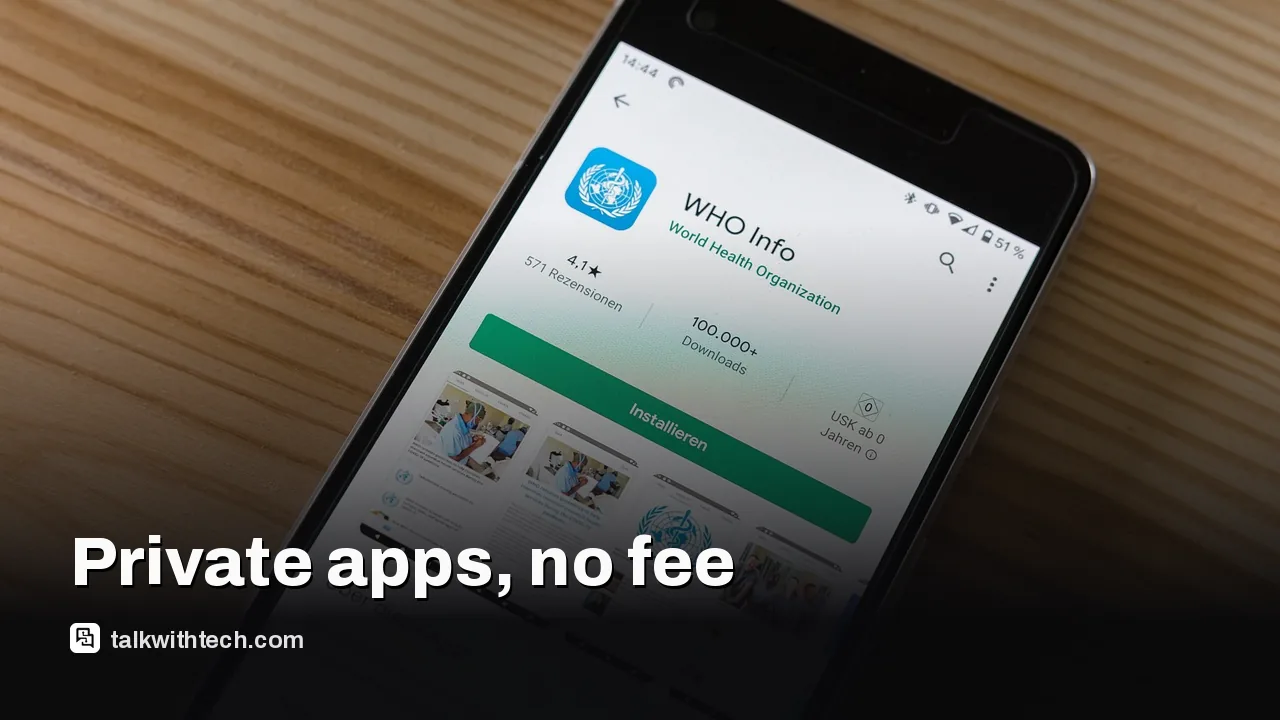
Google will allow anyone 18+ with a Google account to publish privately listed Android apps in the Play Store, built with Google AI Studio, with no paid developer account.
Apps published this way are privately listed and won’t appear in standard store search or recommendations.
This contrasts with Apple, which maintains a paid annual developer fee and stricter submission processes.
Europe and regulatory moves around Android store access continue, but Google’s move is about lowering the bar to publish private apps.
Quick read · 1 min
Google is letting adults publish privately listed Android apps built with AI Studio, without needing a paid developer account. These apps won’t appear in public Play Store search or recommendations, making them feel more like private tools than public apps.
The change could help families, schools, and small groups share simple apps without the usual publishing hurdles. It sits alongside public Play Store apps, a distinction regulators are watching.
What happens next: Google hasn’t announced a full rollout timetable, but watch for updates in AI Studio and Play Console for specifics on access and limits.
Google is quietly lowering the barrier to publish Android apps by letting anyone who’s 18 or older with a Google account publish privately listed apps built in Google AI Studio, with no paid developer account required. The apps won’t appear in the Play Store’s search results or recommendations, making them feel more like a private release than a public app.
The move, reported by The Next Web, marks a shift in how ordinary users can create and share small tools without jumping through the usual developer account hoops. Users won’t need to pay the typical $25 developer account setup that Google historically used for Play submissions, and they won’t have to go through the standard store review that can take time.
Google’s approach contrasts with Apple’s model, where developers pay a $99 annual fee and submit apps for review. Google’s private-path approach leans into AI Studio, Google’s toolchain for building apps with AI capabilities, and restricts visibility to private circles rather than the general Play audience.
Bloomberg reported the private publishing path is aimed at ease of use and rapid testing among families, small teams, or communities who want a shared tool without exposing it to the broader public. It’s designed for use cases like tracking local sports team funds or other small projects where the app isn’t meant to publicize widely.
What’s notable here is not just the absence of a paywall, but the absence of a public storefront for these apps. They won’t appear in Play Store search or recommendations, which could reduce visibility but also reduce exposure to the general public and, potentially, to unwanted scrutiny or reviews.
01
Which apps count as privately published?
Privately published apps are built with Google AI Studio and listed privately in the Play ecosystem. They aren’t meant to be discoverable through standard Play search or public recommendations. The exact controls for who can access these apps are not detailed, but the emphasis is on private sharing rather than mass distribution.
02
What this means for users and developers
For everyday users, this could simplify sharing a small, custom tool with friends, family, or a specific group. There’s less friction to publish, and no recurring developer fees. For developers or hobbyists, the model lowers the cost of entry and may encourage more people to experiment with app ideas, especially those that don’t require broad public exposure.
03
How it fits into broader store rules
Google has been under pressure to clarify how Android apps are published, especially with regulators pressing for fair access to app distribution and interop. This private publishing path runs alongside existing Play Store rules and review processes for public apps. It’s a separate channel, aimed at privacy and controlled distribution rather than broad consumer reach.
04
What this means for everyday people
If you’re a parent, teacher, club organizer, or small team lead, you could create a simple tool for group use without incurring app-store fees or worrying about public visibility. It’s a way to collaborate on a shared utility while keeping it out of the public eye. Remember that these apps won’t surface in search results, so you’ll need to share the link or access method directly with your group.
We don’t have a formal rollout date beyond “now” for this private publishing path, and Google hasn’t outlined all user-facing controls yet. If you’re curious, keep an eye on AI Studio updates and Play Console notices for any details about access, limits, or safety checks tied to privately published apps.
06
Quick answers
Who can publish privately listed apps?
Anyone 18 or older with a Google account can publish privately listed Android apps built in AI Studio, with no paid developer account needed.
Will these apps appear in the Play Store?
No. Privately published apps won’t show up in public search or recommendations.
Why is Google making this change?
The move lowers the barrier to publishing small, private tools and could spur experimentation and collaboration among families, groups, and educators.
Microsoft issues the October 2026 Patch Tuesday fixes for Windows 11 across multiple versions, with security patches, emoji updates, and small usability improvements.
Apple explains HomeView will support some third‑party audio and video apps from your iPhone, but details are still murky and depend on CarPlay compatibility.
4 min read
We use cookies to understand how readers use Talk With Tech, so we can make it better. Is that OK? Privacy policy
The Daily Brief
Today's biggest tech stories, in 5 minutes
Every morning, the news that matters from AI, phones, apps and the people shaping tech. Explained in plain English. Free.
One email a day. No spam, unsubscribe anytime. Privacy policy