Niobia runs AI agents on self-contained GPUs mounted on manufacturing equipment to spot defects as small as pinholes.
The system gathers data in one place and lets engineers chat with an AI assistant to diagnose causes quickly.
The startup aims to speed up fixes in battery and chip production, reducing costly downtime and bottlenecks.
Niobia will present at TechCrunch Disrupt 2026 as a Battlefield finalist, highlighting its autonomous factory ambitions.
Quick read · 1 min
Niobia is introducing AI agents on manufacturing equipment to spot defects and explain their causes in minutes, not days. The goal is to speed fixes in battery and chip production while keeping customer data private.
Why it matters: faster root-cause analysis means less downtime and lower costs for manufacturers. For everyday life, it could speed up the delivery of electronics and possibly lower prices over time.
AI agents run on on-site GPUs on production lines
Engineers can chat with an AI to learn why defects happen
Niobia is a TechCrunch Disrupt Battlefield finalist
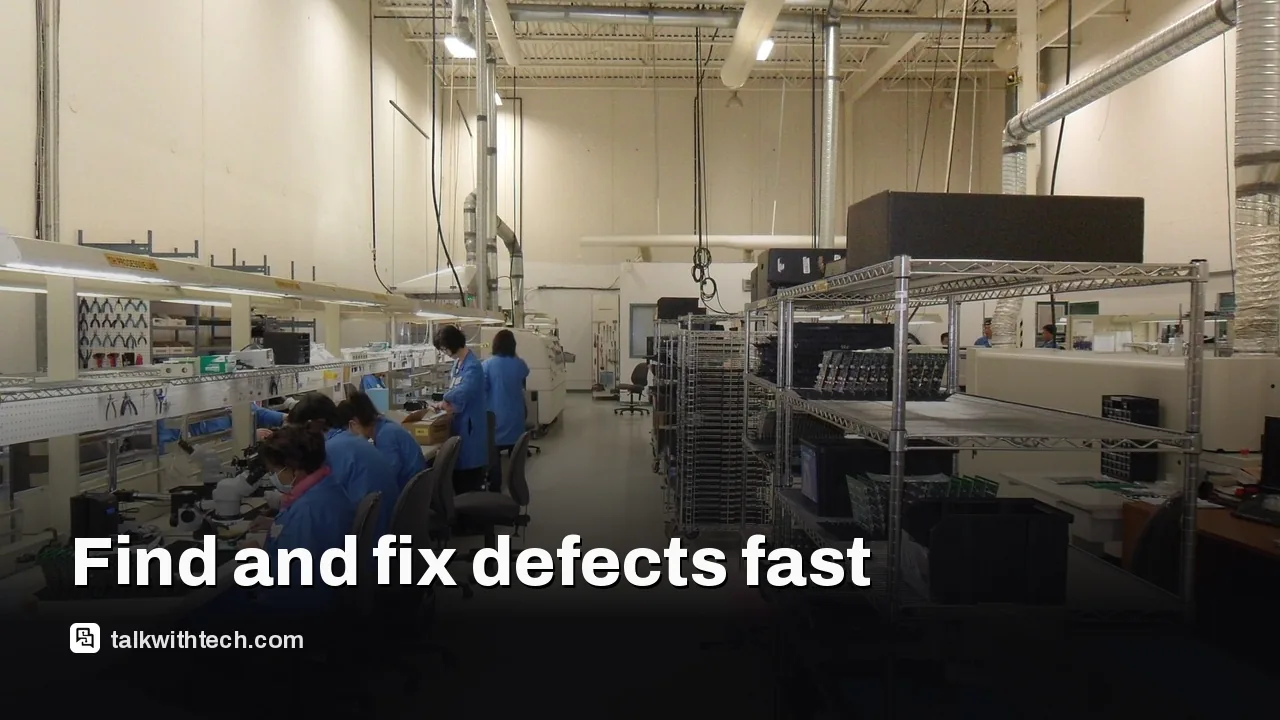
Niobia, a San Francisco startup, is tackling a stubborn bottleneck in electronics manufacturing: figuring out why things go wrong on the line. The company embeds AI agents on production equipment to flag defects, like tiny scratches or pinhole flaws, and then lets engineers ask a chatbot why those defects occurred. The goal is to deliver answers in minutes instead of days.
These agents run on self-contained GPUs mounted directly on manufacturing gear, acting like sensors that watch for anomalies. Crucially, Niobia also pools all the data in one place so engineers can interrogate the system and drill into the root causes of a fault. That combination is designed to shorten the loop between defect discovery and a fix, which matters because battery and chip manufacturing is capital intensive and time sensitive.
Speed is especially important. In many advanced manufacturing environments, a single defect or process hiccup can stall production for an extended period and run into the millions in lost output. Niobia’s approach is meant to shave off days or longer of troubleshooting by giving teams immediate, data-backed insight into what went wrong and why.
Co-founders Gaurav Jha and Harveen Kaur both hold PhDs in chemistry and bring firsthand experience from chipmakers and battery producers. They describe Niobia’s tech as niche but broadly impactful, noting that the massive manufacturing ecosystem behind consumer electronics, glasses, shoes, headphones, and more, relies on processes like film coating, electroplating, and fluidized bed reaction. The company has built its early product to support those three areas, and it plans to expand toward more autonomous, even self-driving, factories for its customers.
Privacy and security are central to Niobia’s approach. The company trains its models on data that stays with the customer, allowing clients to keep encryption keys locally so Niobia cannot decrypt the information. This matters because the data involved is highly sensitive and often proprietary to each manufacturer.
During TechCrunch Disrupt 2026, Niobia will showcase its approach as a Battlefield finalist, competing with other startups to prove how their tech can move the needle on production efficiency while reducing the high costs of defects and downtime.
01
What Niobia actually does on the line
In plain terms, Niobia plants AI agents on the same factory floor equipment that makes or coats components. These agents watch for defects in real time and collect data that engineers can later review. When a problem pops up, engineers can ask the on-device AI about possible causes, turning a murky troubleshooting session into a fast, structured investigation.
02
Why this matters for everyday tech products
Everything from smartphones to electric vehicles depends on reliable, scalable manufacturing. If Niobia can cut the time it takes to diagnose defects and fix processes, it could speed up production, reduce waste, and lower the cost of goods that end up in your hands. For consumers, that could mean shorter wait times for new devices and lower prices as manufacturing becomes more efficient.
03
What this means for the industry
Niobia’s model points to a broader shift: AI that sits on the factory floor rather than in a faraway cloud. By keeping data on site and giving engineers a direct line to reasoning from the AI, it aims to reduce exposure to data leaks while speeding up decision making. If Niobia proves effective at scale, expect more semiconductor and battery makers to explore similar on-line AI setups that augment human engineers rather than replace them.
04
What happens next
Niobia is preparing for TechCrunch Disrupt 2026 in San Francisco, where it will present as a Battlefield finalist. The company intends to push toward broader adoption in three core manufacturing specialties and then widen the footprint toward fully autonomous factories that manage more of the line without human intervention.
A new layout helps the car dashboard tailor itself to the screen and makes app downloads faster, plus YouTube Premium audio can continue while driving. Rolling out soon.
4 min read
We use cookies to understand how readers use Talk With Tech, so we can make it better. Is that OK? Privacy policy
The Daily Brief
Today's biggest tech stories, in 5 minutes
Every morning, the news that matters from AI, phones, apps and the people shaping tech. Explained in plain English. Free.
One email a day. No spam, unsubscribe anytime. Privacy policy