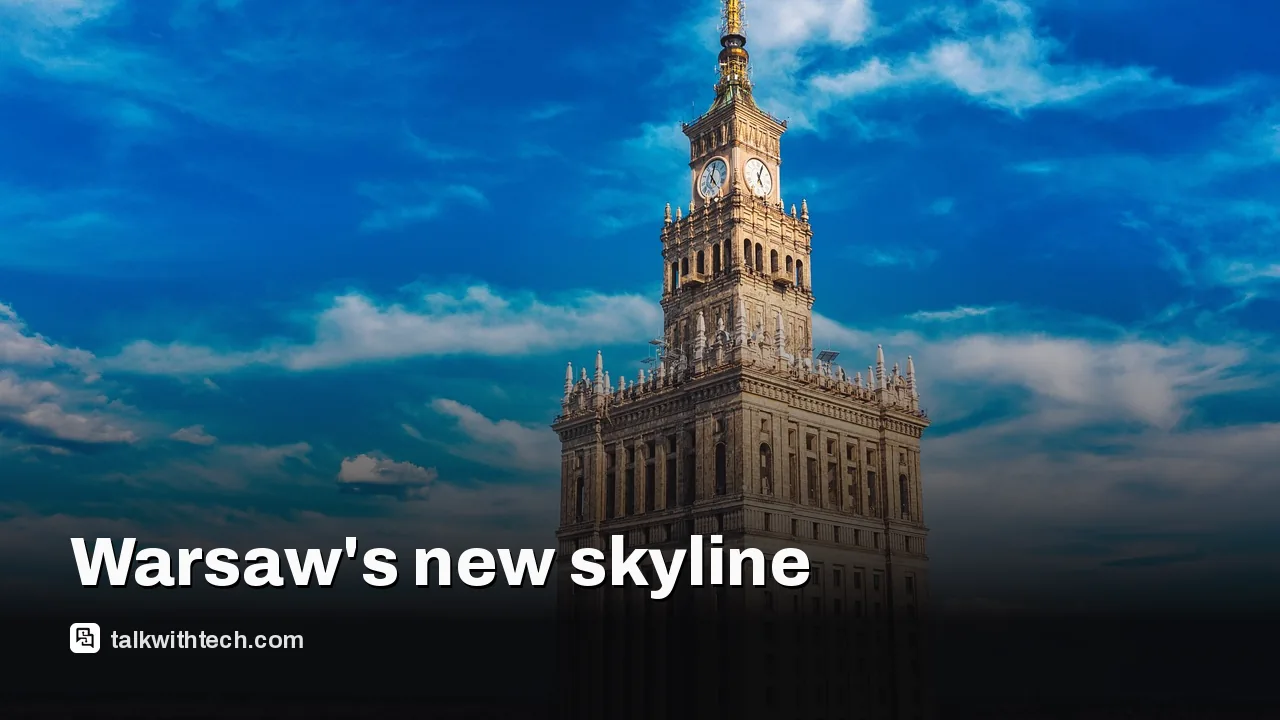
Poland tech hub rises as Warsaw skyline swaps towers for startups
Poland’s economy has surged from post-Soviet scars to a European tech and business hotspot, powering a modern Warsaw skyline and a growing global role.
Talk With Tech Newsroom
The short version
Poland’s economy has grown dramatically since the 1990s, reaching over $1 trillion in national income and converging with Western levels.
Warsaw’s Varso tower and newer infrastructure symbolize a shift from a Soviet-era legacy to a modern, tech-oriented economy.
Poland is attracting global capital and talent, while facing challenges like rising living costs and income inequality.
The country’s ongoing projects aim to balance growth with social stability as it integrates deeper with EU and Nato structures.
Quick read · 1 min
Poland has transformed from a post-Soviet economy into a European growth engine, with incomes rising toward Western levels and a thriving tech scene. Warsaw’s Varso tower symbolizes the shift, standing as the EU’s tallest building and a sign of new business confidence.
The country is attracting global capital, expanding its tech and manufacturing base, and creating high-value jobs. Yet rising living costs and inequality pose challenges as growth continues.
What’s next? Poland is pushing more infrastructure, education, and policy work to sustain growth and social balance. That will ripple into how polled readers in the US, UK and Canada interact with European markets and supply chains.
Increased cross-border investment and tech collaboration
Rising living costs alongside wage growth
Policy and infrastructure efforts to sustain inclusive growth
The skyline above Warsaw tells a story you can feel in the pocketbook as well as in the street. Poland has moved from the shadows of a Soviet past to become one of Europe’s fastest-growing economies, with a tech-friendly climate feeding a surge of investment and job creation. In the four decades since Poland regained independence, incomes have climbed toward Western levels, and the country moved past the $1 trillion mark in national income last year. The transformation isn’t just about numbers; it’s about a culture shift toward higher-value manufacturing, software services, and global business hubs.
On the ground, the contrast is visible. The Varso tower, completed four years ago and now the tallest building in the European Union, rises opposite the once-dominant Palace of Culture and Science. The view is more than aesthetic. It marks a symbolic leap from a period of scarcity to a era of growth, with developers and architects building a future where Warsaw stands as a global business destination as much as a capital city of culture.
Those who know Poland best describe a country that went from economic bottlenecks to a “peak performance” phase. Since joining Nato and the EU, Poland has attracted big names in industry and finance. It has built logistics and tech ecosystems that let companies from across the world run global operations from Polish bases. Yet the shift hasn’t come without pain. The same rapid growth has pushed living costs higher, and income inequality remains a challenge even as the average wage climbs.
By many measures, the shift is pronounced. In the late 1990s, Poland’s income was a fraction of Western levels; today, it sits in the emboldened ranks of Europe’s growth leaders. The migration story has flipped too. Whereas many left for richer salaries abroad, a growing share of Poles are returning, equipped to contribute to a domestic market that’s now capable of sustaining high-value work. Warsaw’s tech and business scene is knitting together a new economy that blends manufacturing, software, and international capital flows.
Poland’s government and business leaders highlight a clear strategy: attract investment in high-productivity sectors, build infrastructure that supports global operations, and invest in people who can work across borders. That means greenfield transport and logistics projects, modern office spaces, and digital services that can scale across Europe and beyond. The result is a country that can compete for knowledge work, not just cheap labor, and a city that’s increasingly seen as a hub for startup ecosystems and multinational offices alike.
Of course, the cost of this ascent isn’t trivial. Rising wages and housing costs compress affordability for some residents, and the benefits of growth aren’t evenly distributed. The path forward, as Warsaw and other cities grow, will hinge on balancing productivity with social equity, while keeping a steady hand on governance and education to sustain the tech and business pipeline.
What does this mean for everyday readers in the US, UK and Canada? If you’re buying a product, you may notice more European supply chains and faster cross-border services. If you invest, Poland’s growth creates potential for European tech companies and startups you already know, possibly influencing them to locate more operations nearby. And if you travel or work remotely, Poland’s expanding infrastructure and job market might present new opportunities or destinations to consider.
As Poland formalizes its place in the EU’s economic orbit, the next year will bring more large-scale investments and perhaps fresh policy tweaks aimed at sustaining growth while placating concerns about housing and income gaps. The question remains: can a country so deeply marked by history channel that energy into a stable, inclusive, high-productivity future? The answer will take shape in the streets, offices, and skylines of Warsaw and other Polish cities in the coming months.
A durable 14-inch business laptop that prioritizes comfort and productivity over flashy specs, with a standout keyboard and solid all‑round performance.