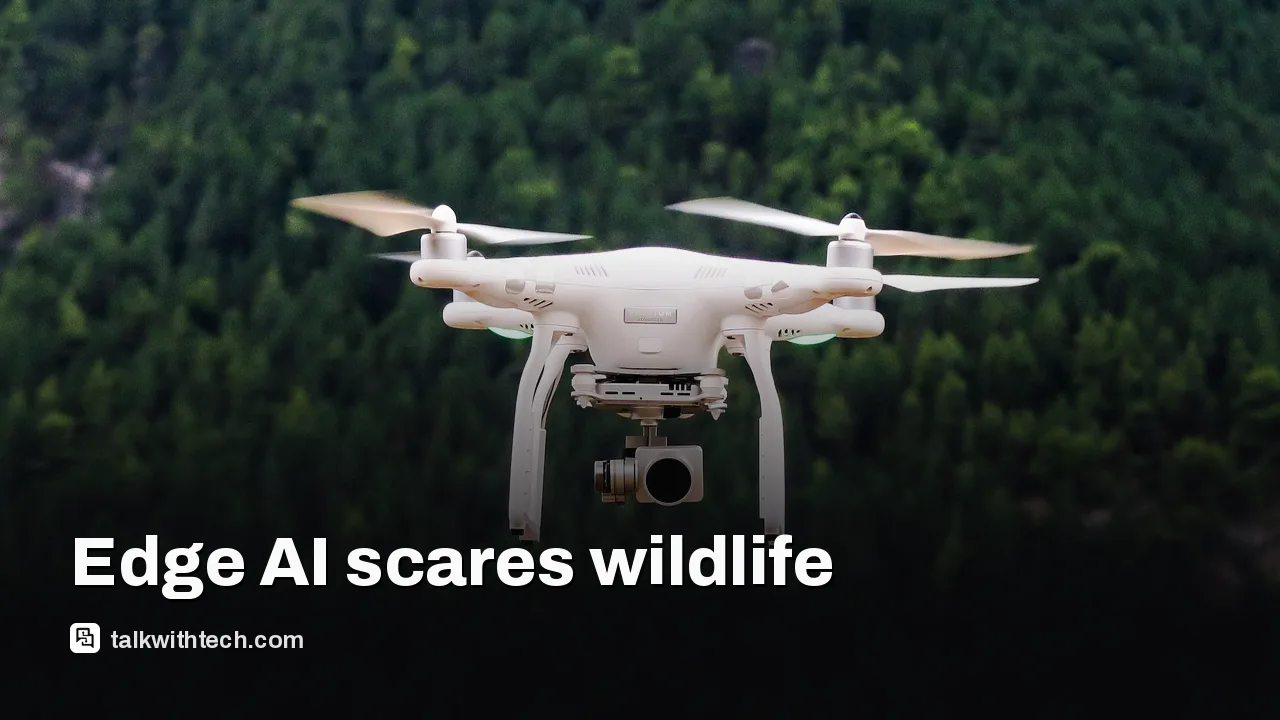
Flox Intelligence builds edge devices that deter wildlife using on-device AI, not cloud processing.
The system identifies animals and emits species-appropriate sounds to scare them away, learning over time to avoid habituation.
About 150 Flox devices are currently deployed at airfields, road and rail corridors, and other critical sites.
Flox is raising a $10 million Series A to expand deployments and extend its software to more outdoor machines.
Quick read · 1 min
Flox Intelligence makes edge AI devices that deter wildlife without cloud processing. The devices wake on motion, identify animals, and play sounds tailored to each species to keep trains, airports and roads safer.
Why it matters: fewer wildlife-related delays and accidents, with on-site data handling that works even where internet is spotty. Flox plans a $10 million Series A to expand deployments and broaden the software to more outdoor machines.
Edge AI keeps data on site.
Species-specific sounds aim to reduce habituation.
Expansion could cover more outdoor machinery like trains and drones.
A Stockholm startup is betting that smarter hardware, not louder alarms, can keep wildlife away from busy infrastructure. Flox Intelligence builds small, battery-powered devices that wake up when they sense motion, identify nearby animals with computer vision, and respond with sounds tailored to each species. The idea is to work outdoors where AI systems usually struggle because nature is unpredictable and always changing.
Founder Sara Nozkova explains the approach as a way to move beyond fixed safety tools. Instead of relying on cloud servers, Flox processes everything on the device. That keeps data local, reduces latency, and helps the system operate in remote or bandwidth-poor areas near rail lines, airports perimeter fences, and road corridors.
In practice, a motion trigger starts a short sequence: a camera captures what’s nearby, the device’s on-board model guesses the animal type, and then a species-appropriate deterrent sound is played. The aim isn’t to scare wildlife into leaving forever but to disrupt patterns that lead to collisions, while avoiding spooking animals into habituating to signals over time.
Flox has built a software layer that maps where devices are placed and what’s happening in the field. The company says this platform also helps clients track deployments, assess effectiveness, and generate compliance and biodiversity reports. The plan is to broaden the software so it can run on other outdoor machines, think trains, trucks and drones, without needing a data center or constant internet access.
Today, Flox reports roughly 150 devices live across several continents, installed at airfields and airport perimeters, along road and rail corridors, and at sites like national parks and electrical substations. The devices are sold up front, with an annual subscription for software and AI updates after the first year. Flox also works with original equipment manufacturers that want to embed its tech in vehicles; Alstom is named as an example partner in the company’s broader plan.
Financially, Flox is aiming for about $1.5 million in revenue by the end of 2026. The company has kicked off a $10 million Series A to scale its footprint, from hundreds to several thousand devices, and to broaden the software to more outdoor uses beyond wildlife management.
01
Which environments could benefit first
Airfields and airport perimeters look like a clear fit because wildlife strikes can cause costly delays and safety concerns. Rail crossings and fence-line corridors along busy highways are another obvious use, where a rapid, local response matters more than a centralized alert. Flox emphasizes that its devices are designed to work in varied weather and light conditions, without forcing teams to rely on cloud processing in remote spots.
02
How it compares to traditional deterrents
Traditional methods often rely on louder sirens, fences, or sometimes animals themselves being controlled by external methods. Flox argues that a tuned, behavior-aware signal can be more effective over time because it adapts to how animals react, reducing the chance of habituation. All responses occur on the device, which also helps protect privacy since data stays on-site.
03
What this means for everyday readers
For people who fly, ride trains, or drive near busy corridors, Flox’s approach could translate to fewer delays caused by wildlife incidents. It could also lower the risk of injuries to animals and workers, and potentially reduce insurance costs tied to wildlife-related disruptions. Since the system runs locally, it remains functional in places with spotty internet or limited cellular coverage.
04
What happens next
Flox is seeking to raise more capital to expand deployments and to push its software into a wider range of outdoor machines. As more devices go live, the company will face questions about reliability in extreme weather, maintenance needs, and how much data is collected and stored locally versus shared with partners.
A battery-powered, edge AI device that detects wildlife and plays species-specific deterrent sounds, with a companion software platform for deployment tracking.
Where are these devices now?
About 150 units are deployed across airfields, road and rail corridors, and other critical sites in North America, Europe and Australia.
A new layout helps the car dashboard tailor itself to the screen and makes app downloads faster, plus YouTube Premium audio can continue while driving. Rolling out soon.
4 min read
We use cookies to understand how readers use Talk With Tech, so we can make it better. Is that OK? Privacy policy
The Daily Brief
Today's biggest tech stories, in 5 minutes
Every morning, the news that matters from AI, phones, apps and the people shaping tech. Explained in plain English. Free.
One email a day. No spam, unsubscribe anytime. Privacy policy