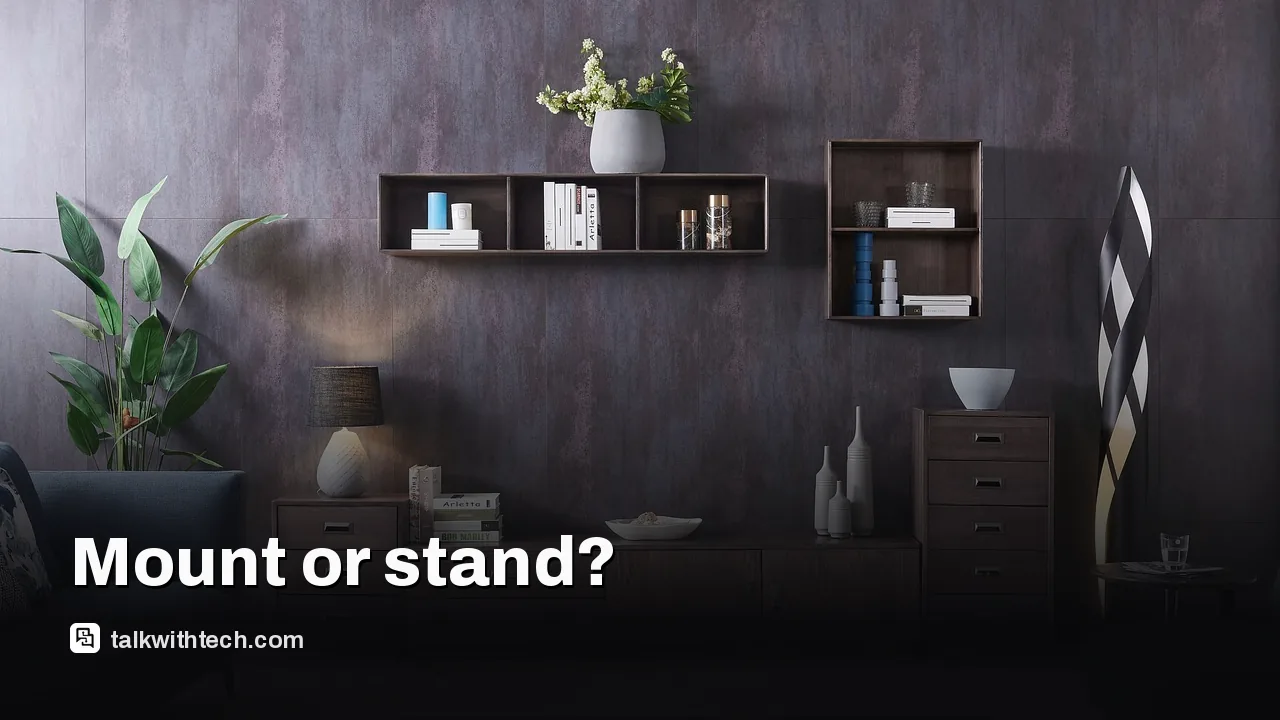
You essentially have two main options: mount the TV on the wall or place it on a stand, each with distinct pros and cons.
Wall mounts save space and look cleaner, but are tougher to install and limit access to ports.
TV stands offer easier setup, more storage, and flexible placement, but take up more room and can look bulky.
Your choice should consider room size, mounting capabilities, evacuation of cables, and future moves.
Quick read · 2 min
Two main options shape how your TV looks and how easy it is to use: wall mounting or placing the TV on a stand. Wall mounts save space and create a clean look but require more effort to install and can limit access to ports after mounting. TV stands are easier to set up and offer storage for devices, but take up more room. Your choice should hinge on room size, how you’ll use the space, and whether you rent or own. Before buying, measure carefully, check wall material, and think about future updates. If you want a sleeker look now and don’t plan to move the TV often, a wall mount can work well. If you want flexibility and easier access to devices, a stand is the safer bet. Expect a range of prices for both options and plan for cable management when making your pick.
Wall mounts free floor space.
Stands offer storage and easier setup.
Measure, plan for cables, and consider wall material.
Two common ways to set up a new TV come down to wall mounting or using a freestanding stand. Both options give you a clean look and easier cable management, but they affect space, flexibility, and how you live with the setup.
Wall mounts create a sleeker profile and free up floor space, which is handy in smaller rooms or when you want a straight, minimalist wall line. The trade-off is the installation work, and once mounted, you may have limited access to ports and slightly fewer options for adjusting height or tilt depending on the model.
TV stands are typically easier to install and offer built-in storage for devices like media players or game consoles. They also let you move components around more freely. The downsides are that a stand can consume more room and may look bulkier, and renting a space often means you’d avoid wall drilling altogether.
01
Which option fits your space
Consider how much room you have and what you value day to day. Wall mounts work well when you want a clean, uncluttered look and don’t plan to move the TV often. If you expect to swap devices, rearrange furniture, or you rent your home, a stand provides more flexibility.
02
Costs and installation effort
Prices vary widely for both choices. Basic wall brackets start low, with more capable models adding to the cost. Stand prices also span a broad range, from very affordable to designer options. Installation effort mirrors price: mounting usually takes more time and some DIY confidence, while stands are typically straightforward to assemble and place.
03
What this means for you
Think about how you’ll use the TV most days. If you want a neat setup with minimal cables and you’re not moving the TV often, a wall mount can be worth the effort. If you value easy access to devices, frequent rearranging, or you’re renting, a stand is often the safer bet.
04
What happens next
Before buying, measure the wall area and the TV’s dimensions, and check your wall type to anchor securely. If you lean wall-mount, verify the TV’s mounting pattern and plan for future upgrades or viewing angles. If you lean stand, plan for cable management and the storage needs for media players or consoles.
Costs vary by model, but basic wall brackets and stands can both be affordable; stands may offer similar pricing with more storage options.
Can I install a wall mount myself?
Yes, if you’re comfortable drilling and aligning the mount to the TV and wall. If not, a professional install is a sensible choice.
Which lasts longer if I change rooms often?
A TV stand is more flexible for moving, while a wall mount stays fixed after installation. Your choice depends on how often you update or rearrange your space.
New safety guidance warns that common PLA and resin printers can release airborne particles and gases in small spaces. Here’s what to know before you print at home.